Pressure Treated Pine Fence Lifespan in Ohio: What Cleveland Homeowners Can Expect
If you're deciding on a wood fence right now, the first question is usually the big one: how long will a pressure treated pine fence actually last in Ohio's climate? Cleveland winters are hard on wood. Freeze-thaw cycles move the ground, snow piles against the bottom rail, and spring rain keeps everything wet for weeks. This FAQ gives straight answers on lifespan, maintenance, cost, and what to check before you sign a contract with a fence company in Cleveland, OH.
How long does a pressure treated pine fence last in Ohio?
A pressure treated pine fence typically lasts 15 to 20 years in the Cleveland, OH area when it is built correctly and stained on a regular schedule. Neglected fences can start failing at the posts in under 10 years. The treatment resists rot and insects, but Ohio's freeze-thaw cycles and wet springs still punish wood that never gets sealed.
The biggest variable is not the pickets. It is the posts and the bottom of the fence, where water sits. Build those right and the rest of the fence tends to take care of itself.
What usually fails first on a pressure treated wood fence?
Posts fail first on most wood fences, even when the panels look fine. A post rots at or just below ground level, where moisture and soil contact meet. You can repaint pickets for years and still end up with a leaning fence because the posts gave out underground.
In Cleveland, freeze-thaw ground movement adds a second problem: posts that heave or shift if they were set too shallow. For a parent or dog owner, a shifted post means a sagging gate and a gap at the bottom. That is exactly the opening a determined dog finds. Proper post depth and drainage at the base matter more to lifespan than any other single decision.
Is pressure treated pine strong enough to contain a big dog or keep kids in the yard?
Yes, pressure treated pine is strong enough for dog and kid containment when the fence is built with tight picket spacing, solid rails, and a gate that latches reliably. For a large dog, a 5 or 6 foot privacy fence in pressure treated pine removes both the visual temptation and the climbing footholds that chain link can offer.
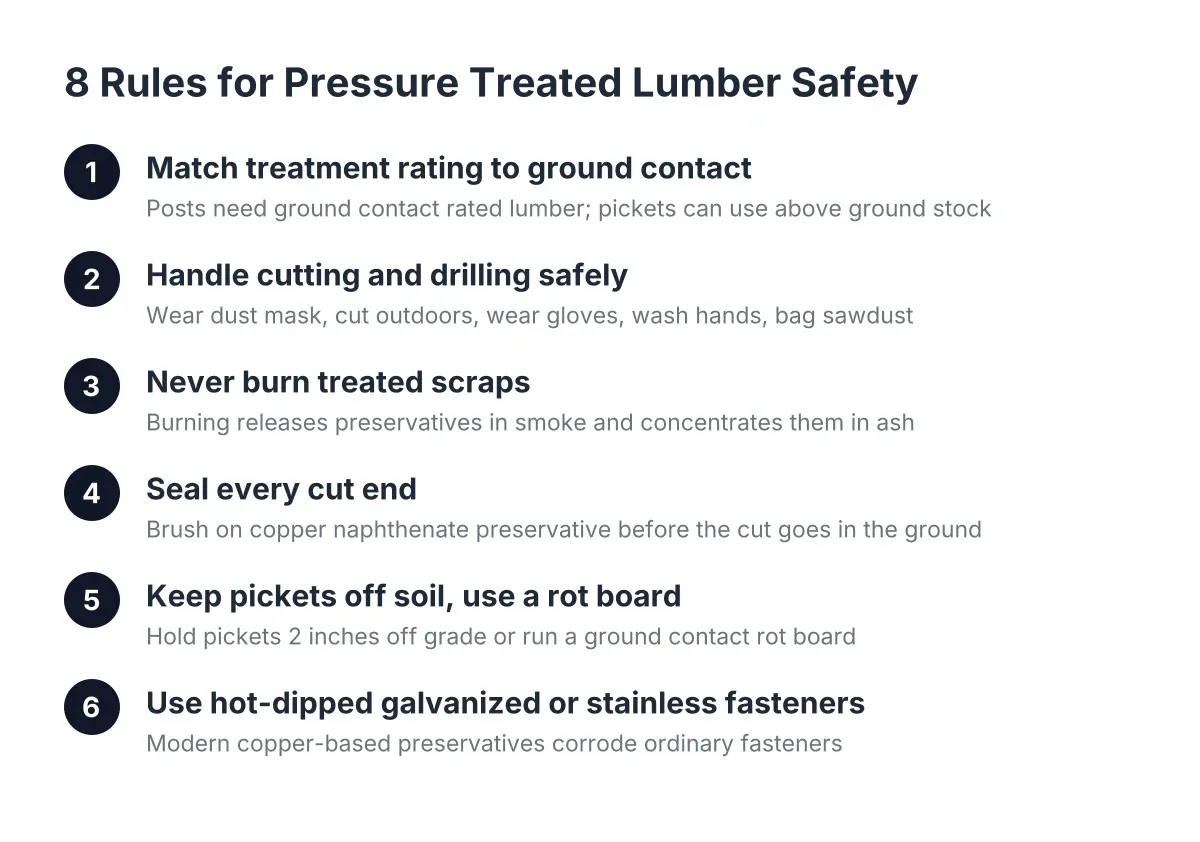
The weak points are the same ones that shorten lifespan: gaps at the bottom and a gate that sags. Ask your installer how they handle grade changes so there is no squeeze-through space under the pickets. A rot board run along the bottom closes that gap and takes the ground moisture hit instead of the pickets.
Why does pressure treated pine hold up better than untreated wood in Cleveland?
Pressure treatment forces preservative chemicals deep into the pine, which is why the wood resists rot and insect damage far better than untreated lumber. That matters in Northeast Ohio, where the ground stays damp from November through April. Untreated pine in ground contact can rot in a few seasons; treated posts last many times longer.
One side effect worth knowing: because the treatment process saturates the wood, pressure treated pine can stay wet for months after installation. That affects when you can stain it, which brings up the next question.
When and how should I stain treated pine?
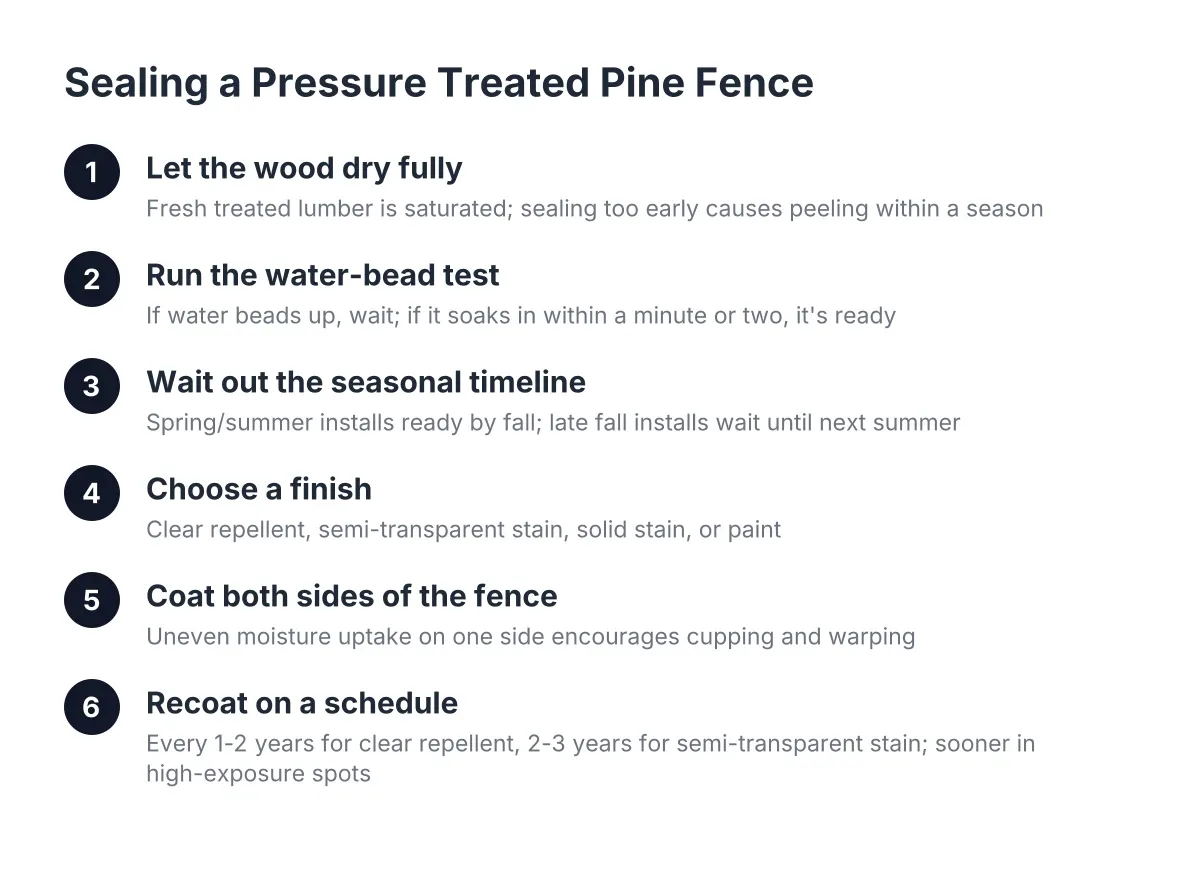
Wait until the wood is dry before staining a pressure treated pine fence, which often means several months after installation. Sprinkle water on a board; if it beads up, the wood is still too wet. Once it soaks in, you can stain.
For treated pine, oil-based stains tend to work well because they penetrate the dense, treated wood. A few habits stretch lifespan the most:
- Stain both sides of the fence, not just the side facing your yard. It extends the life of the boards, not just the look.
- Re-stain every 2 to 3 years, or when water stops beading on the surface.
- Keep sprinklers, mulch piles, and leaf buildup away from the bottom rail and posts.
- Check gate hinges and latches each spring; a sagging gate wears out fast under daily use.
What does treated pine cost compared to cedar?
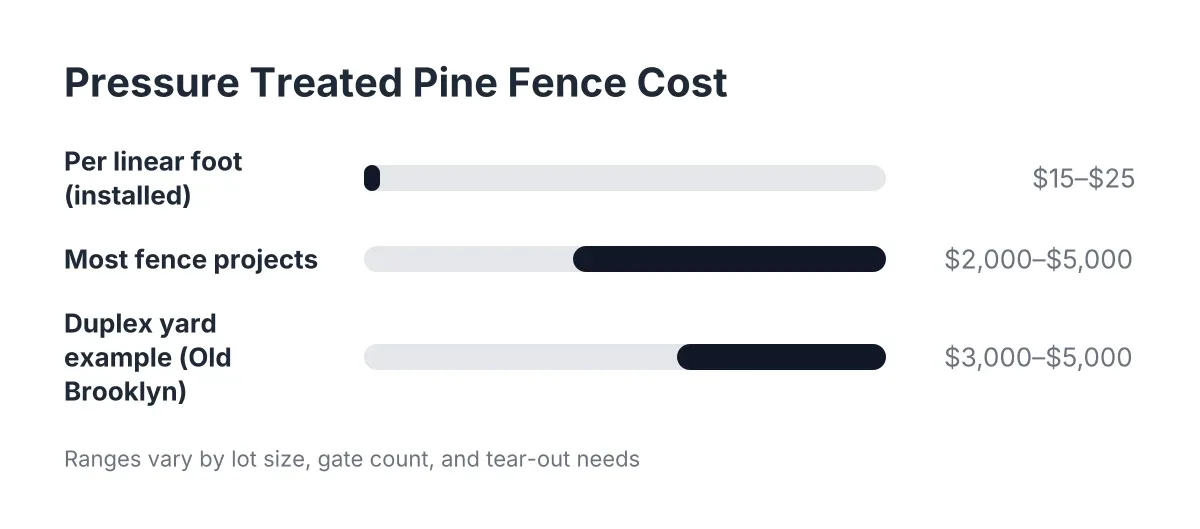
Pressure treated pine runs meaningfully cheaper than cedar for the same fence layout, which is why it is the default choice for budget-conscious projects and rental properties. According to NerdWallet, citing Angi data, professionally installed fences average $15 to $25 per linear foot, with most projects landing between $2,000 and $5,000. Angi puts the average fence installation at $3,277, and privacy fence installation at $4,300 on average.
For example, say a landlord with a duplex in Old Brooklyn needs to secure two backyards before re-listing the units in spring 2026. A pressure treated privacy fence on both yards might fit a $3,000 to $5,000 per-property budget, where cedar could push one yard alone past it. Those are illustrative ranges, not quotes; lot size, gate count, and tear-out of the old fence all move the number.
Are pressure treated pine fence panels or individual pickets better?
Individual pressure treated pickets, installed board by board, usually outlast pre-built pressure treated wood fence panels on uneven Cleveland lots. Stick-built fences follow the grade, so you avoid gaps under the panels where a small dog squeezes through. Panels install faster and can cost less up front, which appeals to landlords on a turnover deadline.
If your yard is flat and the timeline is tight, panels are a reasonable choice. On sloped or older inner-ring lots with tight property lines, board-by-board installation with a rot board at the bottom gives a cleaner, more secure result.
How does lumber quality affect how long the fence lasts?
Board selection affects warping, and warped boards create the gaps that let pets out and moisture in. When picking pressure treated lumber for a fence, avoid posts and boards where the center of the growth rings sits at the edge of the board. That orientation twists and cups as the wood dries.
A careful installer culls those boards before they go in the ground. This is one reason two bids for the same fence can differ: pricing reflects construction practices, material grading, and expected longevity, not just raw lumber and labor.
Do I need a fence permit in Cleveland, OH?
Many Cleveland-area cities require a fence permit, and the rules on height, placement, and property-line setbacks vary by suburb. Older inner-ring neighborhoods with tight lot lines raise more property-line questions than newer subdivisions. Do not state your fence location from memory of where the old fence stood; old fences in Cleveland are often off the line.
Verify requirements with your local building department before work starts, since fees and rules differ city to city. A good fence company handles the permit question up front so you are not tearing out a new fence over a setback dispute.
When should I replace a pressure treated fence instead of repairing it?
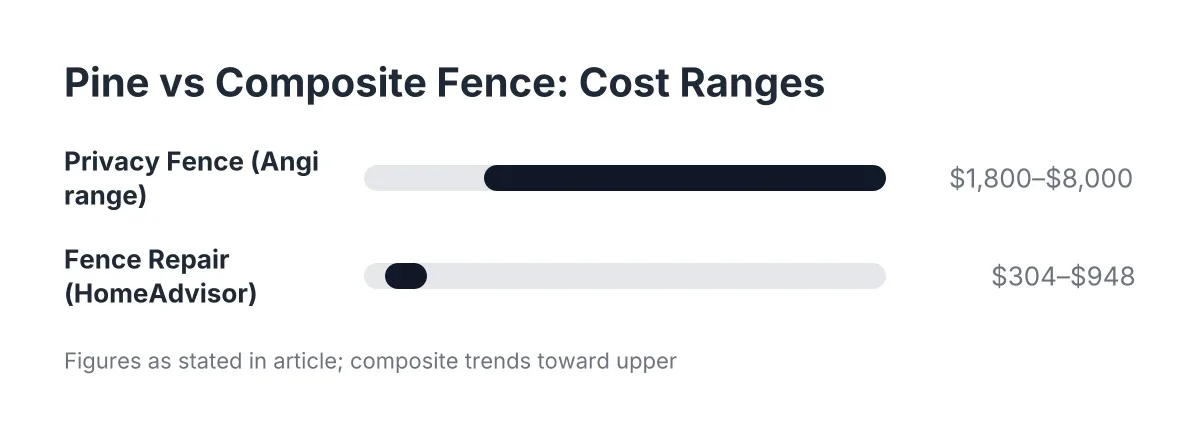
Replace the fence when the posts are rotting or heaving; repair it when the damage is limited to pickets, rails, or a gate. According to Angi's 2026 data, the national average fence repair cost is $618 per project, so fixing a few storm-damaged sections costs far less than full fence replacement.
However, if more than a quarter of the posts are failing, repairs become a treadmill. At that point, fence replacement with properly set pressure treated posts is the cheaper path over the next 15 years. If you are unsure whether posts are sound below grade, have a professional probe them; rot at ground level is not always visible from the surface.
If you need fence installation, Cleveland Fence Installers can help.
Prefer to talk it through? Call (216) 465-0485 — a quick call is usually the fastest way to get a straight answer for your situation.