Does Pressure Treated Pine Need Sealing? Cleveland Fence Contractors Answer
Does pressure treated pine need sealing after your new fence goes in? Short answer: yes, eventually, but not right away. When it comes to sealing pressure treated fence surfaces, the treatment chemicals protect the wood from rot and insects, not from water, sun, and Cleveland's freeze-thaw cycles. If you just lost a fence to a storm or watched ten-year-old posts rot through, this question matters more than most homeowners realize. Sealing done right is the difference between a fence that lasts and a fence you replace again in a decade.
This guide answers the sealing question in plain terms, then covers the timing, the cost, and the decisions around it, written for Cleveland, OH homeowners replacing a failed fence and for landlords deciding what to put up between tenants.
What Does Pressure Treated Pine Actually Protect Against?
Pressure treated pine resists rot, decay, and insect damage because preservative chemicals are forced deep into the wood under pressure at the mill. That is the whole job of the treatment. It does not protect the wood from moisture swelling, sun fading, cracking, or warping. Those are weathering problems, and weathering is exactly what a sealer or stain addresses.
Think of it as two separate threats. The first is biological: fungus and insects eating the wood from the inside. The treatment handles that, which is why pressure treated lumber has become the default choice for a wood fence on a budget. It is affordable, available at every lumberyard in Greater Cleveland, and it holds up in ground contact in a way untreated pine never will.
The second threat is physical. Rain soaks the wood, winter freezes it, spring thaws it, and summer sun bakes the moisture back out. Each cycle opens tiny cracks called checks. Over years, those checks widen, pickets cup and twist, and water finds its way into end grain and fastener holes. The treatment chemicals do nothing to stop any of that. Only a water-repellent sealer or a penetrating stain slows it down.
So when someone asks whether pressure treated pine needs to be sealed, the honest answer is this: the fence will stand without sealing, but it will gray, crack, and weather much faster. In Cleveland's climate, with hard freezes and wet springs, unsealed pine ages on an accelerated schedule.
Why Does Pressure Treated Pine Need Time to Dry First?
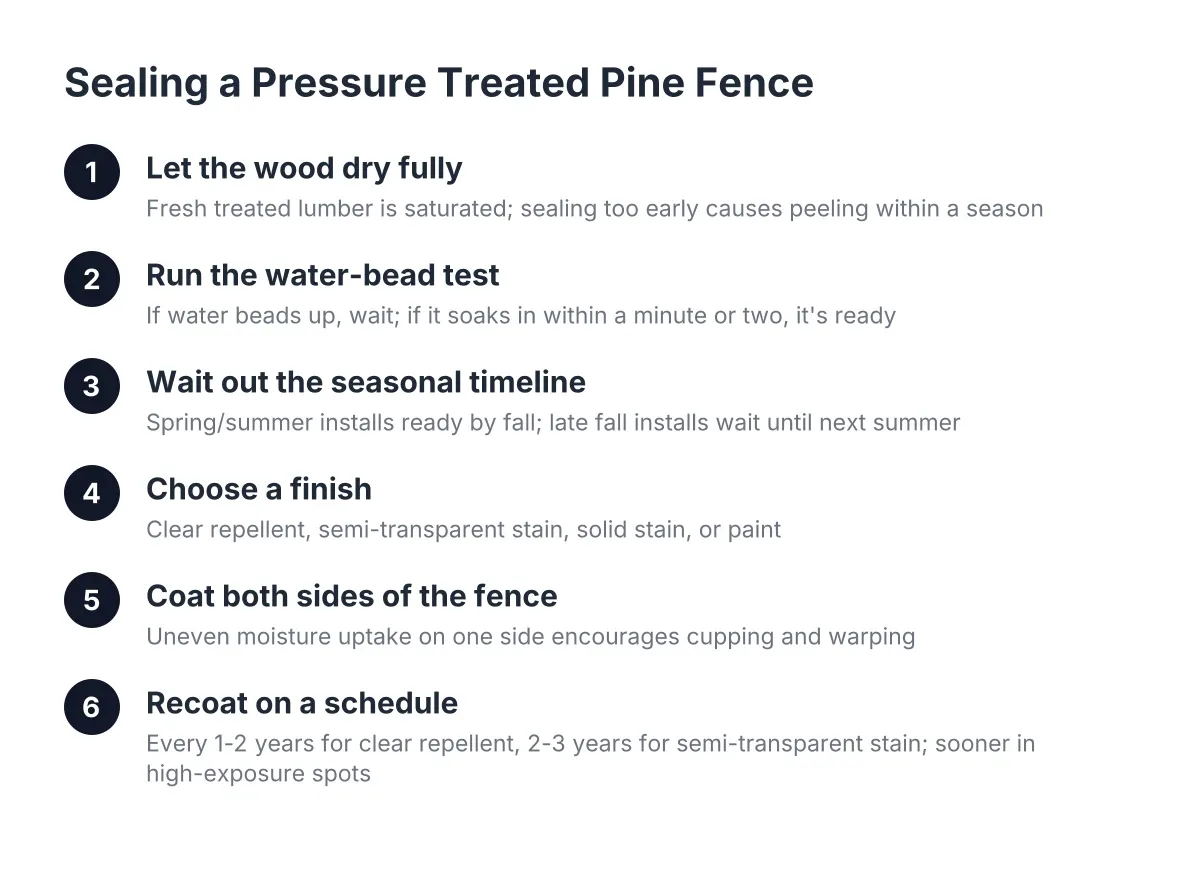
Pressure treated pine needs to dry before sealing because the treatment process leaves the wood saturated with liquid. Fresh boards can stay wet inside for months after installation. Seal too early and the product sits on top of damp wood, fails to penetrate, and peels within a season. Waiting is not optional; it is the step that makes sealing work.
Here is a simple field test anyone can do. Sprinkle water on a picket. If the water beads up and sits on the surface, the wood is still too wet to seal. If the water soaks in within a minute or two, the wood is ready to accept a sealer or stain.
For a fence installed in Cleveland, the practical timeline usually looks like this:
- A fence installed in spring or early summer is often ready to seal by fall of the same year.
- A fence installed in late fall usually needs to wait until the following late spring or summer.
- Kiln-dried-after-treatment lumber (marked KDAT) can sometimes be sealed within weeks, but most fence stock is not KDAT.
- When in doubt, wait another month and repeat the water test. Sealing late costs you a little weathering; sealing early wastes the whole job.
In addition, drying is when pressure treated lumber shrinks. Pickets installed tight together will open small gaps as the water leaves the wood. That is normal. It is also another reason to hold off on sealing: let the boards finish moving first, then lock them down with a finish.
Sealing Pressure Treated Fence: Choosing Your Finish
For most Cleveland fences, a penetrating oil-based stain with water repellent built in beats a clear sealer. Oil-based products soak into pressure treated pine and older weathered wood better than film-forming finishes do. A clear water sealer protects against moisture but does nothing for UV fading, so the fence still grays. A semi-transparent stain handles both.
Can pressure treated pine be stained? Yes, and stain is usually the better call. Here are the realistic options:
- Clear water repellent. Cheapest and fastest. Blocks moisture but not sun. Expect to reapply every one to two years, and expect the wood to gray anyway.
- Semi-transparent oil-based stain. The sweet spot for a pressure treated pine fence. It penetrates, adds pigment that blocks UV, and shows the wood grain. Reapply roughly every two to three years depending on exposure.
- Solid-color stain. Covers like paint but soaks in like stain. Good for hiding mismatched replacement boards after a fence repair. Lasts longer between coats but hides the grain.
- Paint. Pressure treated lumber can be painted, but only after it is fully dry, and paint on a fence tends to peel and demand more upkeep than stain. Most fence contractors steer homeowners away from it.
One detail that pays off: coat both sides of the fence, not just the side facing your yard. A fence finished on one side takes on moisture unevenly, which encourages cupping and warping. Finishing both faces extends the life of the fence enough to be worth the extra product, and it matters whether you own the house or rent it out.
If your fence sits next to a sprinkler zone, a downspout, or a low spot where water pools, treat that run as high-exposure. Those sections need recoating sooner than the rest of the fence, and they are where rot shows up first even in treated wood.
What Happens If You Never Seal It?
An unsealed pressure treated fence in Northeast Ohio will not rot quickly, but it will weather hard. Within a year the wood turns gray. Within three to five years you will see surface checking, raised grain, and pickets starting to cup. The treatment keeps fungus out of the wood, so the structure holds, but the fence looks tired long before it fails.
The bigger risk is at the specific points where water concentrates. End grain at the top of pickets, cut ends of rails, and the zone where posts pass through the soil line all take on water faster than flat faces. The ground-level transition on a post is the single most common failure point on any wood fence. Water sits there, freezes there, and works on the wood there year after year.
Therefore, if you seal nothing else, protect the vulnerable spots. Some installers wrap the post at grade with a rubberized waterproof coating or sleeve, extending a few inches above and below the soil line, which shields that moisture-heavy zone and adds structural life to the post. Capping posts, or at least cutting them at an angle so water sheds off, protects the end grain up top.
For the homeowner replacing a rotted-out fence, this is the lesson hiding in the old one. Pull a failed post and you will usually find the rot concentrated right at grade, not at the bottom of the hole. The wood did not fail everywhere; it failed where water sat. Sealing and detailing those zones is how the replacement avoids the same fate.
Replacing a Failed Fence: Where Sealing Fits in the Decision
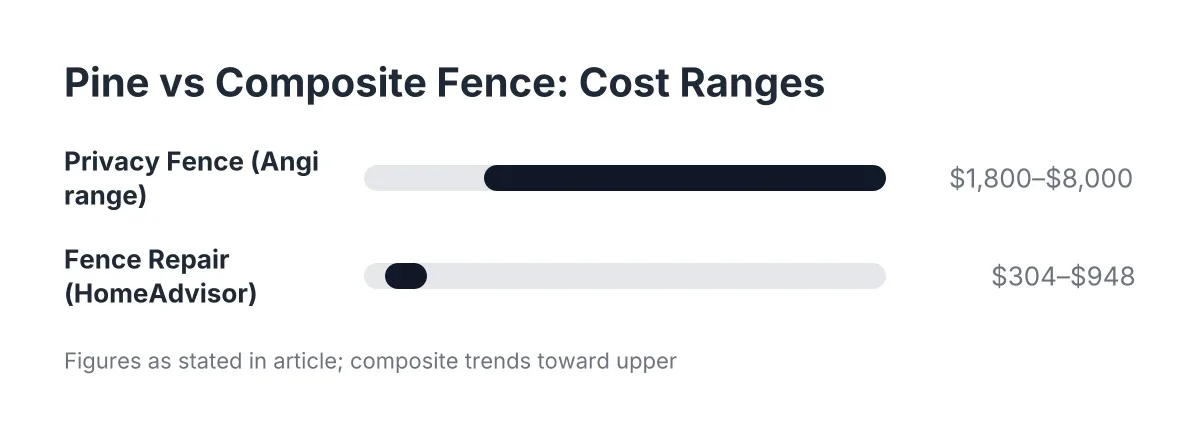
If your old fence is leaning, half the posts are soft, or a storm took out two sections, the sealing question connects directly to the repair-or-replace call. A fence repair makes sense when the damage is isolated: a couple of broken pickets, one cracked rail, one heaved post. According to HomeAdvisor, fence repair averages $618, with most homeowners spending between $304 and $948.
However, when multiple posts are rotted at the ground line, repair money is usually wasted money. New pickets screwed to failing posts buy you a season or two. A straight answer from a fence company should tell you which situation you are in, and a contractor who walks the line and probes each post at grade is giving you real information, not an upsell.
For a full fence replacement, the numbers run higher. Angi reports fence installation averages $3,277, with most homeowners paying between $1,860 and $4,843. NerdWallet puts professionally installed fences at $15 to $25 per linear foot on average, citing Angi data. A privacy fence costs more; Angi data shows privacy fence installation typically runs between $1,800 and $8,000, averaging $4,300. Pressure treated pine sits at the affordable end of those ranges, which is a big part of why it stays popular in 2026.
Suppose a homeowner in Parma loses 40 feet of a 15-year-old fence to a February windstorm. The downed sections look like the obvious problem, but a post-by-post check finds six more posts soft at grade. In that scenario, repairing the two sections might run several hundred dollars, while the remaining posts fail one storm at a time over the next few years. Replacing the full run once, then sealing it on schedule, costs more upfront but ends the yearly patch cycle that triggered the search in the first place.
One permit note for replacements: even when the new fence follows the old footprint, some Cleveland-area cities still want a fence permit on file, and rules differ suburb by suburb. Verify with your local building department before work starts rather than assuming a replacement is exempt.
A Note for Cleveland Landlords Managing Multiple Properties
For a small landlord with a handful of rental doors, sealing is a budget decision, not just a maintenance one. A pressure treated fence that gets a coat of stain every two to three years can outlast an unsealed one by years, which changes the math when you are phasing fence work across properties at $1,200 to $5,000 each.
A practical approach: install pressure treated pine at turnover, let it dry through its first season, then put sealing on the same schedule as other exterior maintenance. Chain link fence remains the lower-maintenance option for rentals where appearance matters less, since it never needs sealing at all. For street-facing yards where rent-ability depends on curb appeal, a sealed wood fence earns its keep. There is a reason sellers invest in exterior prep; a Zillow and Thumbtack analysis found sellers who hire professionals for pre-listing home prep, including curb-appeal landscaping, spend an average of $5,380. Fences are part of that first impression for prospective tenants too.
Solid-color stain is worth considering on rentals specifically. It hides mismatched boards after tenant damage or spot repairs, so the fence reads as uniform from the street even after years of piecemeal fixes.
Buying Smart: Lumber Choices That Reduce Sealing Headaches
The boards you start with affect how well sealing works later. Not all pressure treated lumber behaves the same as it dries, and a few selection habits at the lumberyard prevent warping problems no sealer can fix.
- Check the end grain on posts. Avoid boards where the heart, the center of the growth rings, sits at the edge of the board. That orientation twists and warps as the wood dries.
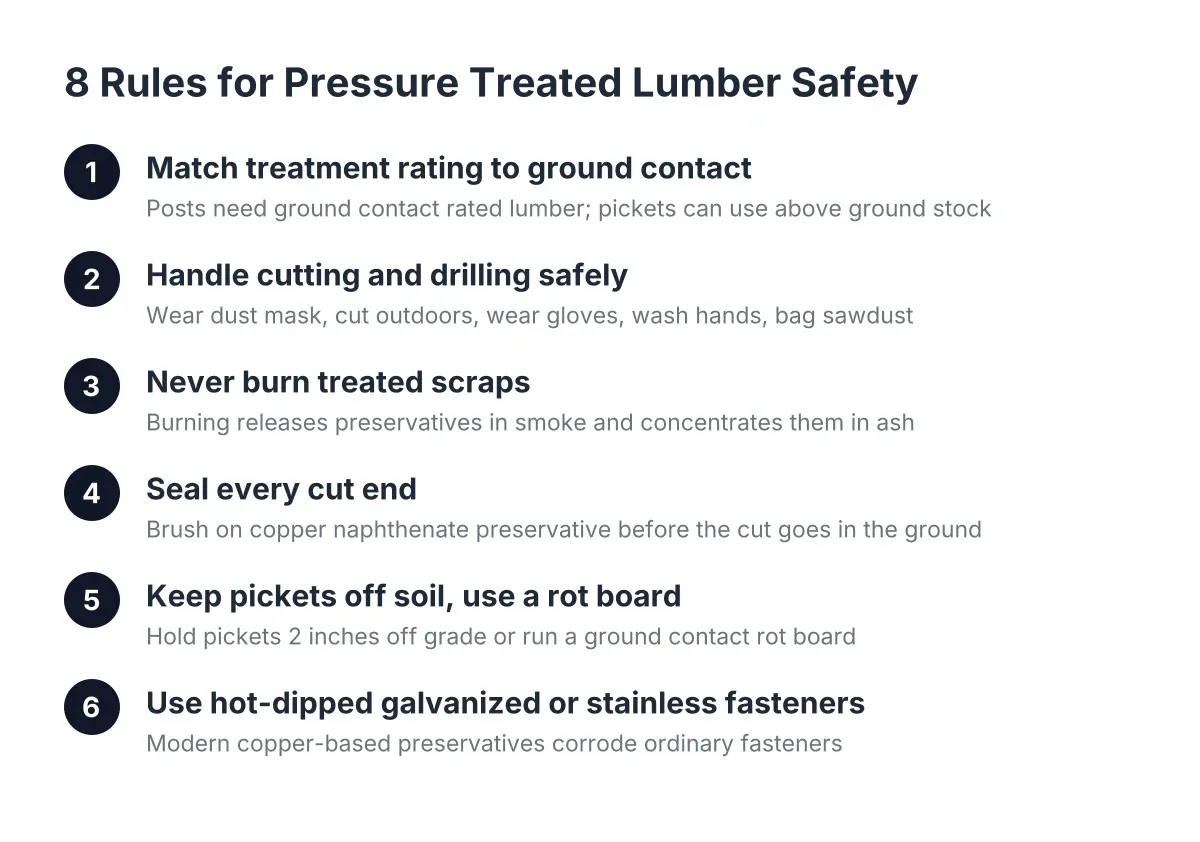
- Match the treatment rating to the job. Posts need ground-contact rated lumber. Pressure-treated lumber for fence rails and pickets can carry an above-ground rating, which costs less.
- Reject boards that are already cupped or twisted. Drying will make existing defects worse, never better.
- Treat every field cut. Any cut end exposes untreated interior wood. Brushing cut ends with a preservative keeps the protection continuous.
What does pressure treated pine look like when new? Usually it carries a green or brown tint from the treatment, sometimes with small incision marks on larger posts. That tint fades as the wood dries and weathers, which is another reason most homeowners end up staining; the fence looks better in a chosen color than in fading treatment green.
On cost, pressure treated pine pickets typically run a few dollars per board at retail, and treated posts somewhat more, though lumber prices move with the market. Compared with cedar, the treated pine fence saves meaningfully on materials for the same layout, with the trade-off that it needs that drying period and a sealing schedule to look its best. Cedar weathers more gracefully unsealed; pine rewards maintenance.
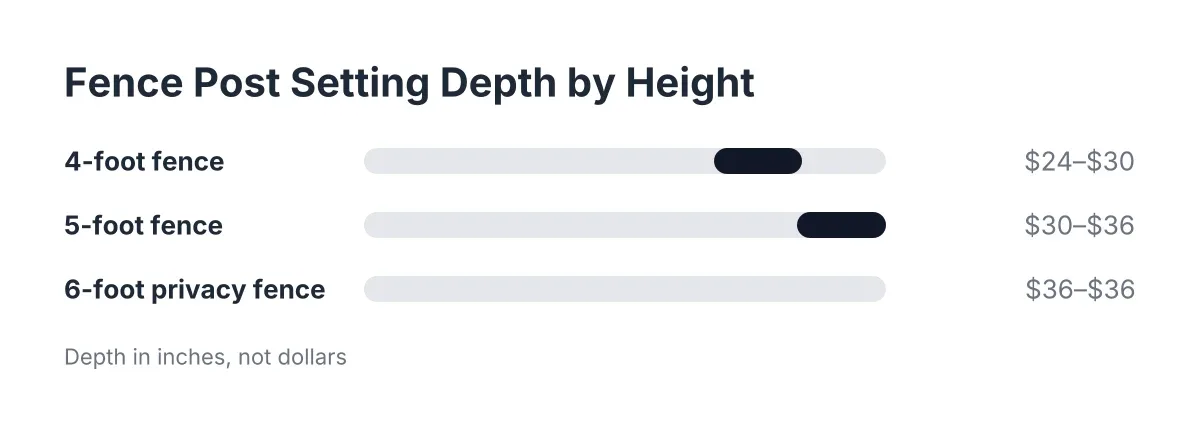
One honest limitation: sealing extends life, but it cannot save a fence built wrong. Posts set too shallow for Cleveland's frost depth will heave no matter what finish is on the pickets, and badly drained post holes rot from below. If your old fence failed structurally, have a professional assess why before the replacement goes in, so the new fence does not inherit the old problems.
The Sealing Schedule That Actually Protects a Treated Pine Fence
Here is the full answer to the question that brought you here, condensed into a working plan. Does pressure treated pine need to be sealed? Yes, if you want the fence to look good and last in Cleveland's freeze-thaw climate, but only after the wood has dried enough to accept the finish.
The schedule looks like this:
- At installation: no sealing. Let the treated wood dry. Expect some shrinkage and small gaps between pickets as moisture leaves the boards.
- After the first dry season, usually 3 to 12 months: run the water test. When water soaks in instead of beading, apply a penetrating oil-based semi-transparent stain to both faces of the fence.
- Every 2 to 3 years after: recoat, sooner on runs with heavy sun, sprinkler spray, or standing water.
- Every spring: walk the fence line. Probe posts at grade, check gate hinges, and catch small problems while they are still a cheap fence repair instead of a replacement.
That is the whole system. The treatment handles rot and insects; the stain handles water and sun; the annual walk-through catches everything else. A pressure treated pine fence maintained this way is the lowest-cost path to a wood fence that holds up in Northeast Ohio, which is why it stays the default recommendation for replacement fences and rental properties across the Cleveland, OH service area.
If you are replacing a failed fence this year, build the first staining into your plan and budget now, not as an afterthought next fall. The homeowners who end up replacing fences every ten years are usually the ones who skipped this step. The ones still happy with the same fence two decades later sealed it on schedule and fixed small problems early.
If you need fence installation, Cleveland Fence Installers can help.
Prefer to talk it through? Call (216) 465-0485 — a quick call is usually the fastest way to get a straight answer for your situation.