Cedar vs. Pressure Treated Pine Fence: Which Is Right for You?
If you are pricing a wood fence in Greater Cleveland, the choice usually comes down to cedar or pressure treated pine. The short answer in the cedar vs pressure treated pine fence debate: cedar wins if you want better looks and less warping and can pay more upfront, while pressure treated pine wins if you want the lowest installed cost and plan to stain it anyway. Both make a solid privacy fence when the posts are set right for our freeze-thaw ground. The wrong post depth kills either material faster than the wood choice does. Here is how the two stack up so you can commit with confidence.
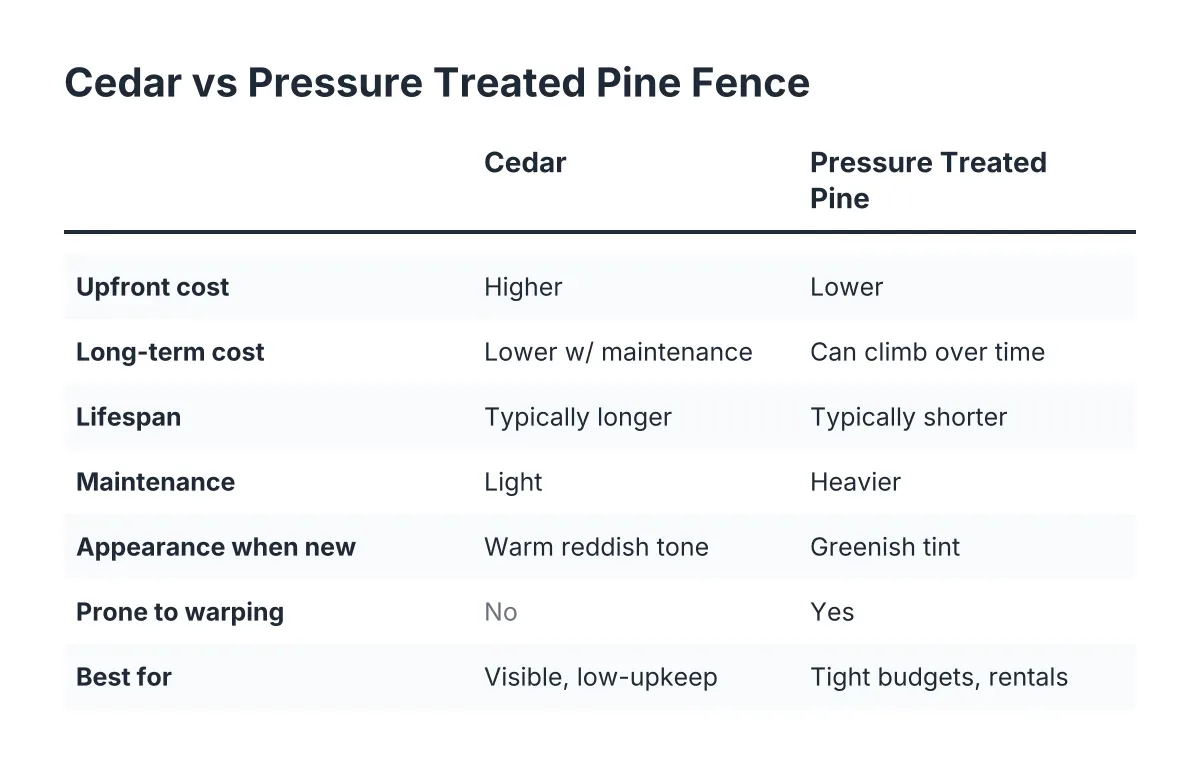
| Criterion | Cedar | Pressure Treated Pine Fence |
|---|---|---|
| Upfront cost | Higher, often the biggest line item in the quote | Lower, the budget-friendly wood option |
| Long-term cost | Lower if you keep up light maintenance | Can climb from staining, sealing, and board replacement |
| Lifespan | Typically longer when installed and maintained well | Typically shorter, though treated posts resist rot well |
| Maintenance | Light; a clear seal every few years keeps the color | Heavier; needs drying time, then stain or seal, repeated |
| Appearance | Rich natural color, straighter boards over time | Greenish tint when new, more prone to warping and checking |
| Best for | Visible fences, long-term owners, low-upkeep buyers | Tight budgets, rental properties, fences you plan to stain |
Cedar: Strengths and Trade-offs
Cedar is a softwood with natural oils that resist rot and insects without chemical treatment. That matters in Cleveland, where fence posts and bottom rails sit in wet ground for months at a stretch. Cedar also holds its shape better than pine. It shrinks and twists less as it dries, so you see fewer cupped boards and popped fasteners two summers after fence installation.
Where cedar shines is appearance and stability. The boards start with a warm reddish tone and weather to a soft gray if you leave them alone. If you want to keep the color, a clear sealer every few years does the job. Compared to pine, that is a lighter maintenance load over the life of the fence. For a privacy fence along a patio or a front-facing section on a tighter inner-ring lot, cedar is the material most homeowners point to and say "that one."
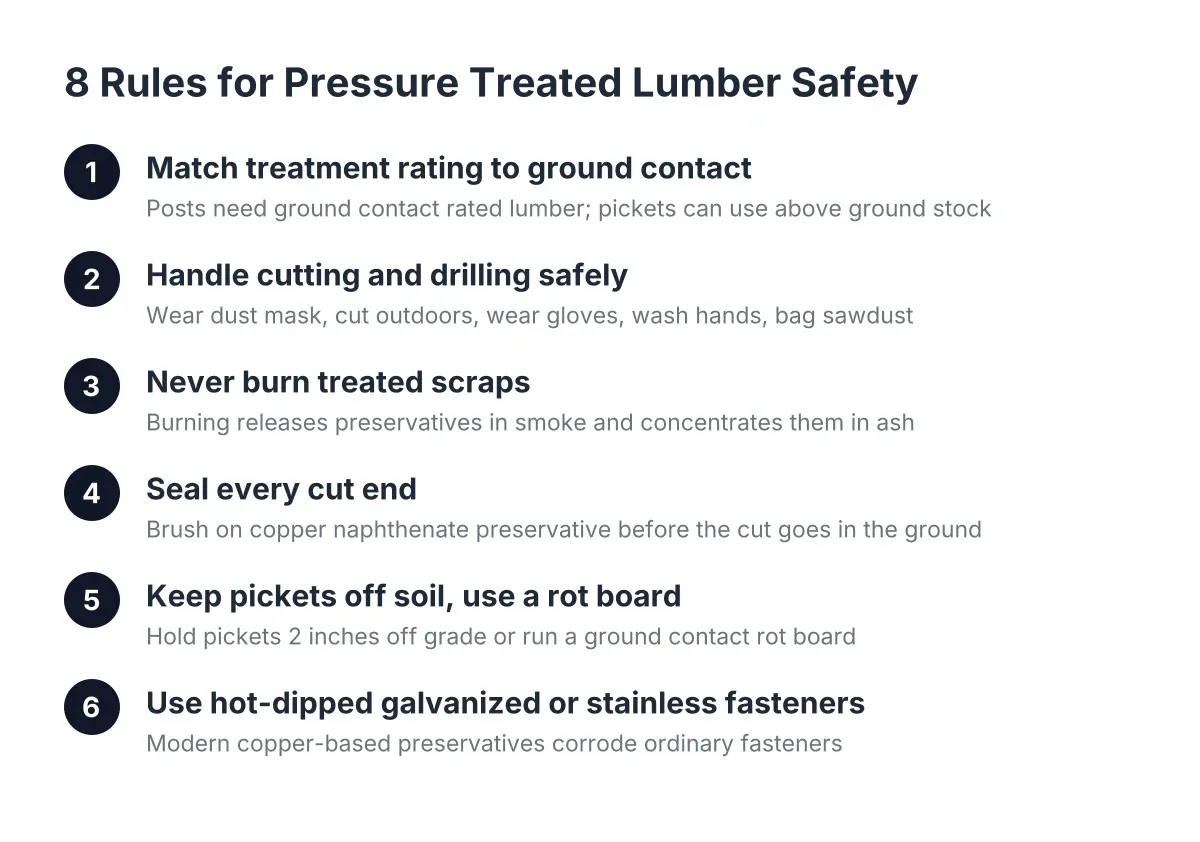
The trade-off is cost. Cedar runs meaningfully more than pressure treated pine for the same fence design, and on a long run of privacy fence that gap adds up fast. Cedar is also a softer wood, so it dents and scratches more easily. One practical note for our area: even on a cedar fence, many builds use pressure treated posts in the ground, because treated lumber handles direct soil contact and freeze-thaw moisture better at the post line. Ask about that combination when you get a free estimate; it is a common way to get cedar looks with treated-post durability.
Pressure Treated Pine Fence: Strengths and Trade-offs
Pressure treated pine is standard pine lumber infused with preservatives under pressure, which protects it from rot and insects. It is the workhorse of wood fence installation because it costs less than cedar and handles ground contact well. If your project is a long backyard run, a rental property, or a fence replacement where budget drives the decision, a pressure treated pine fence is the practical pick. The posts in particular are hard to beat for soil contact in wet, freeze-thaw ground like ours.
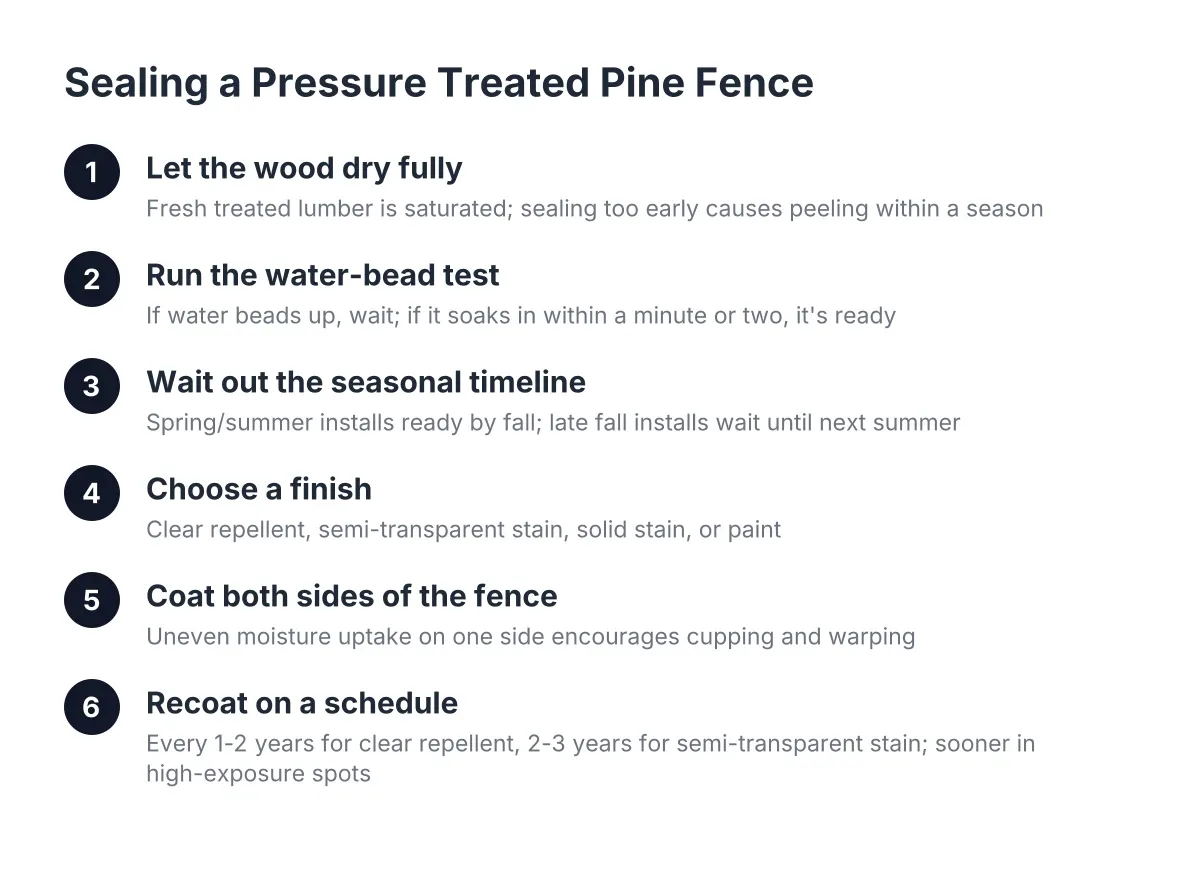
The trade-offs show up in looks and upkeep. New treated pine has a green or brown tint from the preservative, and the boards arrive wet from the treatment process. As they dry over the first several months, some boards warp, twist, or crack. You should also wait until the wood dries before staining or sealing, which means the fence looks unfinished for its first season. After that, plan on staining or sealing on a regular cycle to keep it from graying and checking.
None of that makes treated pine a bad fence. It makes it a fence that asks for more attention. Budget for stain and a weekend of work every few years, or accept the weathered gray look. Many homeowners do exactly that and are happy with the result. If the fence sits along the back of the lot where nobody studies it, the savings are hard to argue with.
Comparing Cost: Cedar vs Pressure-Treated Pine Fence
Cost drivers
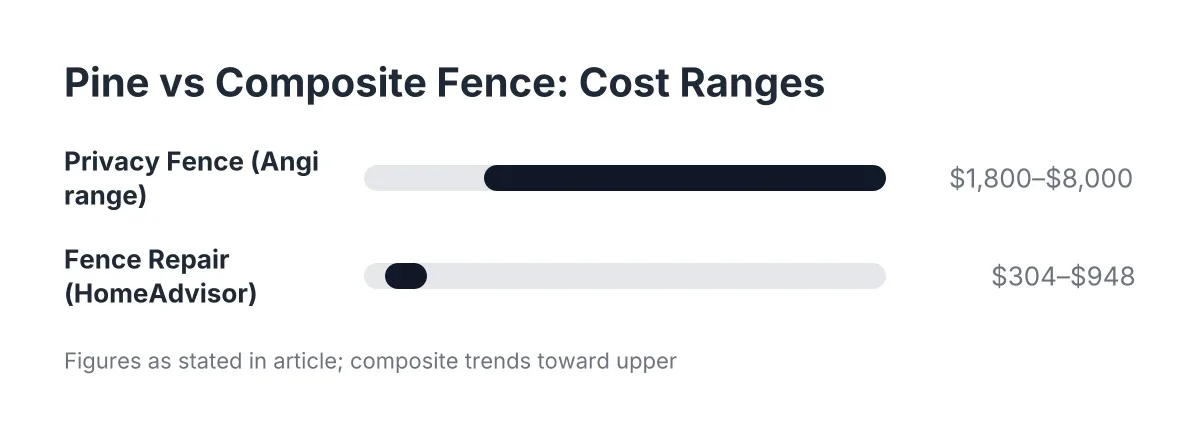
Pine wins on upfront cost, and cedar narrows the gap over time. The material itself is the main driver: cedar boards cost more than treated pine for the same style and height. Labor for fence installation is similar for both, since the posts, rails, and pickets go up the same way. Over the years, pine's staining and board replacement costs eat into its head start. On a short fence the difference is modest. On 200 feet of six-foot privacy fence, the upfront gap is real money, and that is usually what decides it.
Lifespan
Cedar typically lasts longer above ground, while treated pine holds its own at the post line. Cedar's natural oils resist rot without chemicals, and its stability means fewer failed boards along the way. Treated pine resists rot well too, but the drying and movement in the first year or two cause more board-level problems. In Cleveland, lifespan depends as much on installation as on species. Posts set below frost depth in well-drained holes survive freeze-thaw heaving; shallow posts fail no matter what wood sits on top of them.
Installation
Both materials install the same way, so the install itself should not drive your choice. Post layout, frost-depth footings, and gate installation work identically for cedar and pine. One difference worth knowing: treated pine arrives wet and heavy, and good installers account for shrinkage when spacing boards. Cedar arrives drier and more dimensionally stable, which makes tight board-on-board privacy fence patterns a little more predictable. Either way, the permit question comes first. Cleveland-area suburbs each handle fence permits differently, so check with your local building department before anyone digs.
Maintenance
Cedar asks for less, pine asks for more. Cedar can be left to gray naturally with no real penalty, or sealed every few years to hold its color. Treated pine should be stained or sealed after it dries, then re-coated on a regular cycle, or it grays, checks, and splinters sooner. If you know you will not keep up with staining, that honesty should push you toward cedar or toward accepting a gray pine fence from the start.
Situational fit
Match the wood to how long you will own the home and how visible the fence is. Staying ten-plus years with the fence in view from the kitchen window? Cedar's looks and lower upkeep pay off. Fencing a rental, a large back lot, or a property you may sell in a few years? Pine delivers the function at a lower cost. For fence replacement projects where the old fence failed at the posts, the species matters less than fixing the post setting that failed the first time.
Which Should You Choose?
Choose Cedar if:
- The fence is visible from your house, porch, or street and looks matter to you
- You plan to stay in the home long enough for lower upkeep to pay back the higher price
- You want a privacy fence with tight board patterns that stay straight
- You would rather pay more once than stain a fence every few years
Choose Pressure Treated Pine Fence if:
- Upfront cost is the deciding factor, especially on a long run
- You plan to stain or paint the fence anyway, so the green tint does not matter
- The fence serves a rental, a back lot line, or a property you may sell soon
- You are fine with regular sealing, or you can live with a weathered gray look
Still torn? A common middle path is pressure treated posts with cedar boards. You get treated lumber where it touches the ground and cedar where you see it. A fence company that works in Cleveland soil can price both options side by side in one free estimate so you compare real numbers, not guesses.
Common Questions
Do I need a permit for a wood fence in the Cleveland area?
Often yes, and the rules vary by city and even by fence height and placement on the lot. Older inner-ring neighborhoods with tight lot lines raise property-line questions that a fence permit process is designed to catch. Check with your local building department before setting a date, or ask your installer to walk you through the permit question for your specific address.
Which lasts longer in Cleveland's freeze-thaw climate?
Cedar typically outlasts pine above ground, but post setting matters more than species here. Freeze-thaw cycles heave shallow posts and crack concrete footings regardless of the wood on top. Set posts below frost depth with proper drainage, and either material gives you a long-serving fence. Skip that step, and neither will.
Can I mix the two materials?
Yes, and it is a smart combination. Pressure treated pine posts handle soil contact and moisture best, while cedar boards and rails give you the cleaner look and lower upkeep above ground. When you weigh cedar vs pressure treated pine fence options, this hybrid often lands at a price between the two with the strengths of both.
Does pressure treated pine need to be stained?
It does not need stain to resist rot; the treatment handles that. Stain or sealer protects it from sun and surface moisture, which slows graying, checking, and splintering. Let the wood dry for several months after installation first, then coat it and repeat on a regular cycle if you want it to keep its color.
If you need fence installation, Cleveland Fence Installers can help.
Prefer to talk it through? Call (216) 465-0485 — a quick call is usually the fastest way to get a straight answer for your situation.