Pressure Treated Pine vs. Untreated Lumber for Your Fence: Cost and Durability
If you just moved into a home with a wide-open backyard, you want a privacy fence up fast, and you want it to last. The first material question most homeowners hit is whether to use treated vs untreated wood for a fence. Untreated boards cost less at the register, so the comparison is tempting. This guide walks you through the tradeoff step by step, so you can spec a wood fence that survives Cleveland winters instead of rotting out in a few seasons.
Here is the short version: in-ground contact, wet springs, and freeze-thaw cycles punish untreated wood. Pressure treated pine costs more per board but holds up for years longer. Below is how to work through the decision for your own yard.
Step 1: Understand the Difference Between Pressure Treated and Untreated Wood
The difference between treated and untreated pine comes down to one process. Pressure treated pine is pine lumber placed in a sealed tank where preservative chemicals are forced deep into the wood fibers under pressure. Those preservatives resist rot, fungus, and wood-destroying insects. Untreated pine is the same species with no protection beyond whatever paint or stain you apply to the surface.
That matters for a fence because a fence lives outdoors full time. Posts sit in wet ground. Pickets catch rain, snow, and splash-back from the soil. Paint on untreated pine protects only the surface, and the moment it cracks or peels, moisture gets into bare wood and decay starts.
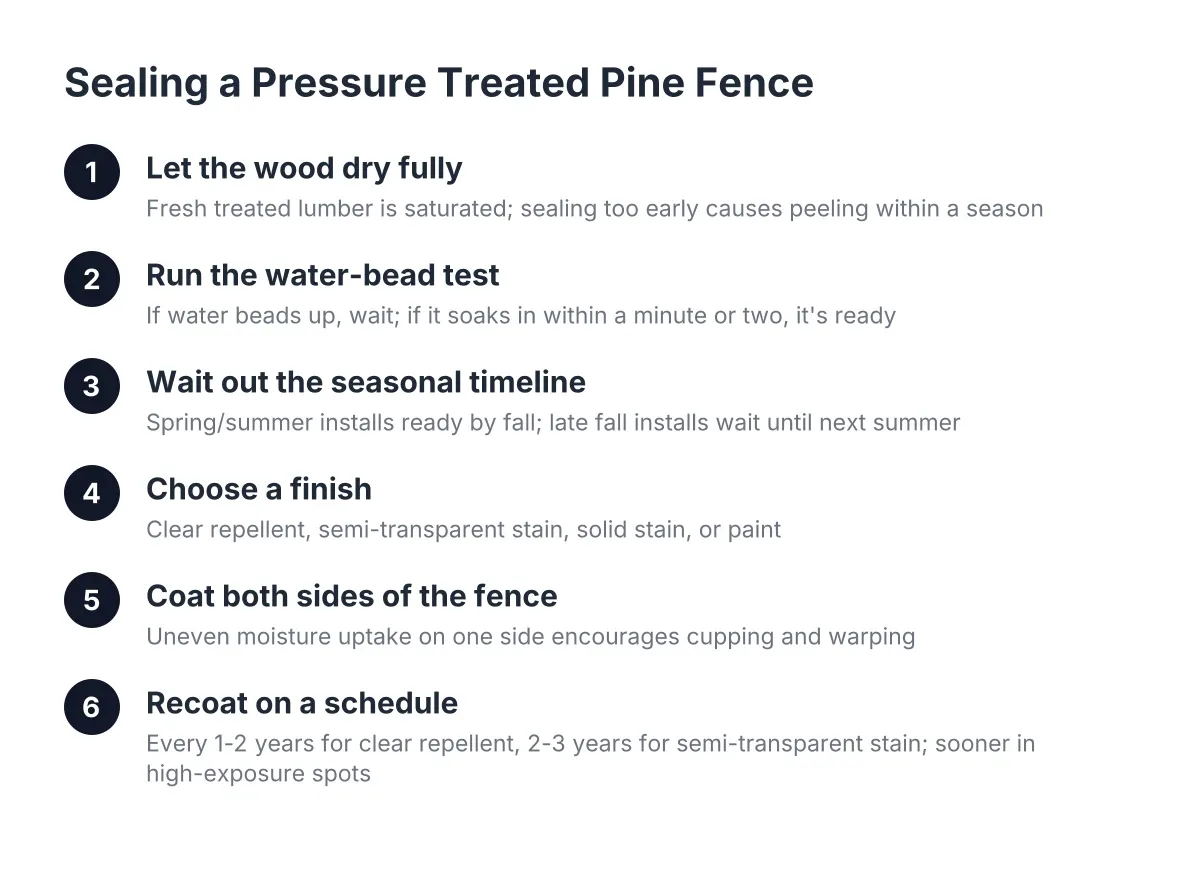
One thing to know before you build: because the treatment forces liquid deep into the wood, pressure treated pine can stay wet for months after installation. Plan to let it dry before you stain it. Oil-based stains tend to work well on pressure treated pine once it has dried out.
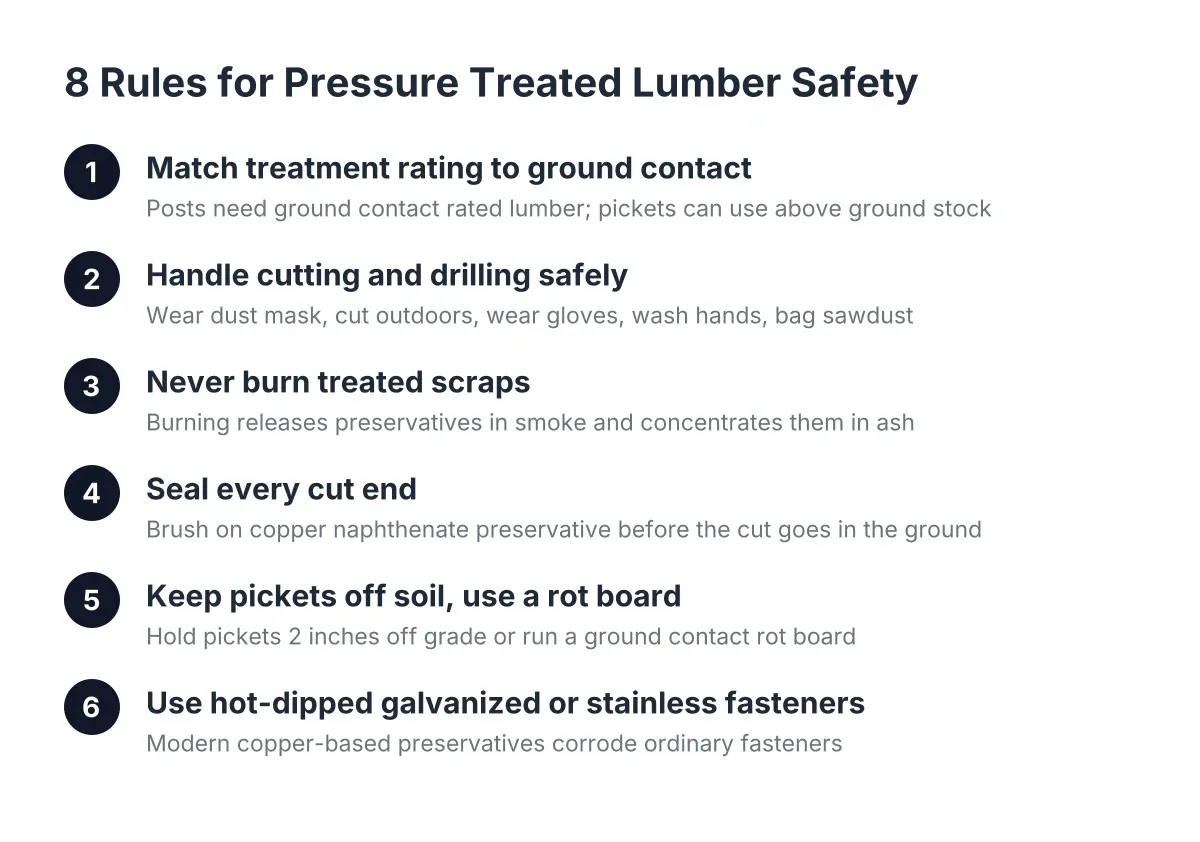
A common question is whether pressure treated pine is toxic. Modern residential treatments are copper-based and approved for use around homes, gardens, and play areas. The older arsenic-based formulas were phased out of residential lumber years ago. Basic precautions still apply: wear a mask when cutting, do not burn scraps, and wash your hands after handling fresh boards.
Step 2: Compare Upfront Cost Against Lifespan
Pressure treated pine costs more per board than untreated pine, but the gap is smaller than most homeowners expect, and the lifespan gap is much larger. When evaluating treated vs untreated wood choices, a rough illustration shows that if an untreated picket runs a dollar or two less than a treated one, you might save a few hundred dollars on a full backyard of material. Then the untreated fence starts failing years earlier, and you pay for fence repair or full fence replacement long before the treated version would have needed it.
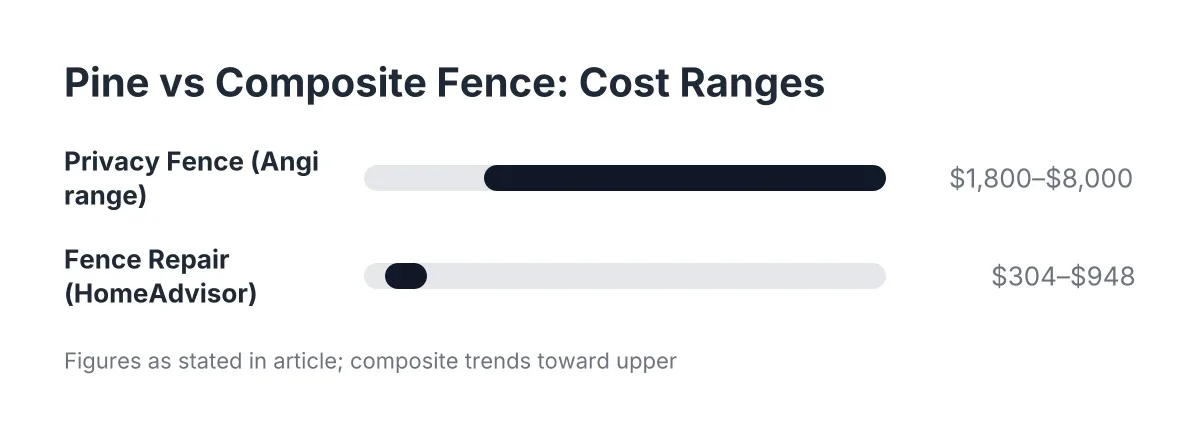
For context on what the full project costs, Angi reports that fence installation averages $3,277, with most homeowners paying between $1,860 and $4,843. For a privacy fence specifically, Angi data shows installation typically runs between $1,800 and $8,000, averaging $4,300. On a budget like that, the material premium for pressure treated lumber is a small share of the total. Labor to dig posts and hang panels costs the same either way, so saving on the wood and shortening the fence's life is a bad trade.
Repairs are not cheap either. According to HomeAdvisor, fence repair averages $618, with most homeowners spending between $304 and $948. An untreated fence in Northeast Ohio will generate those bills sooner and more often.
Step 3: Match the Material to Cleveland Ground Conditions and Choose Treated Wood Over Untreated
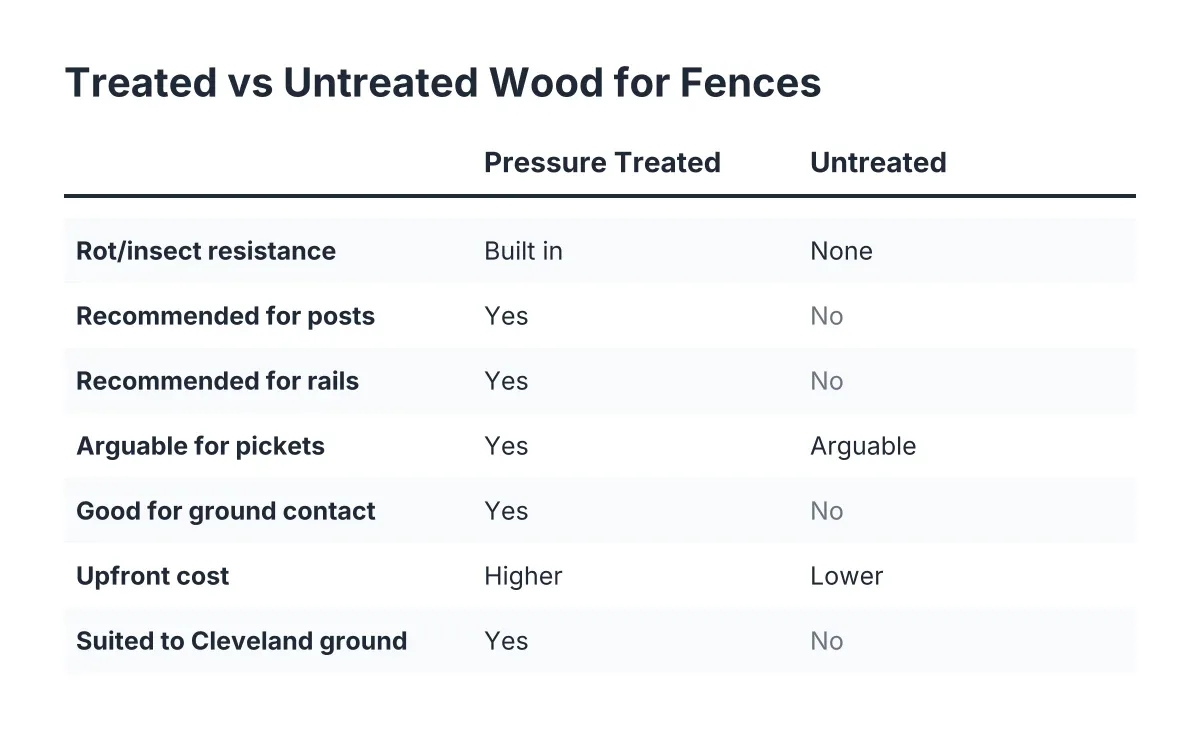
This is where the pressure treated versus untreated wood question stops being close. Cleveland's freeze-thaw cycles move the ground every winter and keep soil wet for long stretches of spring. Any wood that touches that ground needs rot and insect resistance built in, not painted on.
Work through your fence parts in this order:
- Posts: These go two to three feet into the ground. Use pressure treated lumber rated for ground contact, no exceptions. An untreated post in wet Cleveland soil is the fastest path to a leaning fence.
- Rails: Horizontal rails catch and hold water on their top edge. Pressure treated rails resist the rot that starts there.
- Pickets: Pickets mostly stay above grade, so this is the only spot where untreated wood is even arguable. It still is not worth it; splash-back and snow pile-up keep the bottom few inches wet for months.
- Rot board: A horizontal pressure treated board run along the bottom of the fence takes the ground contact so the pickets do not. If pooled water or snowbanks sit against your fence line, a rot board meaningfully extends picket life.
Even cedar fences, which resist rot naturally, typically get pressure treated pine posts and a pressure treated rot board for exactly this reason. The ground is the enemy, and treated pine handles it best for the money.
Step 4: Where Untreated Wood Still Makes Sense (and Why Not for Outdoor Fences)
Untreated pine has legitimate uses; a perimeter fence in Northeast Ohio is not one of them. Save untreated lumber for indoor projects, covered porch trim, or temporary structures where it never touches soil or sits in weather year round. For anything with posts in the ground, pressure treated wood or a naturally rot-resistant species like cedar is the baseline.
Suppose a homeowner in a new build on Cleveland's west side fences a 150-foot backyard with untreated pine pickets to shave the material bill. In that scenario, the bottom of the pickets starts graying and softening within a few seasons where snow piles against the fence, and spot repairs begin while a neighbor's pressure treated pine fence from the same year still looks sound. The savings disappear into maintenance, and the fence needs replacement years early.
One honest limitation on the other side: pressure treated pine is not maintenance-free. Treated posts can still warp or twist as they dry, especially boards cut so the center of the growth rings sits at the edge of the board. A good installer culls those boards before they go in the ground. Staining both faces of the fence once the wood dries also extends its life well beyond bare treated wood.
Step 5: Spec the Fence, Check the Permit, and Confirm Your Property Line
Once you have settled on pressure treated pine fencing, lock down the details before anyone digs.
- Choose your style. A standard flat-face privacy fence uses less picket material than board-on-board, which overlaps pickets and costs more in both material and labor for the same fence line.
- Pick stick-built or panels. Pressure treated wood fence panels install faster; stick-building lets the installer follow Cleveland's uneven lots and older grade changes more cleanly.
- Confirm the property line. If you just moved in and do not know exactly where your line sits, find your survey pins or order a survey before setting posts. Building on a neighbor's land creates the exact dispute you moved in hoping to avoid.
- Ask the permit question. Fence permit rules, height limits, and setback requirements vary by municipality across Greater Cleveland. Verify requirements with your local building department before scheduling installation; do not rely on what the previous owner or a neighbor did.
- Plan post setting for frost. Posts need to be set deep enough to handle freeze-thaw ground movement, with drainage in mind. This is where professional fence installation earns its cost; a heaved post ruins a straight fence line fast.
As of 2026, pressure treated pine remains the most affordable path to a solid wood privacy fence in this climate, and for professionally installed fences overall, NerdWallet reports average costs of $15 to $25 per linear foot, citing Angi data. If your lot has steep grade changes, buried utilities, or an unclear boundary, bring in a surveyor or an experienced fence company before you commit to a layout.
Choose pressure treated pine over untreated lumber for anything outdoors and in the ground, let it dry, stain both sides, and the fence that finally gives you privacy from the neighbors will still be standing straight a decade of Cleveland winters from now.
If you need fence installation, Cleveland Fence Installers can help.
Prefer to talk it through? Call (216) 465-0485 — a quick call is usually the fastest way to get a straight answer for your situation.