Pressure Treated Pine Fence Terms Explained: A Plain-English Glossary
If you are pricing a wood fence in Greater Cleveland, the quotes and product labels can read like a foreign language. This pressure treated pine fence glossary turns that jargon into plain English so you can read an estimate line by line, ask sharper questions, and spot a thin spec before you sign anything. Each entry starts with a short, standalone definition, then tells you why it matters to your project and your price. Skim the index below, then jump to the terms you keep running into.
- Pressure Treating: wood forced full of preservative
- Ground Contact Rated: treated to survive touching soil
- Above Ground Rated: lighter treatment, not for posts
- Retention Level: how much preservative is in the wood
- Incising: small slits that help treatment soak in
- Kiln Dried After Treatment (KDAT): re-dried wood that warps less
- Checking: surface cracks as wood dries
- Post Setting: how posts get anchored in the ground
- Frost Line: the depth the ground freezes in winter
- Heaving: posts pushed up by freezing soil
- Picket: the vertical boards you see
- Rail: the horizontal backbone boards
- Fastener (Hot-Dipped Galvanized or Stainless): hardware that will not corrode in treated wood
- Fence Permit: city sign-off before you build
- Property Line Survey: a map showing exactly where your land ends
- Linear Foot: how fence length gets measured and priced
- Tear-Out: removing the old fence first
- Gate Hardware: the hinges and latch that make a gate work
Wood and Treatment Terms in a Pressure Treated Pine Fence Glossary
These are the words you will see on lumber tags and in material lists. Most of the confusion in a pressure treated pine fence glossary starts right here, because treatment ratings decide how long the wood lasts, not just what it costs.
Pressure Treating
Pressure treating means forcing a liquid preservative deep into lumber inside a sealed tank so the wood resists rot and insects. Plain pine rots fast outdoors; treated pine can last decades. When a quote says "pressure treated pine," you are paying less than cedar but getting wood built to survive weather. If durability versus cost is your main question, see our comparison of pressure treated pine vs. untreated lumber.
Ground Contact Rated
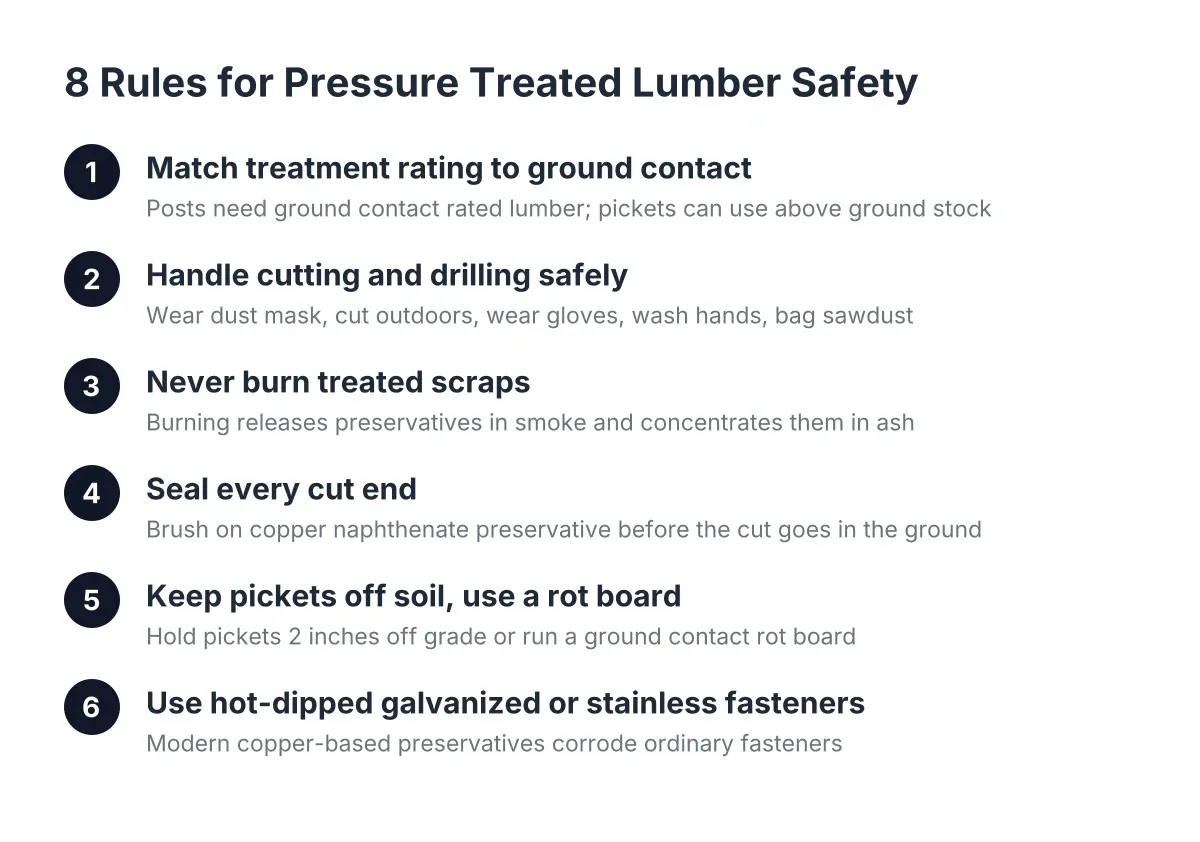
Ground contact rated means the lumber carries enough preservative to survive direct, long-term contact with soil. Fence posts sit in the ground, so they must be ground contact rated or they will rot at the soil line years early. This is one of the first things to check on any wood fence quote. If the estimate does not say which rating the posts carry, ask.
Above Ground Rated
Above ground rated means the wood has a lighter dose of preservative meant for parts that never touch soil, like pickets and rails. It costs less than ground contact lumber, and that is fine where it belongs. The problem is when a low bid quietly uses above ground lumber for posts. That shortcut saves money now and costs you a leaning fence later.
Retention Level
Retention level means the amount of preservative left in the wood after treatment, usually printed on the tag stapled to each board. Higher retention equals better protection against rot and bugs. You do not need to memorize the numbers; you need to know the tag exists. A fence company that can tell you the retention level of your posts is paying attention to the details that decide lifespan.
Incising
Incising means cutting shallow slits into lumber before treatment so the preservative soaks in deeper. You will see it as rows of small marks on the wood surface. Some buyers think incised posts are damaged; they are not. The marks mean the treatment reached further into the board, which matters most for posts buried in wet Cleveland soil.
Kiln Dried After Treatment (KDAT)
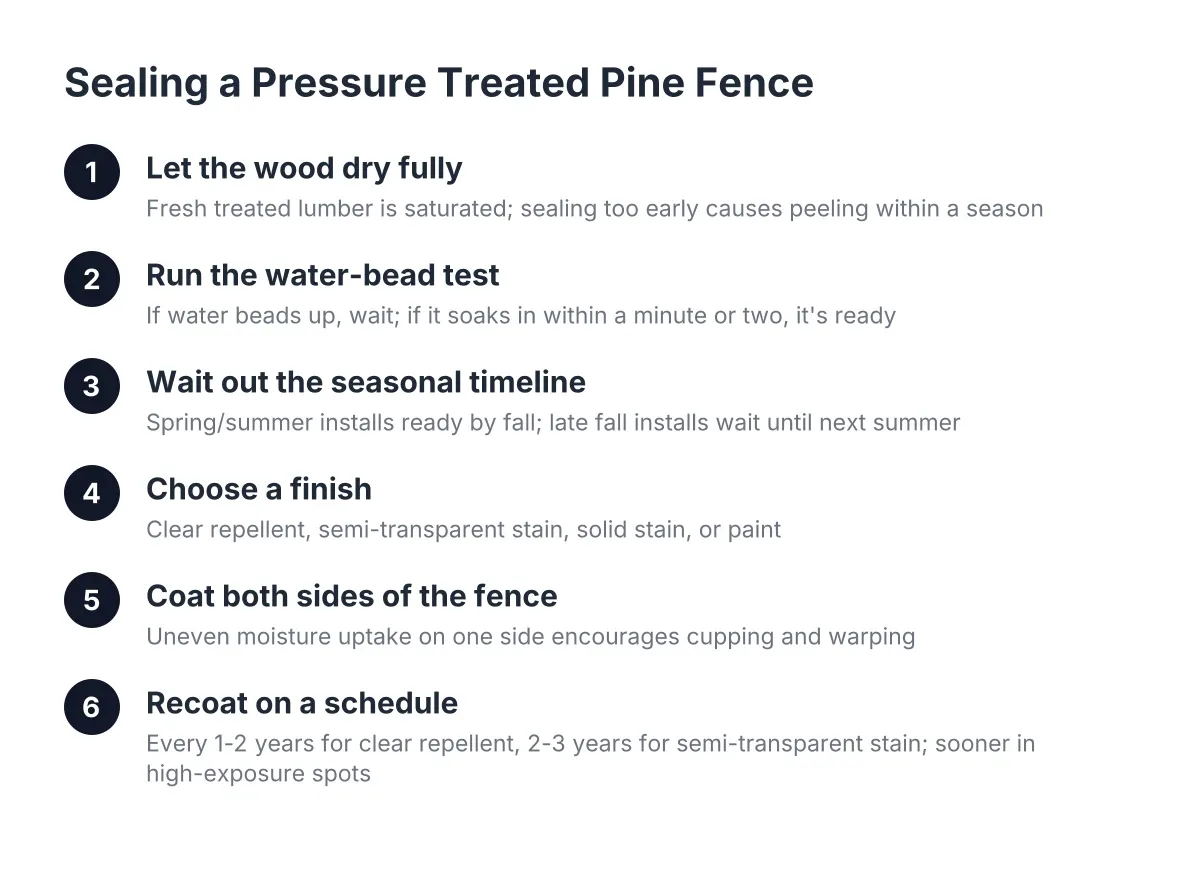
KDAT means the lumber was dried in a kiln after pressure treating, so it arrives with far less moisture inside. Fresh treated pine is wet and heavy, and it shrinks and twists as it dries in your yard. KDAT wood costs more but warps less and takes stain sooner. If straight, clean lines matter to you, ask whether KDAT is an option.
Checking
Checking means the small surface cracks that appear as treated wood dries out in the sun. Some checking is normal in any pressure treated pine fence and does not weaken the structure. Deep splits that run through a board are a different story and worth flagging during repair or warranty talks. Knowing the difference keeps you from panicking over cosmetic cracks or ignoring real damage.
Installation and Site Terms
These terms describe what happens in your yard. In Cleveland, freeze-thaw ground movement makes the installation details matter as much as the lumber.
Post Setting
Post setting means the method used to anchor fence posts in the ground, most often digging a hole and filling it with concrete or packed gravel. The setting method and depth decide whether your fence stays straight through Cleveland winters. A quote should say how deep the posts go and what fills the hole. If it does not, that is your first question on the phone.
Frost Line
The frost line is the depth the ground freezes in winter, which varies by region. Posts set shallower than the frost line can get pushed around when the soil freezes and thaws. In Northeast Ohio, that cycle happens every year, so post depth is not a place to cut corners. Your local building department can tell you the accepted depth for your area.
Heaving
Heaving means the ground pushing a fence post upward as the water in the soil freezes and expands. A heaved post lifts, tilts, and drags the fence panels with it. It is the most common reason older Cleveland fences lean after a hard winter. Proper post depth and drainage during fence installation are the defense.
Picket
A picket is one of the vertical boards that forms the visible face of a wood fence. Picket width, spacing, and thickness drive both the look and the price. Pickets butted tight together give you a privacy fence; gaps give you airflow and a lower lumber bill. When comparing quotes, check that both list the same picket thickness, because thin pickets cup and crack sooner.
Rail
A rail is one of the horizontal boards that runs between posts and holds the pickets. Most fences use two or three rails per section. Three rails cost more but keep a six-foot privacy fence from sagging in the middle. If two quotes differ in price, count the rails before you assume one company is just cheaper.
Fastener (Hot-Dipped Galvanized or Stainless)
A hot-dipped galvanized or stainless fastener is a nail or screw coated or made to resist the corrosive chemicals in treated lumber. Regular steel fasteners corrode fast in pressure treated wood, leaving black streaks and loose boards. Hardware is a small line on the estimate and a big factor in how the fence ages. Ask what fasteners the crew uses; a good answer takes ten seconds.
Pricing and Paperwork Terms
Fence Permit
A fence permit is written approval from your city or township to build a fence of a given height and location. Many Cleveland-area communities require one, and rules differ block to block, especially in older inner-ring neighborhoods with tight lot lines. Do not assume; verify with your local building department before work starts. A fence company that raises the permit question early is protecting you, not slowing you down.
Property Line Survey
A property line survey is a measured map, prepared by a surveyor, showing exactly where your land ends. Fences built even a few inches over the line can trigger disputes or forced removal. On older Cleveland lots, the existing fence is often not on the true line. If there is any doubt, a survey before fence installation is cheaper than a fight after.
Linear Foot
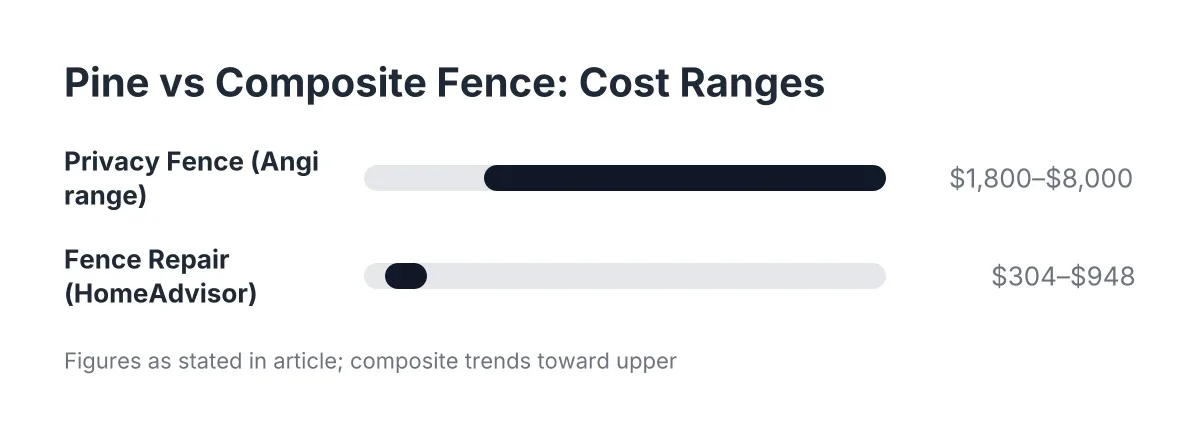
A linear foot means one foot of fence length measured along the ground, and it is the standard unit fence quotes use. A 150-foot yard priced per linear foot lets you compare bids directly. Just make sure each quote covers the same height, material, and post spacing, or the per-foot numbers mislead you. Gates are usually priced separately from the linear footage.
Tear-Out
Tear-out means removing and hauling away your old fence before the new one goes in. It is a normal line item on a fence replacement quote, covering labor, disposal, and sometimes breaking out old concrete footings. If a quote skips tear-out, ask who removes the old fence and where the debris goes. Surprise disposal costs are an avoidable argument.
Gate Hardware
Gate hardware means the hinges, latch, and any drop rod or spring that make a gate open, close, and lock. Gates fail before fences do because they move every day, so hardware quality matters more here than anywhere else. Heavier hinges and a self-closing latch cost a little more during gate installation and save repair calls later. Ask what hardware is included before you compare gate prices.
Using These Terms in Your Pressure Treated Pine Fence Glossary
What this pressure treated pine fence glossary gives you is the vocabulary to read a quote line by line instead of just looking at the bottom number. You can now ask about post rating, depth, rails, and hardware, and you will understand the answers. If you are still weighing wood types, our guide to cedar vs. pressure treated pine walks through that choice, and a free estimate can put real numbers on your yard.
If you need fence installation, Cleveland Fence Installers can help.
Prefer to talk it through? Call (216) 465-0485 — a quick call is usually the fastest way to get a straight answer for your situation.