Why Pressure Treated Pine Pickets Fail in Ohio Winters and How to Prevent It
Cleveland winters are hard on wood fences. Pressure treated pine pickets resist rot and insects, but Ohio's freeze-thaw cycles, wet springs, and lake-effect snow can still crack, warp, and loosen them if the fence is built or maintained the wrong way. This FAQ covers why pressure treated pine fails here, how to prevent it, and what to expect on cost and process if you are replacing a storm-damaged fence or fencing a new yard for the first time. Understanding how to avoid pine picket winter damage is essential for long-lasting fence performance.
Why do pressure treated pine pickets fail in Cleveland winters?
Pressure treated pine pickets fail in Cleveland mostly from moisture cycling, not from rot alone. The treatment chemicals protect against decay and insects, but they do not stop the wood from absorbing water, freezing, and expanding. Repeated freeze-thaw cycles open checks and cracks, pull fasteners loose, and warp boards that were installed wet. Pine picket winter damage occurs when this combination of moisture and freezing temperatures overwhelms the treatment's protective capacity.
In addition, the posts are usually the real failure point. A fence can look fine above ground while the posts rot or heave at the soil line. Cleveland's freeze-thaw ground movement pushes on posts every winter, and a post that shifts takes the pickets and rails with it.
Preventing winter damage in pressure treated pine pickets and posts
No. Pressure treatment protects pressure treated pine pickets from rot and insect damage, not from warping, cracking, or twisting. Because the treatment forces chemicals deep into the wood, the boards can stay wet for months after installation. As that moisture leaves, the wood moves.
That is why board selection and installation details matter so much. For example, lumber where the heart of the growth rings sits at the edge of the board is more prone to twisting as it dries. A careful installer culls those boards instead of nailing them up.
How do you prevent pressure treated pine picket winter damage and failure?
Prevention comes down to drainage, drying, and fasteners. Keep the wood away from standing water, let it dry before sealing, and use hardware that holds through seasonal movement. A fence built with these details handles Ohio winters far better than one slapped together in a weekend.
Here is what makes the biggest difference:
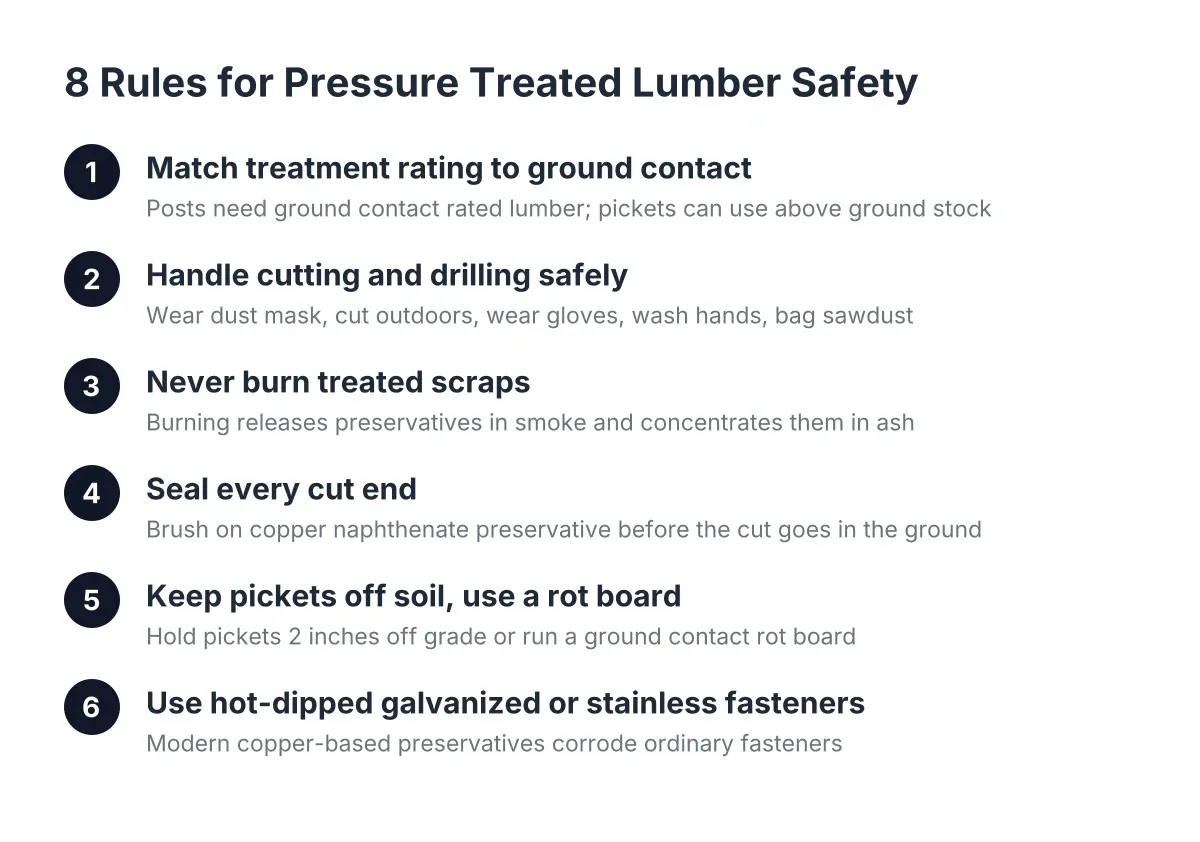
- Set posts below the frost line so freeze-thaw ground movement cannot heave them.
- Avoid trapping moisture against posts; concrete backfill can hold water against the wood and speed up rot, so drainage matters more than most homeowners think.
- Keep pickets off the ground. A rot board along the bottom takes the soil contact and pooled water so the pickets do not wick moisture up.
- Use galvanized or stainless fasteners rated for treated lumber; the treatment chemicals corrode standard hardware.
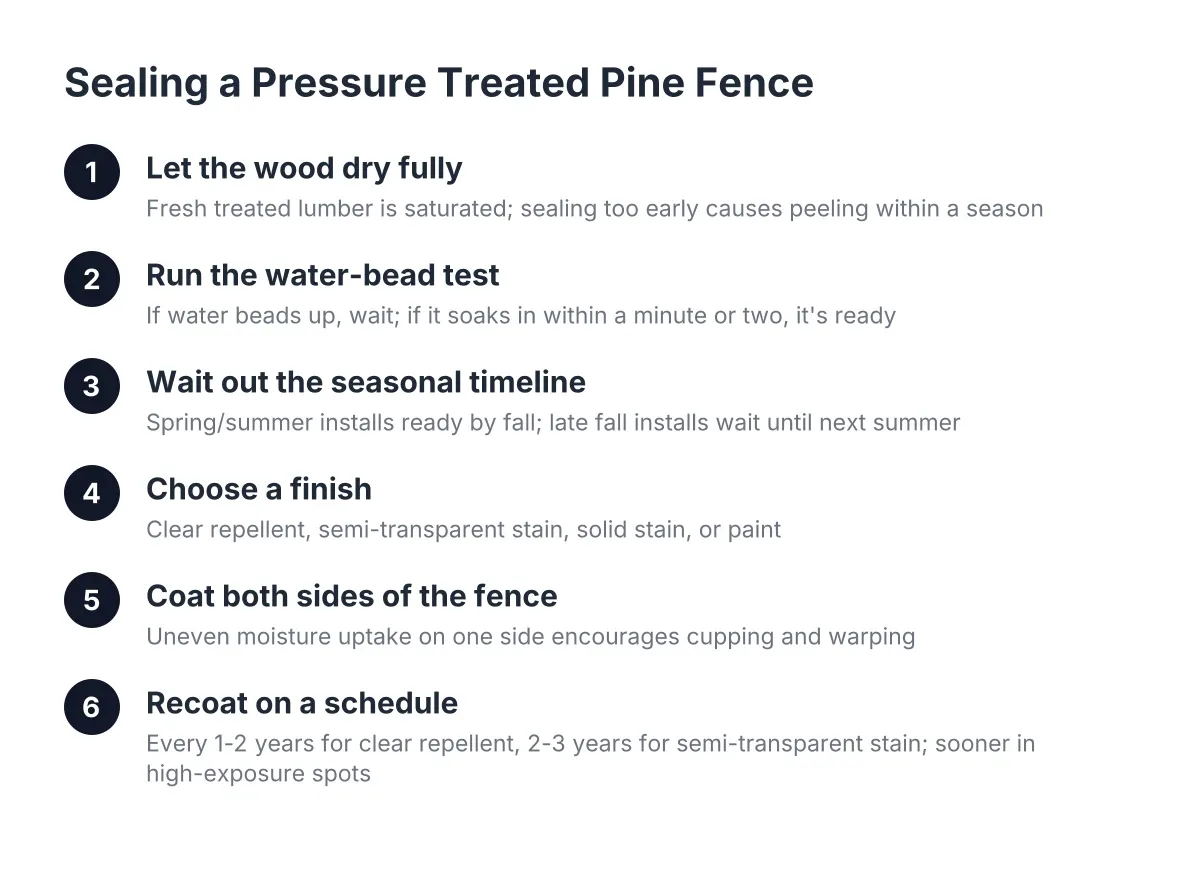
- Let the wood dry for weeks or months, then seal or stain it before its first full winter.
Should you stain or seal pressure treated pine before winter?
Yes, but not right away. Treated pine arrives wet from the treatment process, and stain or sealer will not absorb into saturated wood. Let the fence dry until water no longer beads on the surface, then apply a water-repellent sealer or stain before the freeze-thaw season starts. Preventing pine picket winter damage through proper sealing is one of the most cost-effective maintenance steps a homeowner can take.
Oil-based stains work well on pressure treated pine and on older, weathered fences because they penetrate the wood instead of sitting on top. Treated pine does not need paint to survive; a penetrating stain or clear sealer every two to three years does more for winter durability than a coat of paint that cracks and peels.
Is pressure treated pine a good choice for a privacy fence in Cleveland, OH?
Pressure treated pine is the most common choice for a privacy fence in Cleveland, OH, and for good reason. It is affordable, widely available, and treated to resist the rot and insects that kill untreated wood fast in our wet climate. Built correctly, a pressure treated pine fence handles Ohio winters for many years.
The trade-off against cedar is appearance and movement. Cedar stays straighter and silvers evenly, but it costs more per picket. Many Cleveland homeowners who compare cedar vs pressure treated pine pickets land on treated pine for budget, then protect it with a rot board and regular stain. Pressure treated wood for privacy fence builds also works in horizontal designs, though a pressure treated pine horizontal fence needs a mid-span vertical stay to keep long boards from bowing over time.
What does a pressure treated pine fence cost to install in 2026?
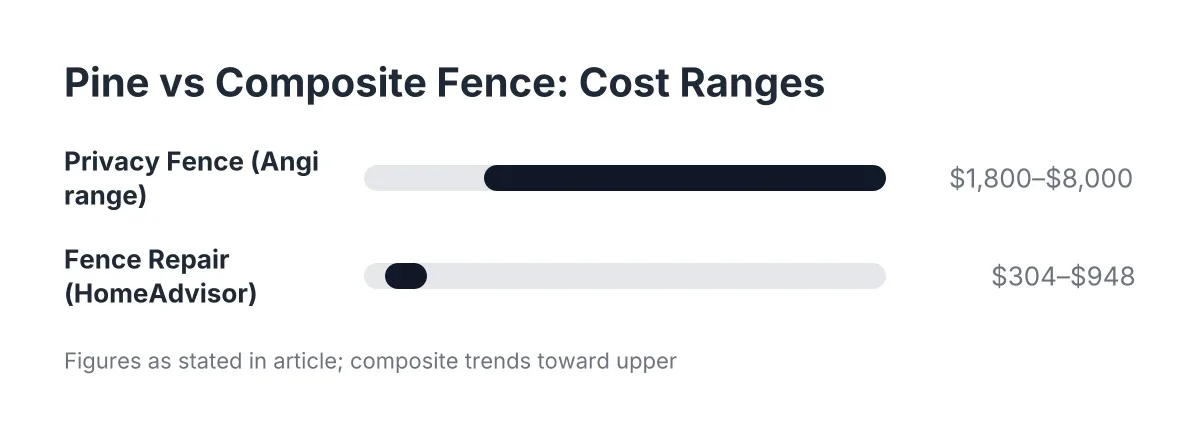
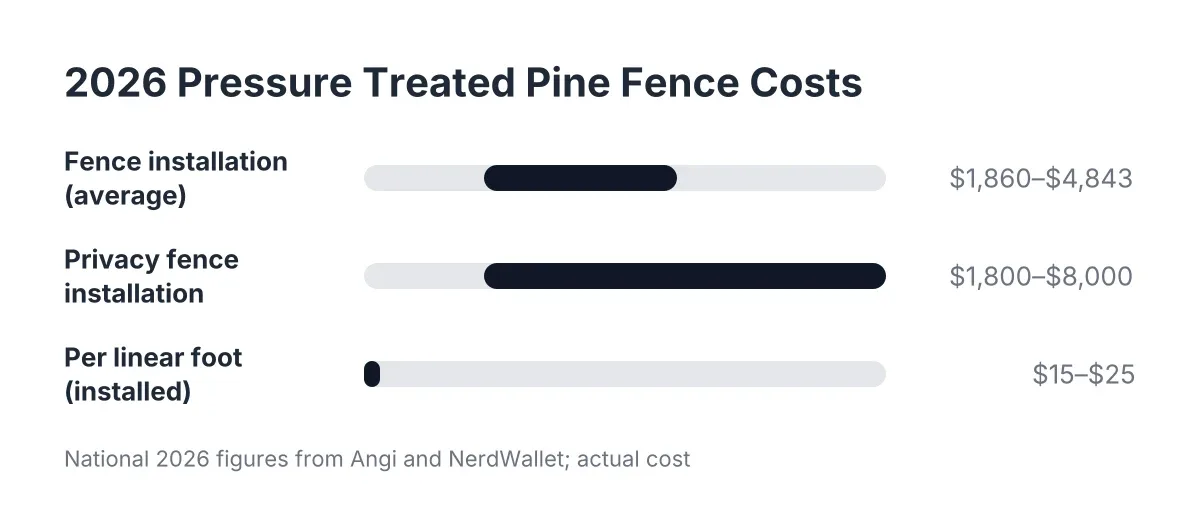
National figures give you a realistic starting range for 2026. According to Angi, fence installation averages $3,277, with most homeowners paying between $1,860 and $4,843. For taller privacy builds, Angi data shows privacy fence installation typically runs $1,800 to $8,000, averaging $4,300.
Per foot, NerdWallet reports professionally installed fences cost $15 to $25 per linear foot on average, citing Angi data. Your actual number in Greater Cleveland depends on fence height, picket style such as dog ear or french gothic, gate installation, terrain, and whether old fence removal and haul-away are included. A written quote should spell each of those out.
Should you repair a winter-damaged fence or replace it?
Repair makes sense when damage is limited to a few pickets or rails and the posts are still solid and plumb. HomeAdvisor reports fence repair averages $618, with most homeowners spending between $304 and $948. Replacement makes sense when posts are rotted at the grade line or multiple sections lean, because new pickets on failing posts is money wasted.
Suppose a storm drops a limb on two sections of a 12-year-old fence in Old Brooklyn. If the posts in those sections snapped but the rest of the fence stands straight, a section repair is honest work. However, if you can rock most of the posts by hand, you are patching a fence that is already gone, and fence replacement is the cheaper path over the next five years.
Do you need a fence permit for a replacement in Cleveland, OH?
Possibly, even if the footprint does not change. Permit rules vary by municipality across Greater Cleveland, and some cities treat a full fence replacement as new construction while others do not. Height limits, setbacks, and corner-lot sight lines can also apply.
Therefore, verify with your local building department before work starts, especially on older inner-ring lots with tight property lines. A good fence company will walk you through the permit question for your specific city rather than guessing. Do not rely on what was allowed when the old fence went in; rules change.
When should you call a pro instead of doing it yourself?
Call a pro when posts are involved. Swapping a handful of pressure treated pine pickets is a fair DIY job; digging posts below the frost line, setting them plumb in heaving clay, and squaring long runs on a sloped Cleveland lot is not. Bad post work is the number one reason fences lean within a few winters.
Also call now, not in spring, if a fence section is down and a dog or small kids could get out, or a leaning run could fall on a neighbor's property. Professional fence installation includes layout, post setting, rails, pickets, gate installation, and cleanup; old fence tear-out and haul-away are sometimes extra, so confirm it in writing.
How do you pick a fence installer for a treated pine fence?
Ask three questions before you sign anything. First, how deep do you set posts, and what backfill do you use for drainage? Second, does the quote include tear-out, haul-away, permit handling, and a rot board, or are those extras? Third, what fastener type do you use with treated lumber?
A fair quote lists linear footage, height, picket style, gate count, and every included item. Vague one-line quotes are where surprise charges hide. If you are weighing materials or repair vs replacement, a walk-through with an installer who builds for Cleveland's actual soil and winters beats guessing from a big-box aisle. Cleveland Fence Installers offers a free estimate across the Greater Cleveland service area and gives straight answers on cost, permits, and whether your fence is worth saving.
If you need fence installation, Cleveland Fence Installers can help.
Prefer to talk it through? Call (216) 465-0485 — a quick call is usually the fastest way to get a straight answer for your situation.