Post Setting Depth for a Pressure Treated Pine Fence in Cleveland Soil
You just moved into a house with a wide open backyard, and the lack of privacy hit you the first weekend. Before you price panels and pickets, there is a less visible decision that decides whether your new fence stands straight in five years: fence post setting depth. For a pressure treated pine fence in Cleveland, the depth you set each post matters more than the brand of lumber on the rack. Cleveland's ground freezes, thaws, and moves. A post set too shallow gets pushed up and tilted a little more every winter, and the fence above it leans with it.
This guide explains why Cleveland soil is hard on fence posts, how deep posts need to go for different fence heights, and what a proper post setting actually looks like from hole to backfill. If you are planning a privacy fence to block sightlines from a neighbor, or a safety fence around a pool or play yard, the depth question comes first. Everything else is built on it.
Why Cleveland Ground Moves, and Why Your Fence Cares
Northeast Ohio winters do something specific to the soil. Water in the ground freezes, and when water freezes it expands. That expansion pushes upward on anything buried in the frozen layer, including fence posts and the concrete around them. The trade calls this frost heave.
Then spring comes. The ground thaws, softens, and settles back down, but not evenly. A post that got lifted half an inch in January does not always drop back into the same spot in April. Repeat that cycle every year and a shallow post walks its way up and out of plumb. The fence starts to lean, gates stop latching, and panels pull apart at the rails.
Clay-heavy soil, which is common across much of Greater Cleveland, makes this worse. Clay holds water, and wet soil heaves harder than dry soil. Older inner-ring neighborhoods with tight lot lines add another wrinkle: there is often less room to work, and the fence usually runs close to driveways and downspouts where water collects.
The fix is not a thicker post or a fancier picket. The fix is getting the bottom of the post below the layer of ground that freezes, so the frost has nothing to grab and lift.
How Deep Should You Set Fence Posts for Optimal Setting Depth?
For a 6-foot privacy fence in the Cleveland area, plan on setting posts at least 36 inches deep, and deeper is better in wet or clay soil. The working rule is to bury one third of the total post length and to get below the local frost line. A 6-foot fence typically uses a post around 9 feet long for that reason.
Here is how that rule plays out by fence height:
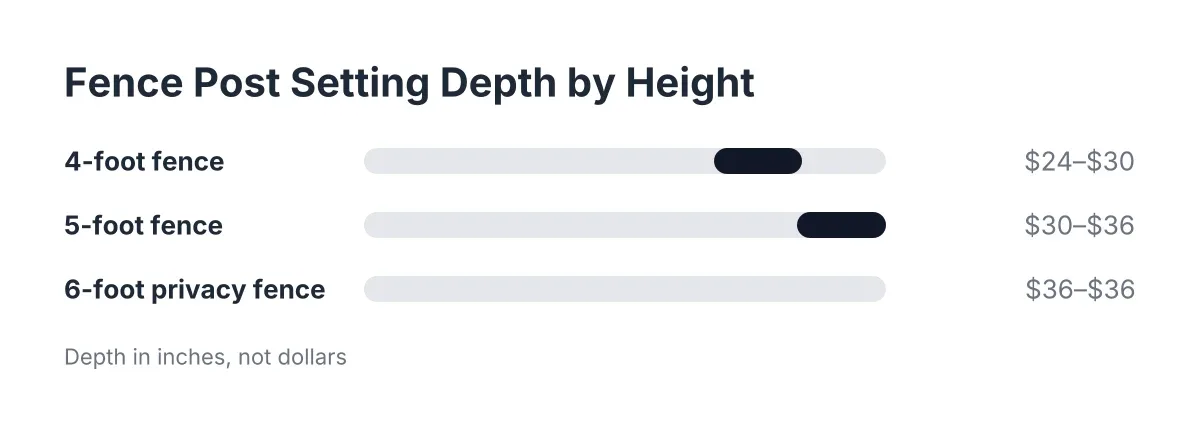
- 4-foot fence (common for chain link fence or a pool enclosure): posts set about 24 to 30 inches deep, with the deeper end of that range for Cleveland frost.
- 5-foot fence: posts set about 30 to 36 inches deep.
- 6-foot privacy fence: posts set 36 inches deep at minimum, which also clears the frost depth in most Northeast Ohio ground.
- Gate posts at any height: go to the deep end of the range, because gates put constant swinging load on two posts instead of spreading it across a whole line.
Two things drive those numbers. First, the frost line: the bottom of the post and its concrete footing must sit below the depth where the ground freezes, or frost heave will lift it. Second, leverage: a 6-foot privacy fence is a solid wall that catches wind off Lake Erie like a sail. The taller and more solid the fence, the more the wind pries on each post, and the more depth it takes to resist that force.
Note that frost depth is not a single number for every lot. It varies with soil type, moisture, and exposure. Your local building department can tell you the frost depth used for footings in your city, and that is worth confirming before anyone digs. It is also one reason the fence permit question and the post setting depth question tend to come up together in Cleveland.
Pressure Treated Pine Underground: Why It Is the Right Post Material for Setting Depth
The depth rule explains where the post goes. The material question explains why pressure treated pine is the standard choice for the part of the fence that lives underground.
A fence post spends its life in the wettest, dirtiest part of the yard: buried in soil, surrounded by concrete, cycling between frozen and soaked. Untreated wood rots fast in that environment. Cedar resists rot better than untreated pine, but ground contact is still its weak point, which is why many cedar fences in this region ride on pressure treated pine posts.
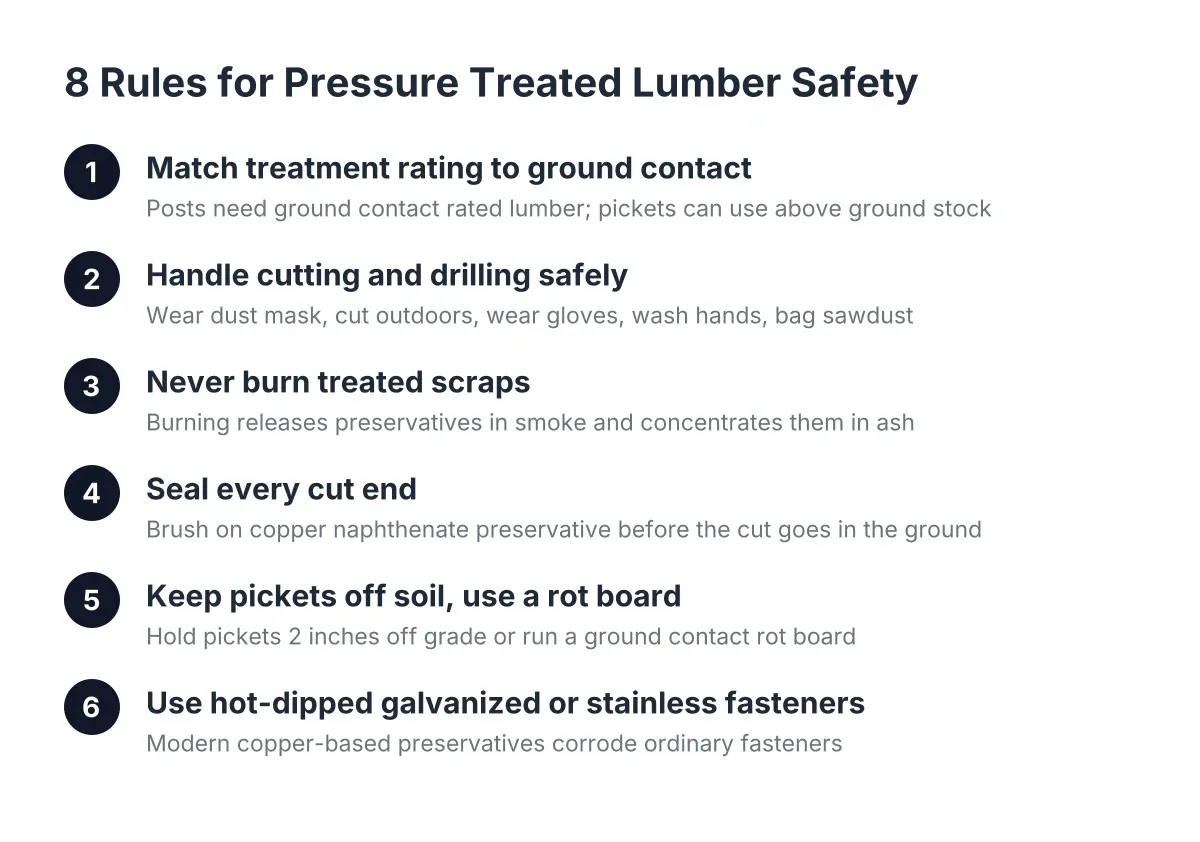
Pressure treated lumber for fence posts is pine that has had preservative forced deep into the wood under pressure. That treatment is what lets the post sit in wet ground for years without rotting off at the soil line. For Cleveland conditions, posts rated for ground contact are the right spec; the label on the lumber says so, and it is worth checking before anything goes in a hole.
The same logic shows up in a smaller detail good installers use: a pressure treated rot board run along the bottom of the fence. Pickets that touch pooled water wick moisture up from the bottom edge. A treated board at grade takes that abuse instead, and it is far cheaper to swap a rot board in ten years than to replace the bottom six inches of every picket. If you are comparing a pressure treated pine fence against cedar for the pickets themselves, that comparison is its own decision; for the posts in the ground, treated pine is the material doing the structural work either way.
What Proper Fence Post Setting and Depth Looks Like, Step by Step
Depth is the headline, but depth alone does not make a stable post. Here is the sequence a careful crew follows, and it is the same checklist to use if you are evaluating a quote or watching an install.
- Dig past the frost line. For a 6-foot privacy fence that means a hole 36 inches or deeper, and wider at the bottom than a post alone would need, so concrete can form a solid footing.
- Set the post in concrete. A common method is placing the post into freshly poured concrete, which the trade calls stabbing the post. The concrete locks the post to a mass of material the frost cannot easily lift.
- Plumb it and brace it. The post gets checked for plumb on two faces and held there while the concrete sets. A post that cures leaning stays leaning.
- Stop the concrete short of grade. The footing should end a few inches below ground level, with soil placed over the top. This hides the concrete, lets grass grow flush against the post, and gives the fence line a finished residential look instead of exposed gray collars at every post.
- Backfill and tamp in stages. Soil goes back into the hole a few inches at a time, tamped hard between layers. Tamping pushes the backfill tight against the concrete and post and closes up hidden cavities.
That last step deserves emphasis. Loose backfill is the quiet failure mode in fence installation. When soil around the footing is not compacted, water finds the gaps, the frost gets a grip, and wind works the post back and forth in its hole. Posts that loosen over the years usually loosen because nobody tamped, not because the post or concrete failed.
One more detail separates a clean fence line from a wavy one. Experienced installers set posts an inch or two taller than final height, run a string line at the finished height, and trim each post down to the string. On a Cleveland lot where the ground pitches toward the street or a back alley, this is how the fence top stays smooth and consistent even though the grade underneath rises and falls. A post that is still sticking up above the line after setting is also a warning sign; it often means the hole was not dug deep enough in the first place.
Pressure and Depth: How They Vary by Post Position in the Fence
Depth requirements for post setting change along the run of the fence, because different posts carry different pressure. Treating every hole the same is a common shortcut, and it is where problems start.
Gate posts work the hardest. A gate hangs its full weight on one post and slams against the other, every day, in every season. For a pool or play-yard gate with a self-closing hinge and a self-latching latch, a loose post is not a cosmetic issue; a sagging gate post means a gate that no longer closes and latches on its own, which defeats the safety purpose of the fence. Gate posts get the deepest holes and the most concrete on the job.
Corner and end posts come next. They anchor the tension of the whole run, especially on a chain link fence where the fabric is stretched tight between terminal posts. Line posts in the middle of a straight run carry the least individual load, but on a solid 6-foot privacy fence they still take serious wind pressure, which is why the one-third-buried rule applies to them too.
Low spots matter as well. Say a homeowner in Parma has a back corner where downspout water collects every spring. That is a hypothetical but familiar situation, and in that scenario the posts near the wet corner deserve extra depth and careful footing work, because saturated soil heaves hardest and holds posts the loosest. Routing water away from the fence line helps the whole fence, not just that corner.
What Getting the Depth Right Costs, and What Getting It Wrong Costs
Deeper holes cost more. They take longer to dig, use more concrete, and need longer posts. A 9-foot post costs more than an 8-foot post, and 30 or 40 holes at proper depth is a full day of real labor, more if the digging hits roots, buried debris, or hard clay, which older Cleveland lots serve up regularly.
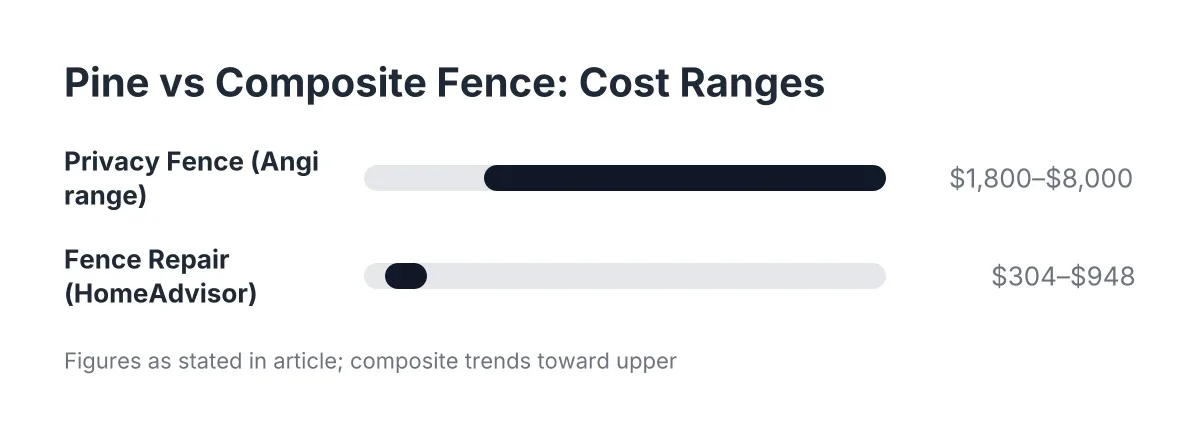
For budgeting context, Angi reports that fence installation averages $3,277, with most homeowners paying between $1,860 and $4,843, and privacy fence installation specifically averages $4,300. NerdWallet, citing Angi data, puts professionally installed fences at $15 to $25 per linear foot on average. Proper post setting is part of what those numbers buy. A bid that comes in far under the local range sometimes gets there by digging shallow holes, and that discount comes due in three to five winters.
The cost of getting it wrong shows up as fence repair. HomeAdvisor reports fence repair averages $618 per project. Resetting heaved posts is disruptive work: panels come off, old concrete comes out of the ground, and the hole gets dug again, this time to the depth it needed in the first place. On a fence with many shallow posts, repeated repairs can approach the cost of fence replacement.
There is a real trade-off to acknowledge. Deeper is better against frost, but there is a practical limit; past the point where the post is below frost depth with a solid footing and tight backfill, extra depth adds cost without adding much stability. The goal is correct depth for the fence height and the soil, not maximum depth everywhere.
Property Lines, Permits, and the Questions to Settle Before Digging
If you just bought the house, you may not know exactly where your property line sits, and that is worth resolving before any post hole gets dug. A fence set on the neighbor's side of the line creates exactly the dispute a new homeowner wants to avoid. Your closing documents may include a survey; if not, a licensed surveyor can mark the pins. On older inner-ring lots with tight side yards, a few inches matters.
The fence permit question runs alongside the line question. Cleveland-area cities differ on when a permit is required, what fence heights are allowed, and how close to the line a fence can sit. Some suburbs also have specific rules for pool enclosures, including fence height and self-latching gate hardware. Do not rely on a neighbor's word or an online forum for any of this; call your local building department and confirm what applies to your address before the project is scheduled. A reputable fence company working in Greater Cleveland will raise both questions early rather than after the holes are dug.
Underground utilities are the third pre-dig item. Ohio law requires a call to 811 before digging, and post holes at 36 inches are deep enough to find gas and electric lines the hard way. The locate call is free and takes a few days, so it belongs at the start of the schedule.
When to Handle Post Setting Yourself and When to Bring in a Crew
A capable homeowner can set posts correctly. The method is not secret: dig below frost, set in concrete, plumb, stop the footing short of grade, and tamp the backfill hard in stages. For a short run of chain link fence or a small garden enclosure, that is a reasonable weekend project.
A full privacy fence is a different scale of work. Thirty-plus holes at proper depth, string lines across a pitched yard, gate posts that must hold a self-latching gate square for years, and a hard inspection deadline if the fence encloses a new pool: that combination is where professional fence installation earns its cost. If your soil is unusually wet, your lot has significant slope, or the fence has to pass a code inspection for a pool or play area, consult a professional rather than guessing at the footing details.
Either way, the principle does not change with who holds the shovel. In Cleveland's freeze-thaw ground, the fence you see is only as good as the three feet of post you cannot see. Get the depth right, tamp the backfill tight, and the pressure treated pine underneath will hold your new privacy fence plumb through winters the pickets never feel.
If you need fence installation, Cleveland Fence Installers can help.
Prefer to talk it through? Call (216) 465-0485 — a quick call is usually the fastest way to get a straight answer for your situation.