Chain Link Fence Installers Terms Explained: A Plain-English Glossary
If you are getting quotes for a chain link fence in Greater Cleveland, the jargon piles up fast. This chain link fence installers glossary turns the trade talk into plain English so you can read an estimate line by line, ask sharper questions, and spot a thin bid before you sign. Each entry starts with a short, standalone definition, then tells you why the term matters to your project and your wallet. Keep it open while you compare quotes.
- Terminal post: the heavy posts at ends and corners
- Line post: the lighter posts in between
- Top rail: the horizontal pipe along the top
- Fabric (mesh): the woven wire itself
- Gauge: wire thickness, lower number means thicker
- Mesh size: the diamond opening size
- Tension bar and tension band: hardware that pulls the fabric tight
- Galvanized vs. vinyl-coated: the two main rust-fighting finishes
- Post setting: how posts get anchored in the ground
- Frost line: how deep the ground freezes
- Stretching: pulling the fabric tight during install
- Gate hardware: hinges, latches, and drop rods
- Property line survey: finding your legal boundary
- Fence permit: the city's sign-off before you build
- Setback: required distance from the property line
- Linear foot: how fence pricing is measured
- Tear-out (removal): taking down the old fence
- Free estimate: the no-cost written quote
Chain Link Fence Components and Key Installer Glossary Terms
These are the words you will see most often on a materials list. Knowing them helps you compare two quotes part by part instead of guessing.
Terminal Post
A terminal post is the heavier, larger-diameter post set at every end, corner, and gate opening of a chain link fence. Terminal posts carry the pulling force of the stretched fabric, so they take more concrete and more labor than the posts in between. Count the corners and gates on your layout; each one adds a terminal post to the quote. If a bid shows fewer terminal posts than your layout needs, ask why.
Line Post
A line post is one of the lighter posts spaced along the straight runs between terminal posts. Line posts hold the fence upright but do not fight the tension of the fabric, so they can be smaller and cheaper. Installers space them at regular intervals; wider spacing uses fewer posts but can let the fence sag in wind. Post spacing is a fair question to ask any fence company before work starts.
Top Rail
A top rail is the horizontal pipe that runs along the top of a chain link fence and ties the posts together. It keeps the fabric from sagging and gives the fence a straight, finished line. Some low-cost residential jobs swap the rail for a tension wire; that saves money but looks and performs differently. Your quote should say which one you are getting.
Fabric (Mesh)
Fabric means the woven wire mesh that makes up the body of a chain link fence; installers also call it mesh. It arrives in rolls and gets stretched between the terminal posts. Fabric quality is set by its gauge, mesh size, and coating, which are the next three entries. When two quotes differ in price, the fabric spec is often the reason.
Gauge
Gauge is the measure of wire thickness in chain link fabric, and a lower gauge number means thicker, stronger wire. A 9-gauge fence uses heavier wire than an 11-gauge fence, so it costs more and resists damage better. For a yard with kids, dogs, or snow piled against it all winter, thicker wire pays off. Always check that both quotes you are comparing list the same gauge.
Mesh Size
Mesh size is the width of the diamond-shaped openings in chain link fabric, measured between the wires. Smaller diamonds mean more wire per foot, which raises both strength and price. A standard 2-inch mesh suits most backyards, while smaller mesh is common around pools and pet areas where climbing or escape is a concern. The mesh size should appear on your written quote.
Tension Bar and Tension Band
A tension bar is a flat metal bar woven through the end of chain link fabric, and tension bands are the clamps that bolt that bar to a terminal post. Together they let the installer pull the fabric tight and lock it in place. Missing or undersized tension hardware is a common cause of loose, wavy fence. If you are reviewing fence repair options for a sagging fence, this hardware is one of the first things a pro checks.
Galvanized vs. Vinyl-Coated
Galvanized means the steel wire is coated in zinc to fight rust, while vinyl-coated means a colored plastic layer (usually black or green) covers the wire on top of that. Galvanized is the classic silver chain link and costs less. Vinyl-coated costs more but blends into landscaping and adds another layer against Cleveland's wet winters. The comparison of chain link, wood, and vinyl fencing for Cleveland winters covers how each finish holds up.
Chain Link Fence Installation, Site Work, and Installers Glossary Reference
This part of the chain link fence installers glossary covers what happens in the ground and on install day. Experienced chain link fence installers spend most of their skill here, because a fence is only as good as its posts.
Post Setting
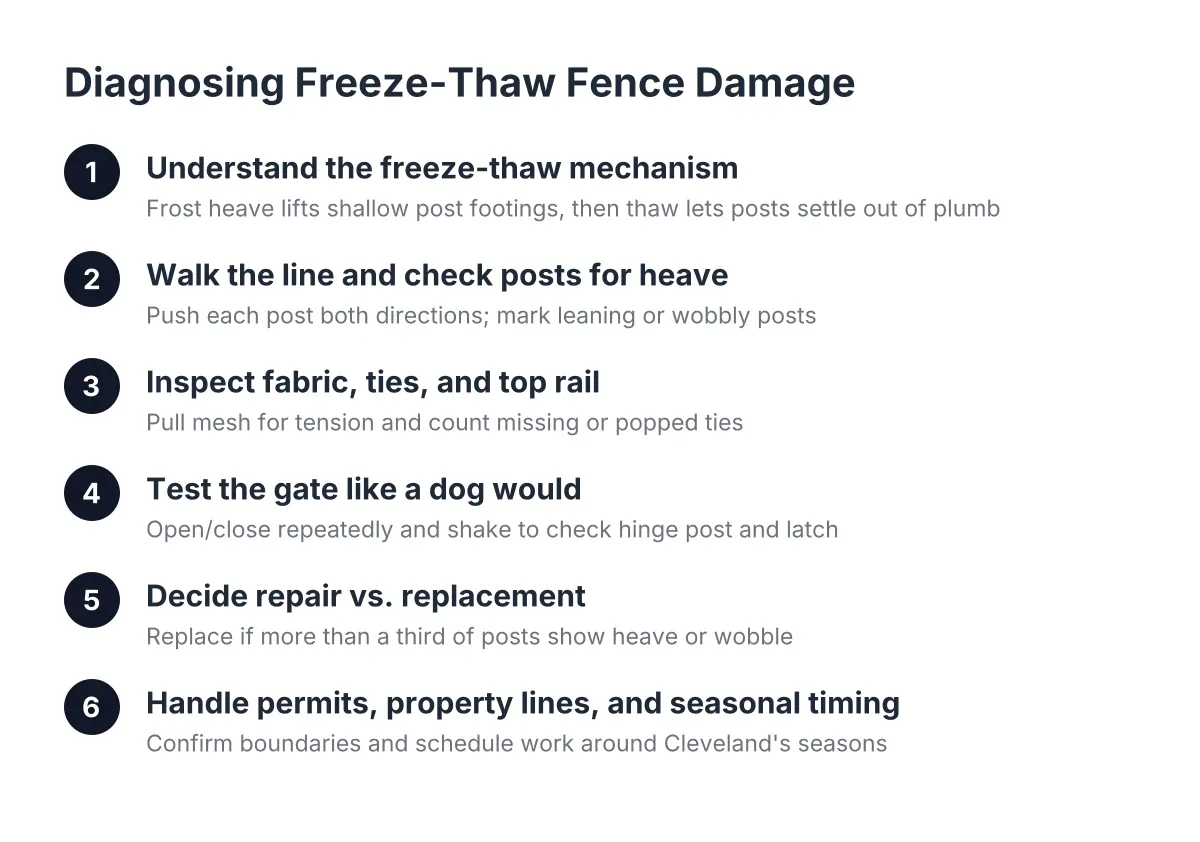
Post setting is the method used to anchor fence posts in the ground, most often by digging a hole and filling it with concrete around the post. How deep the hole goes and how much concrete it takes drives a big share of your labor cost. In Cleveland, freeze-thaw ground movement can push a shallow post up and out over a few winters. Ask every bidder how deep they set posts and whether they use concrete on every post.
Frost Line
The frost line is the depth to which the ground freezes in winter in a given region. Posts set below the frost line stay put; posts set above it can heave upward as the frozen soil expands. This is why post depth matters more in Northeast Ohio than in mild climates. A quote that skimps on digging depth may look cheaper now and cost you a leaning fence later.
Stretching
Stretching means pulling the chain link fabric tight between terminal posts before attaching it, usually with a come-along or fence puller. Proper stretching is what separates a crisp, drum-tight fence from a loose one that rattles and sags. It takes the right tools and a feel for how much tension the fabric needs. This step is a strong reason to hire a pro instead of wrestling a 50-foot roll yourself.
Gate Hardware
Gate hardware means the hinges, latch, and any drop rod or wheel that let a fence gate swing, close, and lock. A gate gets opened thousands of times, so hardware quality shows up fast in daily use. Double-drive gates for vehicles need a drop rod to pin one side closed. If your project includes gate installation, make sure the quote names the gate width, swing direction, and hardware included.
Pricing, Permits, and Paperwork
Most surprises on a fence project come from this category, not from the fence itself.
Property Line Survey
A property line survey is a measured map, prepared by a licensed surveyor, that shows exactly where your legal lot boundaries sit. Fences built on a guess can end up on a neighbor's land, which means disputes or tear-out. Cleveland's older inner-ring neighborhoods often have tight lot lines where a foot matters. Our guide to fence permits and property lines in Cleveland walks through when a survey is worth it.
Fence Permit
A fence permit is the approval a city or suburb issues before you build a fence, confirming the plan meets local rules on height, placement, and materials. Permit requirements vary by community across Greater Cleveland, so the only reliable answer comes from your local building department. Skipping a required permit can mean fines or a forced tear-down. A good fence company will tell you up front whether the permit question applies to your address.
Setback
A setback is the minimum distance local rules require between your fence and a property line, sidewalk, or street. Setbacks exist to keep sight lines clear at corners and driveways and to prevent boundary disputes. Your local building department sets the numbers, and they differ from one suburb to the next. Ask about setbacks before you finalize the fence layout, not after the posts are in.
Linear Foot
A linear foot is the standard unit for measuring and pricing fence: one foot of fence length along the ground. Most quotes price materials and labor per linear foot, then add line items for gates, corners, and tear-out. Measuring your yard yourself gives you a quick sanity check on any bid. The breakdown of what drives chain link fence cost in Cleveland shows how material, labor, and climate each move the per-foot number.
Tear-Out (Removal)
Tear-out means removing an existing fence, including pulling old posts and hauling away the debris, before the new fence goes in. Old concrete footings can be stubborn and add real labor time. On a fence replacement job, tear-out should appear as its own line on the quote. If it does not, ask whether removal and disposal are included or billed later.
Free Estimate
A free estimate is a written quote a contractor provides at no cost after reviewing your project, usually following a site visit or detailed measurements. A useful estimate lists materials by spec, labor, gates, tear-out, and who handles the permit question. Vague one-line totals make comparison impossible. Get your estimate in writing and check that it covers your full service area and layout, not a rough guess from the curb.
Using These Terms
You now have what this chain link fence installers glossary set out to give you: the vocabulary to read a fence quote line by line and notice what is missing. When a bidder mentions gauge, post depth, or tension hardware, you will know what they mean and what to ask next. If a term on your estimate is not here, ask the contractor to explain it in plain words; a good one will.
If you need chain link fence installation, Cleveland Fence Installers can help.
Prefer to talk it through? Call (216) 465-0485 — a quick call is usually the fastest way to get a straight answer for your situation.