Do I Need a Permit for a Chain Link Fence in Cleveland? FAQ for New Homeowners
You just closed on a house with a wide-open backyard. The neighbors can see straight into your kitchen window, you are not sure where your property line actually sits, and before you call anyone to put up a chain link fence, one question keeps coming up: do I need a permit? It is the right question to ask first, because in Greater Cleveland the answer changes from one city to the next, and getting it wrong can mean tearing out posts you just paid to set.
This FAQ walks through the permit question the way a local contractor would answer it on the phone: plainly, without hype, and with the honest caveat that your city's building department has the final word.
Do I Need a Permit for a Chain Link Fence in Cleveland?
In most Cleveland-area cities, yes, a fence permit is required before you install a chain link fence, even a short one in the backyard. Each municipality sets its own rules on height, placement, and setbacks, so the only reliable answer comes from your local building department. Treat the permit as step one, not paperwork to sort out later.
Greater Cleveland is a patchwork of suburbs, and each one writes its own fence rules. A fence that is fine in one city may need a variance two streets over in the next. That is why asking "do I need a permit" before you order materials matters more here than in places with one countywide code.
The safest move is a short call or website check with the building department in your specific city before any quote gets signed. A fence company that works across Greater Cleveland should know which cities require what, but the permit itself is tied to your address.
Why Do Cities Require a Fence Permit at All?
Cities require a fence permit to confirm three things: the fence sits on your property, it meets height limits for its location, and it does not block sightlines at corners or driveways. The permit review protects you as much as it protects the city, because it catches property-line and height problems before posts go in the ground.
For a new homeowner with no existing fence, that review is useful. You may think you know where your lot ends, but grass lines and old landscaping are not legal boundaries. The permit process pushes you to confirm the line before concrete gets poured.
In addition, many inner-ring Cleveland suburbs have older housing stock with tight lot lines. A fence set six inches onto the neighbor's side is a dispute waiting to happen. The permit step is where that mistake gets caught cheaply.
What Happens If I Skip the Permit?
Skipping a required fence permit can lead to a stop-work order, a fine, and in the worst case an order to remove or relocate the fence at your own cost. Cities usually find out through neighbor complaints or routine inspections, and unpermitted work can also surface later when you sell the house.
Suppose a homeowner in a Cleveland suburb installs a 4-foot chain link fence without checking, and it turns out the city requires a permit plus a 2-foot setback from the sidewalk. In that scenario, the fix could mean pulling every post along the front run, redigging holes, and resetting them. Post setting is the expensive, labor-heavy part of fence installation, so doing it twice hurts.
There is also the resale angle. Unpermitted structures can complicate a sale or an insurance claim. For a few phone calls up front, it is not worth the risk.
Does a Chain Link Fence Need a Permit If a Wood Privacy Fence Does?
If your city requires a fence permit, it almost always applies to chain link the same as wood. The permit is about height, placement, and property lines, not the material. A 4-foot chain link fence and a 6-foot wood privacy fence usually go through the same application, though height limits may differ by fence location.
However, height is where material choice and permit rules intersect. Many cities cap front-yard fences lower than backyard fences, and a 6-foot privacy fence that is fine along the back line may not be allowed along the street. Chain link at 4 feet often clears those limits more easily, which is one reason it stays popular for marking a boundary fast.
If privacy is your main goal, ask about the allowed height for your specific lot before deciding between chain link, a pressure treated fence, or another wood fence style. The permit rules may settle the material question for you.
How Do I Find My Property Line Before the Fence Goes In?
Your property line is defined by your deed and plat, not by fences, hedges, or mowing patterns. The reliable options are your closing survey, the county auditor's parcel maps as a starting reference, or a professional boundary survey with pins set at the corners. For a brand-new fence on a lot with no existing boundary markers, a survey is the safest answer.
For example, say you bought a new build last year and the lot has survey pins still in place at the corners. Experienced chain link fence installers will locate those pins, stretch a string line between them, and set the fence slightly inside your line so there is no argument later. If the pins are gone, a surveyor can reset them before any digging starts.
One honest trade-off: a survey adds cost and a little time. On a tight lot with close neighbors, it is money well spent. On a large rural parcel with clear markers, your installer and building department can tell you whether it is necessary.
Does My Neighbor Have to Agree to the Fence or Split the Cost?
In most Ohio cities, you do not need your neighbor's permission to build a fence on your own property, and residential neighbors generally are not required to split the cost of a fence you choose to build. Cost-sharing rules mostly apply to specific situations, so confirm with your city if you expect the neighbor to contribute.
That said, a two-minute conversation over the driveway prevents most fence disputes. Tell the neighbor what you are planning, show them where the line is, and note which side the finished face will go. Nobody has ever regretted that conversation; plenty of people have regretted skipping it.
Also check whether your city has rules about which direction the finished side of a fence must face. Some suburbs require the smooth side to face outward toward the neighbor or street.
What Does the Fence Permit Process Usually Look Like?
The fence permit process in most Cleveland-area suburbs follows the same basic steps, even though fees and timelines differ by city. Expect something like this:
- Confirm your property line with a survey or existing pins.
- Sketch a site plan showing the fence location, height, and material.
- Submit the application to your city's building department with the fee.
- Wait for approval before any digging or post setting starts.
- Schedule any required inspection after installation.
Do not treat posted fees or review times from one city as true for another. As of 2026, every Greater Cleveland suburb still handles fence permits its own way, so verify the current requirements with your own building department.
A good fence company will tell you up front whether your city requires a permit, what the application needs, and who is responsible for pulling it. If a contractor waves off the permit question entirely, that is a warning sign, not a convenience.
Do I Need a Permit for Fence Repair or Replacement Too?
Minor fence repair, such as replacing damaged chain link fabric or a few bent top rails, usually does not require a permit. Full fence replacement often does, because many cities treat a new fence on old posts, or a complete rebuild, as new construction. The dividing line between repair and replacement varies by city, so ask before assuming.
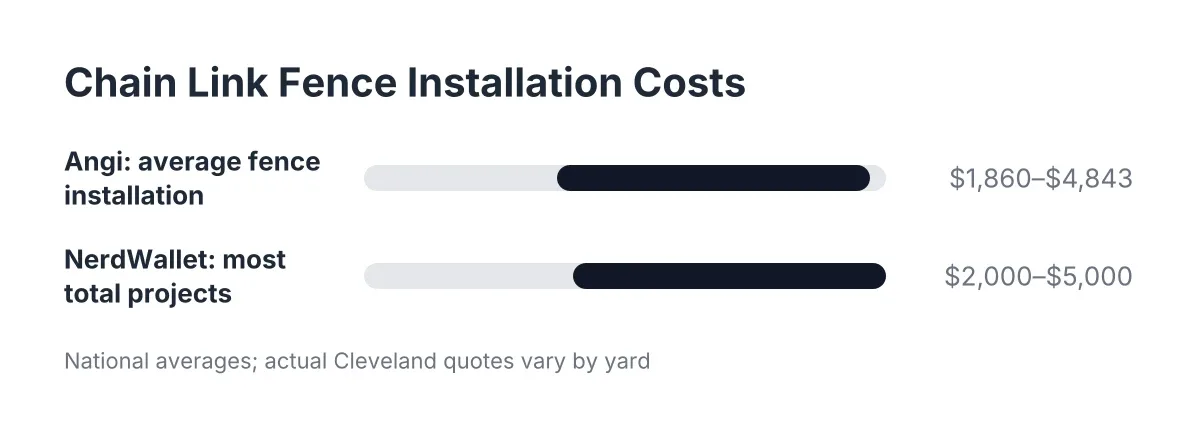
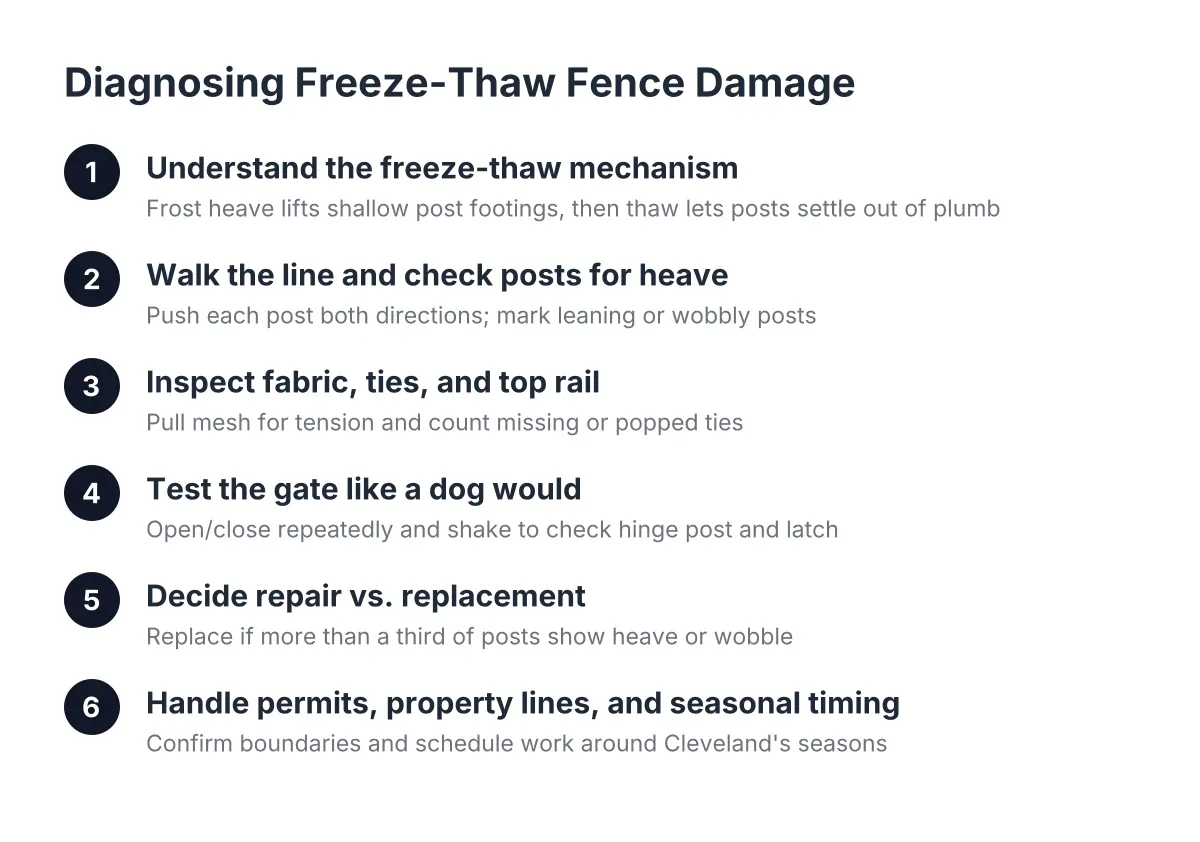
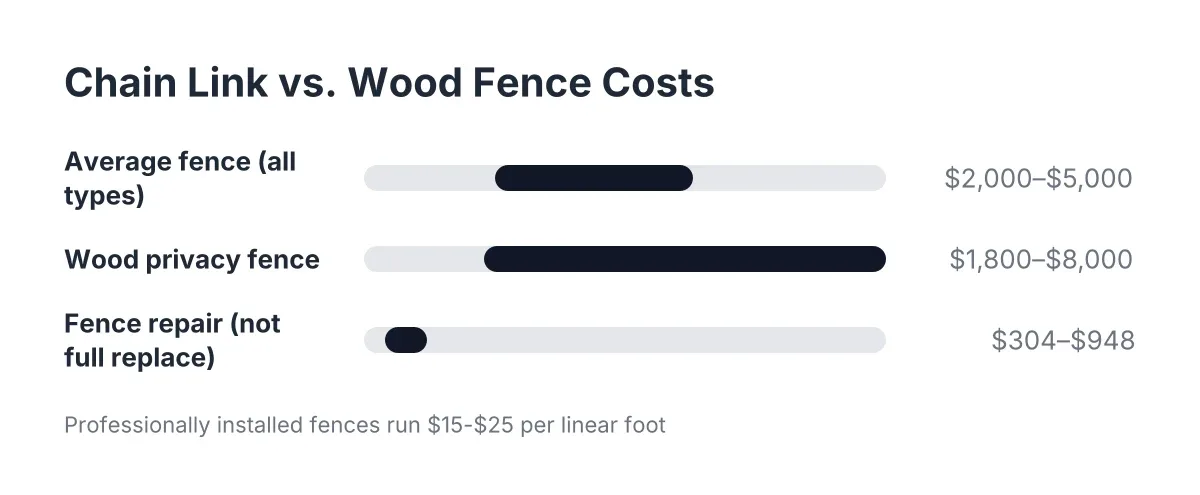
This matters in Cleveland because freeze-thaw ground movement heaves posts and loosens footings over time. What starts as a leaning section can turn into a full replacement job, and the permit answer changes with the scope. For reference, Angi's 2026 data puts the national average fence repair cost at $618 per project, while Angi reports full fence installation averages $3,277, with most homeowners paying between $1,860 and $4,843.
Therefore, get the scope nailed down first. Once you know whether the job is a repair or a replacement, the permit question answers itself with one call to the city.
The Bottom Line for New Cleveland Homeowners
Asking whether you need a permit before building a fence is the smartest first move you can make. In Greater Cleveland the likely answer is yes, the specific rules depend on your suburb, and the property line matters as much as the paperwork. Confirm the line, check with your building department, and make sure whoever installs the fence treats the permit as part of the job, not an afterthought.
If you need chain link fence installation, Cleveland Fence Installers can help.
Prefer to talk it through? Call (216) 465-0485 — a quick call is usually the fastest way to get a straight answer for your situation.