Do I Need a Fence Permit in Cleveland? Property Lines and Rules Explained
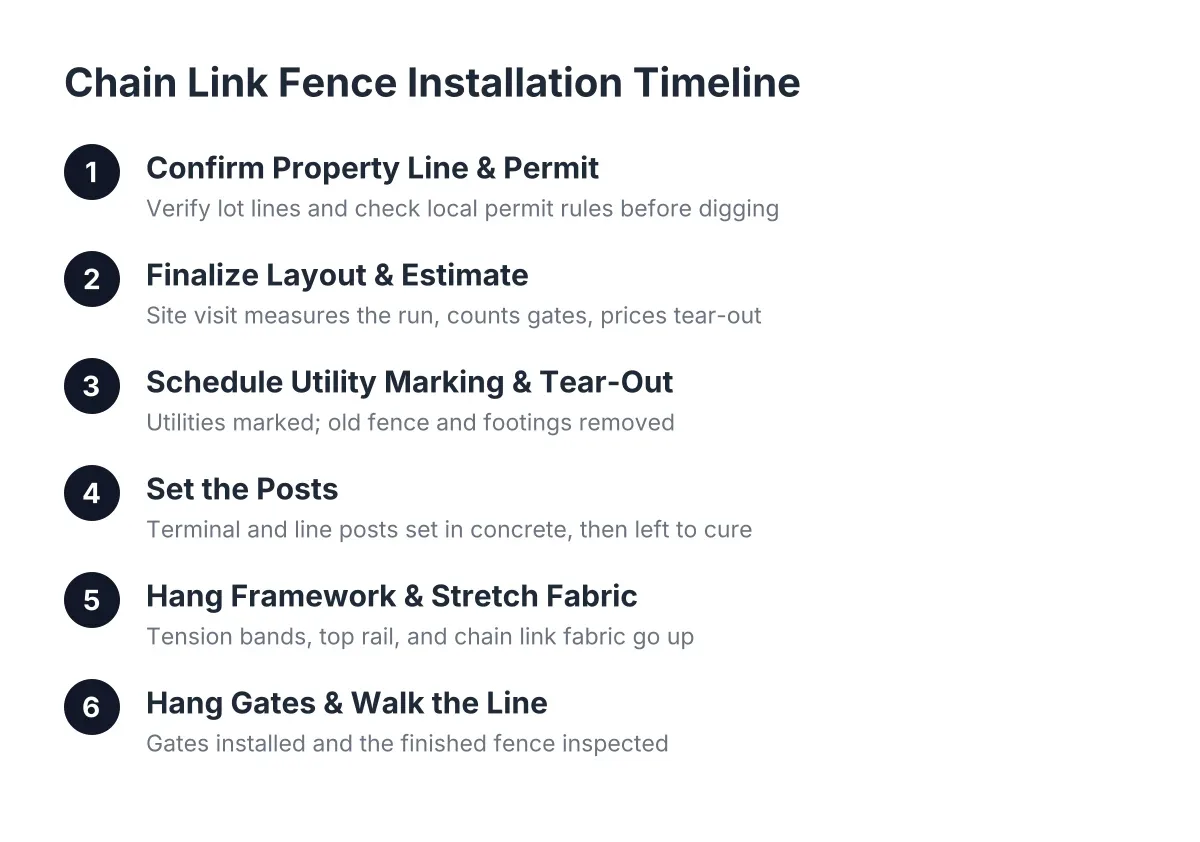
If you are asking "do I need a fence permit before I build," you are already ahead of most first-time fence buyers. Nobody wants to pay thousands for a fence installation and then learn the city wants it moved, shortened, or torn out. The good news: the permit question has a clear path to an answer, and so does the property-line question. This list walks through eight things to check before you sign anything, written for the Cleveland homeowner who wants the baseline facts first—starting with what you need to know about securing a fence permit in Cleveland.
One note up front. Cleveland and its suburbs each handle fence permits their own way. Heights, setbacks, and fees vary from one building department to the next. Nothing here replaces a call to your local building department; treat this as the checklist that tells you what to ask.
1. Understanding Fence Permit Requirements in Cleveland
Whether you need a fence permit in Cleveland depends on your specific municipality, and many Greater Cleveland communities do require one before installation. The only reliable answer comes from your local building department, because Cleveland proper, Lakewood, Parma, Euclid, and other suburbs each set their own rules on height, placement, and materials.
Call or check the city website before you get quotes, not after. Ask three questions: is a permit required for a fence at my address, what height is allowed in the front yard versus the back, and do I need a site drawing or survey with the application. A fence company that works in your area should know the local pattern, but the homeowner is usually the one on the hook if a fence goes up without a required permit.
Do not assume a short fence or a repair is exempt. Some cities treat fence replacement the same as new installation. Others allow repair of an existing fence without a permit but require one when posts or full sections change. Five minutes on the phone with the building department settles it.
2. Confirm Your Property Line Before Anyone Digs
A fence built even a foot over the line can turn into a dispute, a tear-out, or a forced rebuild. In Cleveland's older inner-ring neighborhoods, lots are tight and the gap between houses can be narrow, so the margin for error is small. The hedge or old fence you assume marks the line may not.
Here is how to pin it down:
- Check your closing documents for a survey from when you bought the house.
- Look up your parcel on the county auditor's site to see lot dimensions.
- Find the iron survey pins at your lot corners; a cheap metal detector often locates them.
- If none of that settles it, hire a surveyor. A few hundred dollars now beats moving a fence later.
In addition, decide whether to build on the line or inside it. Building on the line usually requires the neighbor's agreement and can create shared maintenance questions. Building a few inches inside your line keeps the fence fully yours but gives up a sliver of yard. For tight Cleveland lots, many homeowners set the fence just inside the line to avoid any argument.
3. Know When a Pool Makes the Fence Question a Code Question
Do I need a fence around my pool? In most Ohio communities, yes; pools and spas above a certain depth require a code-compliant barrier, and that usually means a fence of a minimum height with a self-closing, self-latching gate. This applies to above ground pools too, not just in-ground installations.
If you are installing a pool, trampoline, or play equipment this year, the fence stops being optional and starts being an inspection item. Your pool installer or insurer may hand you a deadline. Before that happens, confirm with your building department what height, gate hardware, and latch placement your city requires in 2026, because those specs drive the quote.
Chain link is a common choice for pool enclosures because it meets height requirements at a lower cost than wood privacy fencing, and gate installation with a self-latching mechanism is straightforward. Just confirm the mesh size and height your inspector expects before ordering material.
4. Call Before You Dig, Every Time
Fence posts go two to three feet deep, which is deep enough to hit gas, electric, cable, or water lines. Ohio law requires calling 811 before digging so utilities can mark their lines for free. A reputable installer handles this as standard practice, but ask about it directly; it is a quick way to gauge whether a contractor cuts corners.
Marked lines can also change your fence layout. For example, a buried gas service line running along your planned fence route may force posts to shift a foot or two. Better to know that during planning than when an auger hits something.
5. Understand What a Fair Price Looks Like Before You Get Quotes
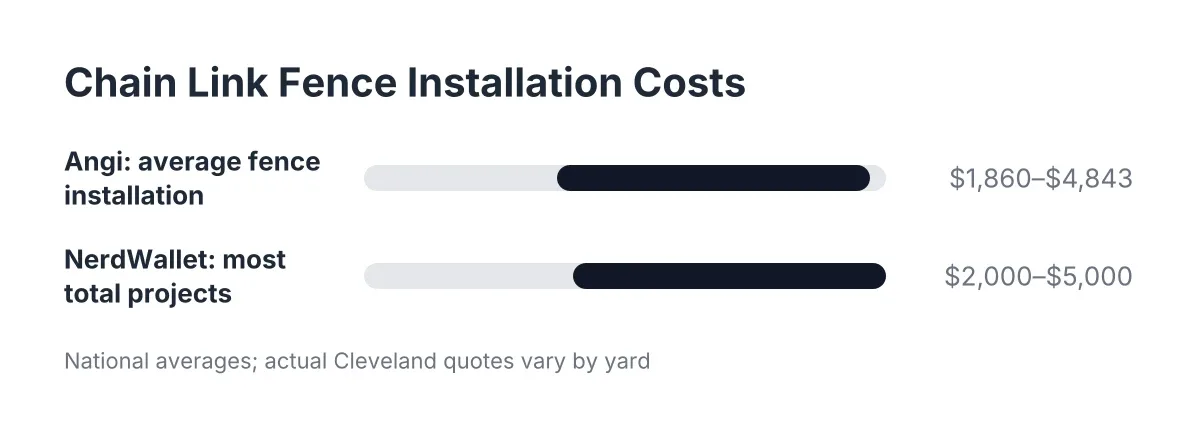
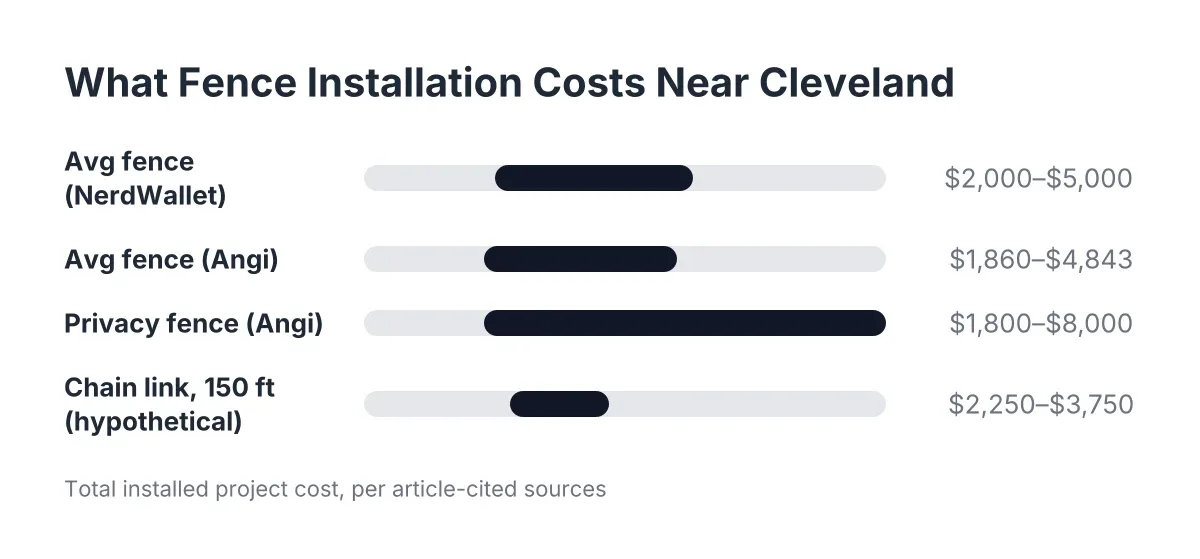
The fastest way to spot a bad quote is to know the national baseline. According to NerdWallet, professionally installed fences cost $15 to $25 per linear foot on average, with total projects typically landing between $2,000 and $5,000. Angi reports an average fence installation cost of $3,277, with most homeowners paying between $1,860 and $4,843.
Material moves those numbers. Chain link fence usually sits at the lower end, which is why budget-focused buyers and landlords lean on it. A pressure treated fence costs more per foot, and privacy fence installation averages $4,300 according to Angi, with projects ranging from $1,800 to $8,000 depending on height and length.
Say a homeowner in Old Brooklyn needs about 150 feet of four-foot chain link to enclose a backyard for two dogs and a swing set. In that hypothetical, the NerdWallet range suggests roughly $2,250 to $3,750 before gates and extras. If a quote comes in far outside a range like that with no explanation, ask what is driving it; sometimes there is a real reason, like slope or old fence removal, and sometimes there is not.
6. Ask What the Quote Includes, Because Extras Hide in the Gaps
Most quote surprises are not the fence itself. They are the line items nobody mentioned. Before you compare two quotes, make sure both cover the same scope.
Ask about each of these:
- Old fence tear-out and haul-away, which matters for any fence replacement job
- Gate installation, since gates cost more per foot than fence runs and pool-code latches add hardware cost
- Post setting in concrete, which matters in Cleveland because freeze-thaw ground movement heaves shallow or poorly set posts
- Permit handling, and who files the application
- Slope adjustments, since grading changes how fabric or panels are cut and set
In Cleveland's climate, post depth and setting are not details to skip. Posts set too shallow work loose after a few winters of frost heave. A quote that is cheaper because it skimps on post setting is not cheaper in five years; that is where fence repair bills come from. HomeAdvisor puts average fence repair at $618, so a fence built right the first time protects real money.
7. Compare Chain Link and Wood on Your Actual Needs, Not Looks Alone
Chain link and wood solve different problems, and the honest answer depends on why you want the fence. Chain link costs less, installs faster, handles Cleveland winters with little maintenance, and gives you clear sight lines to a pool or play area, which many parents actually prefer. The trade-off is zero privacy and a utilitarian look that some cities restrict in front yards.
Wood gives you privacy and curb appeal, especially a pressure treated fence stained to match the house. However, it costs more up front and needs periodic staining or sealing to survive freeze-thaw cycles and wet springs. For a landlord enclosing a rental yard or a parent fencing a pool on a deadline, chain link usually wins on cost and speed. For a homeowner screening a patio from a close neighbor, a privacy fence earns its higher price.
When you start calling chain link fence installers, ask how they handle corners and end runs where a full section will not fit, and whether they stretch a string line between end posts to keep the run straight. Experienced crews cut shortened sections into less visible areas and keep full sections facing the street. Those small answers tell you who does this work regularly.
8. Vet the Contractor the Same Way You Vetted the Price
Once the permit question and the budget baseline are settled, the last variable is the installer. A chain link fencing company that works your area regularly should answer permit and property-line questions without hedging. If an installer waves off the permit question or says "nobody checks," treat that as a red flag; unpermitted work can surface during a home sale or a neighbor complaint, and the fine lands on you.
A short script for the first call: ask whether a permit is likely needed at your address, who pulls it, how deep they set posts for our frost conditions, and whether tear-out and gates are in the quote. Then ask for a written estimate that itemizes those pieces. Searching for a chain link fence company in my area will surface plenty of names; this script sorts them fast.
The Bottom Line on Cleveland Fence Permits and Planning
So, do I need a fence permit in Cleveland? In many Greater Cleveland communities, yes, and the only answer that counts comes from your building department before the first post hole is dug. Confirm the property line, call 811, and know the baseline cost ranges so every quote has context.
Get those four things in order and the rest of the project gets simple. You will walk into the first phone call knowing roughly what the job should cost, whether the city needs to sign off, and which questions separate a careful fence company from a fast one. That is the whole point: no fines, no surprise fees, and no fence you have to move next spring.
If you need chain link fence installation, Cleveland Fence Installers can help.
Prefer to talk it through? Call (216) 465-0485 — a quick call is usually the fastest way to get a straight answer for your situation.