Why Chain Link Fences Fail in Cleveland’s Freeze-Thaw Cycles (and How to Prevent It)
If you own a yard or a rental in Greater Cleveland, you have probably seen it: a leaning post, a sagging top rail, a gap under the fabric big enough for a beagle. Most chain link fences fail here for one reason that rarely gets named in generic repair guides: Cleveland's freeze-thaw ground movement, which causes freeze-thaw fence damage. Water in the soil freezes, expands, and pushes on anything set in the ground. Then it thaws and lets everything settle, slightly out of place. Repeat that dozens of times every winter and a fence that was never built for it starts coming apart.
This guide walks through the failure points step by step, in the order a fence contractor would check them. Whether you are a parent who needs the yard to hold a determined dog or a landlord getting a rental ready between tenants, use these steps to find the weak spots before they turn into an escape route or a code violation.
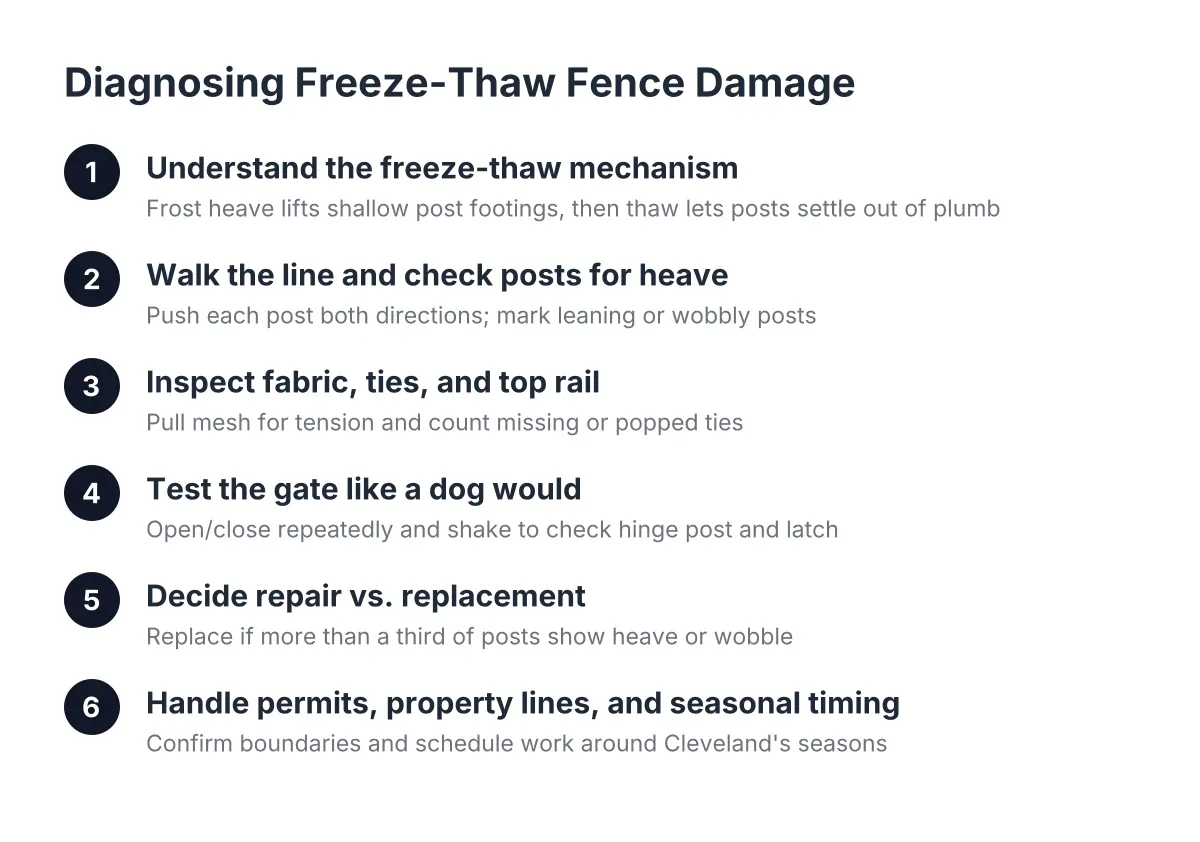
Step 1: How Freeze-Thaw Cycles Damage Chain Link Fences
Chain link fences fail in Cleveland mostly because of what happens below grade, not above it. The fabric itself is tough. The framework is steel. Additionally, the weak link is the connection between the posts and the ground, and that connection is exactly what freeze-thaw cycles attack.
Here is the mechanism in plain terms. Soil holds water. When that water freezes, it expands and heaves upward. A post footing that is too shallow sits inside the frost zone, so the frozen ground grabs it and lifts it. In spring the ground thaws and the post settles, but not always back to plumb. A few winters of this and the post leans, the top rail bows, and the fabric loosens.
Footing size matters as much as depth. A post set in a skinny plug of concrete is prone to the concrete cracking under lateral force, which creates a wobble point right at the break. The post looks fine until a dog hits the fence or a snow load leans on it, and then it moves at the crack.
Know the main freeze-thaw failure modes before you inspect anything:
- Heaved or leaning posts from shallow or undersized footings
- Cracked concrete footings that let posts wobble under side pressure
- Loose or popped fence ties that let the fabric flap and sag
- Gaps opening at the bottom as fabric tension drops
- Sagging gates that no longer latch because the hinge post shifted
Step 2: Walk the Line and Check Every Post for Heave
Start at one corner and walk the full fence line. Push on each post, firmly, in both directions. A sound post set below the frost line barely moves. A heaved or cracked footing shows up right away as a lean, a wobble, or a post that sits higher than its neighbors.
Look at the ground around each post base. Concrete pushed up above grade, a mushroom of soil around the post, or a visible gap between the concrete and the dirt all point to frost heave. Mark every suspect post with tape or spray paint so you can count the problem spots and describe them accurately when you get a free estimate.
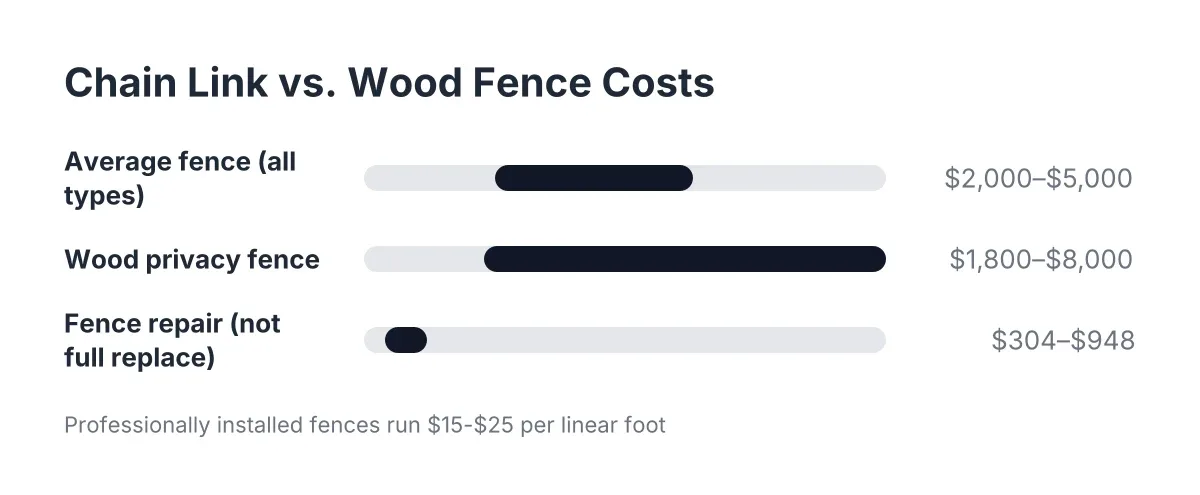
For a landlord, this walk-through is the difference between a targeted fence repair and a full fence replacement. Say you own a double in Old Brooklyn with 120 feet of chain link around the back yard. In that scenario, three heaved line posts might be a repair measured in hundreds of dollars, while a full tear-out is a different budget line entirely. For context, HomeAdvisor reports fence repair averages $618, with most homeowners spending between $304 and $948.
Step 3: Inspect the Fabric, Ties, and Top Rail for Loosening
After the posts, check what holds the fabric in place. Grab the mesh at waist height between posts and pull. Properly tensioned fabric resists; fabric that has lost tension flexes and creates slack a dog can exploit at the bottom edge.
Next, look at the fence ties, the small wire clips that bind the fabric to the posts and top rail. Ties come in different lengths matched to the pipe diameter, and they need to be bent so the wrap traps the fabric link tight against the pipe. A tie bent the wrong way stays loose enough that wind pops it open over time. Count the missing or popped ties; each one is a point where the fabric can pull away.
The freeze-thaw cycle makes this problem worse. Every time a post shifts during a freeze-thaw cycle, it tugs on the ties and the tension bands at the terminal posts. A fence can shed ties for two or three winters before anyone notices, and by then the fabric sags in whole sections.
Step 4: Test the Gate Like a Dog Would
Gates fail first because they take daily use plus all the same ground movement. If the hinge post heaves even an inch, the gate drops out of square, the latch stops catching, and you are back to standing in the yard every time the dog goes out.
Test it the hard way. Open and close the gate ten times fast. Lift the free end and check for play in the hinges. Latch it, then shake it the way a 70-pound dog would hit it chasing a squirrel. If the latch pops or the gate bounces open, the gate or its hinge post needs attention now, not next season.
For containment, the bottom gap under the gate matters as much as the latch. A toddler will not dig, but a small dog will flatten itself through a four-inch gap. Measure the gap at the gate and along the fence bottom. Anything a determined pet could squeeze through should go on your repair list, with options like tension wire or a bottom rail.
Step 5: Decide Between Chain Link Fence Repair and Replacement
Repair makes sense when the failures are isolated: a few heaved posts, popped ties, or a sagging gate on an otherwise sound fence. Replacement makes sense when the problem is systemic, meaning most footings were set shallow and every winter will produce new leaners.
A reasonable rule of thumb: if more than a third of the posts show heave or wobble, price out fence replacement alongside the repair. Chasing failures post by post across several winters often costs more in total than one correct rebuild. The same logic applies to hiring. Choosing the cheapest bid on a fence that has to be rebuilt in five years costs more than paying for footings done right the first time.
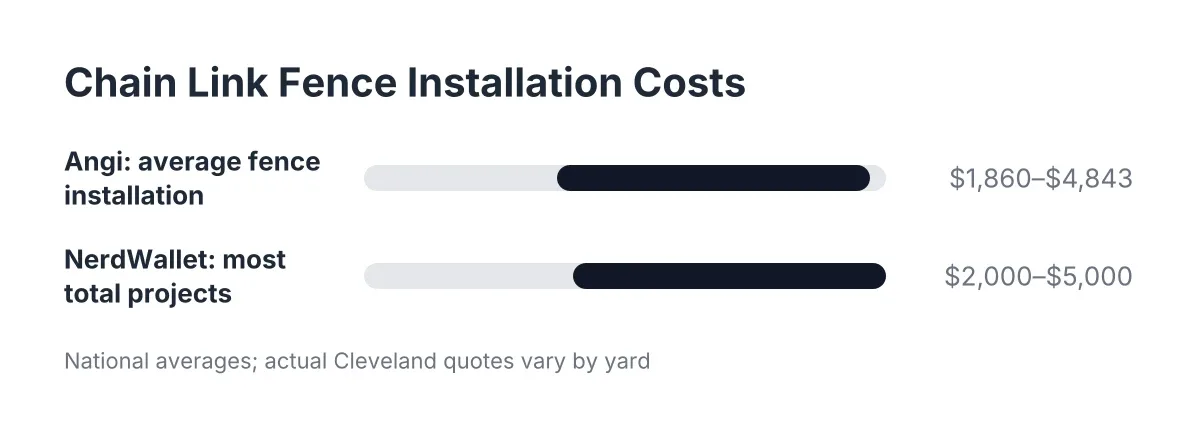
Budget context helps here. Angi reports that fence installation costs an average of $3,277, with most homeowners paying between $1,860 and $4,843. NerdWallet puts professionally installed fences at $15 to $25 per linear foot on average, citing Angi data. Chain link usually lands at the affordable end of those ranges, which is one reason landlords default to it for rental yards.
Protecting Your Fence from Freeze-Thaw Damage Through Proper Installation
Chain link fences resist Cleveland winters when the posts are set below the frost line in footings wide enough to stay intact under side load. Depth keeps frost from grabbing the footing and lifting it. Footing diameter keeps the concrete from cracking into a hinge point. Those two details decide whether the fence shrugs off winter or leans a little more every spring.
Good chain link fence installers also get the small things right: ties bent to trap the fabric, fabric stretched to proper tension, gates hung on posts sized for the swing and the daily slamming. When you compare bids, ask each fence company how deep they set posts, what footing diameter they pour, and how they handle gate posts. Vague answers on footings predict a fence that fails on schedule.
Step 6: Handle Permits and Property Lines Before Work Starts
Cleveland and its inner-ring suburbs each handle the fence permit question their own way, and older neighborhoods with tight lot lines raise property-line issues that newer suburbs rarely see. Before any posts go in, confirm with your local building department whether your project needs a permit and what setback or height rules apply. Do not rely on what the previous owner did; rules change, and an unpermitted fence can become a problem at sale or inspection.
This step matters most for landlords. A fence installed over the line on a rental can turn into a dispute with a neighbor you never meet, handled through your tenant. Verify the line, get the permit question answered in writing where you can, and keep the paperwork with the property file.
One honest limitation: this guide helps you diagnose freeze-thaw damage, but judging whether a cracked footing can be saved or must come out usually takes someone with a digging bar and experience. If you find widespread heave, bring in a professional before you spend on piecemeal fixes.
Step 7: Plan the Work Around Cleveland's Seasons
Timing affects both quality and schedule. Frozen ground makes digging slow and footing work harder, so spring through fall is the natural window for post setting in Northeast Ohio. Ties, fabric re-tensioning, and gate adjustments can happen almost any time of year.
Therefore, plan backward from your deadline. A parent who wants the yard secure before summer should get estimates in late winter or early spring, before the schedule fills. A landlord with a June turnover should book the work for the vacancy window, since a crew can usually finish a standard chain link job on a rental lot in a day or two once posts are set.
As of 2026, demand for fence work in Greater Cleveland still spikes after the first warm weekends of spring. Getting your inspection done and your scope defined in March puts you ahead of that rush, with a clear list of exactly which posts, ties, and gates need attention and why.
If you need chain link fence installation, Cleveland Fence Installers can help.
Prefer to talk it through? Call (216) 465-0485 — a quick call is usually the fastest way to get a straight answer for your situation.