Chain Link Fence vs. Wood Fence: Pros, Cons, and Cost Compared for Cleveland
Your old fence is down, leaning, or rotted past the point of patching, and now you have a choice to make. When replacing a fence, deciding between chain link or wood comes down to four things: upfront cost, maintenance, privacy, and how each material handles Cleveland's freeze-thaw winters. This guide walks through the comparison step by step so you can replace what failed with the right fence, not just the same fence.
This matters whether you are a homeowner staring at two storm-flattened sections or a landlord who needs a yard secured before the next tenant moves in. The right answer is not the same for every property. Work through the steps below in order and you will land on a confident choice.
Step 1: Decide What the Fence Actually Has to Do
Start with the job, not the material. A fence that only has to contain a dog or mark a property line has different requirements than one that has to block the view of a neighbor's driveway.
Write down your top priority before you look at a single quote. For most Cleveland properties it falls into one of these buckets:
- Containment: keeping pets or kids in, or keeping strangers out of a rental yard
- Privacy: blocking sightlines on a tight inner-ring lot where houses sit close together
- Boundary and appearance: marking the line and looking decent from the street
- Security between tenants: a locked gate and an intact perimeter so a vacant unit is not an open invitation
Chain link wins on containment, durability, and cost. A wood fence wins on privacy and curb appeal. If you need both privacy and a tight budget, there is a middle path, covered in Step 5.
Suppose you own a double in Old Brooklyn with a shared backyard and tenant turnover coming in six weeks. In that scenario, containment and speed matter more than looks, and chain link is the obvious call. Now suppose instead you live in that house and your deck faces the neighbor's kitchen window. Privacy moves to the top, and wood earns its higher price.
Step 2: Compare Chain Link and Wood Fence Costs Honestly
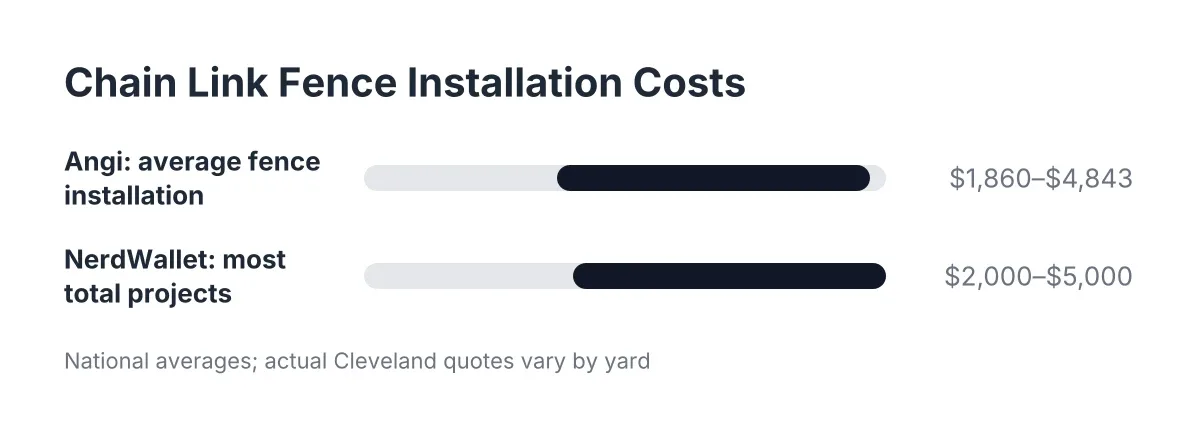
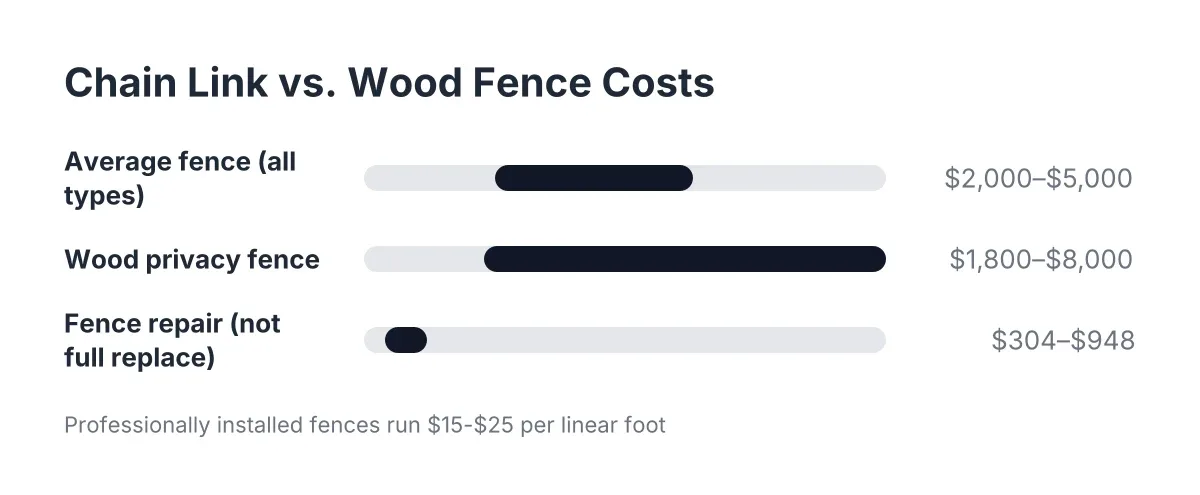
Chain link costs less than wood almost every time, both to install and to own. The gap shows up in materials, labor hours, and what you spend over the next fifteen years. For context on the overall market, NerdWallet reports professionally installed fences cost $15 to $25 per linear foot on average, citing Angi data, with total projects typically landing between $2,000 and $5,000.
Chain link sits at the low end of that range. A standard galvanized chain link fence uses less material per foot and goes up faster than a board fence. Wood privacy fencing sits higher; Angi data shows privacy fence installation typically costs between $1,800 and $8,000, averaging $4,300.
A few things move the number in either direction:
- Height and gauge: a 6-foot chain link fence with heavier wire costs more than a 4-foot residential run
- Color coating: black vinyl-coated chain link costs more than galvanized but still usually less than wood; the black chain link cost versus wood comparison often still favors chain link
- Wood style: board-on-board and shadow box designs need more picket material than a flat-face privacy fence, so they cost more in both material and labor
- Gates: every gate adds hardware and labor, and gate installation on chain link is cheaper than a wood gate that can sag
- Terrain and access: slopes, tree roots, and tight lot lines all add time
One warning from the trade: the cheapest quote is not always the cheapest fence. Pricing reflects construction practices and expected lifespan, not just materials. A fence that has to be rebuilt in eight years costs more than one built right the first time.
Step 3: Weigh How Each Material Survives a Cleveland Winter
Cleveland's freeze-thaw cycles are the real test. The ground moves every winter, and that movement works on fence posts year after year. How each material handles it should weigh heavily in your decision.
Steel chain link posts set in concrete below the frost line handle ground movement well. The fabric flexes, the posts stay put, and there are no boards to pop loose. Snow load and wind pass through the mesh instead of pushing on a solid face.
Wood takes more punishment. Wood posts are prone to warping, twisting, and rotting over time, and a solid privacy fence catches wind like a sail off the lake. If your current fence failed because the posts rotted at the ground line, you have already seen this play out. A pressure treated fence with properly set posts lasts far longer than a bargain build, and staining both sides extends its life considerably, but it will always ask for more upkeep than steel.
Here is the maintenance picture side by side:
- Chain link: no staining, no sealing, no board replacement; occasional tension adjustments and gate hardware checks
- Wood: staining or sealing every few years, replacing warped or rotted boards, and monitoring posts at the ground line where rot starts
For a landlord with several rental doors, that maintenance gap compounds across properties. A chain link fence you never think about beats a wood fence you re-stain at three addresses.
Step 4: Settle the Repair vs. Replace Question Before You Choose
Do not price a new fence until you know whether you need one. If a storm took out two sections but the rest of the posts are solid, a targeted fence repair may carry you years. HomeAdvisor reports fence repair averages $618, with most homeowners spending between $304 and $948 to restore an existing fence. That is a different budget conversation than full fence replacement.
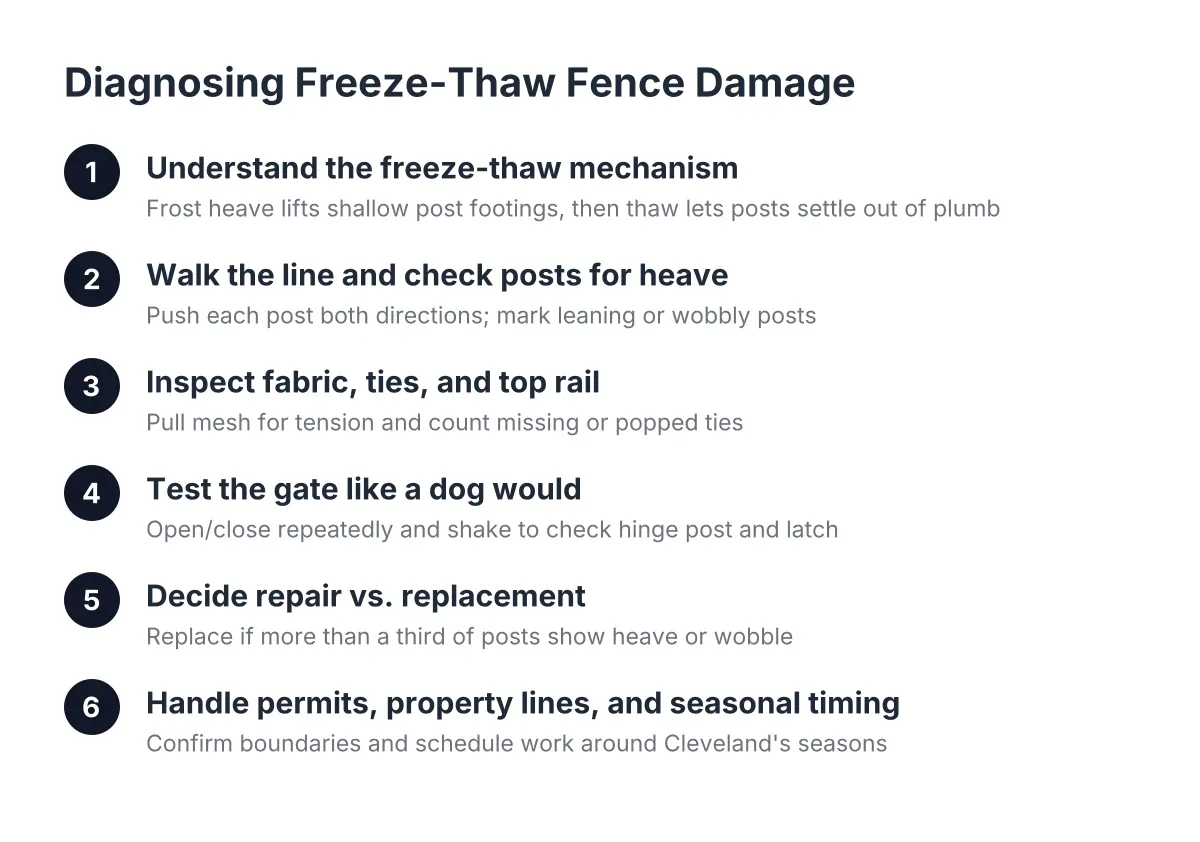
The honest test is the posts, not the boards or the fabric. Grab each post near the damaged area and push. If posts are loose, soft at the ground line, or snapped below grade, patching the visible damage only buys you a season. If more than a third of the posts fail that test, replacement usually costs less per year of fence life than repeat repairs.
Skeptical that a repair quote is just an upsell to replace everything? Ask the contractor to walk the line with you and point out which specific posts fail and why. A straight answer sounds like "these four posts are rotted, the rest are sound," not "the whole thing has to go."
One permit note: even if the footprint does not change, some Cleveland-area suburbs treat a full replacement differently than a repair. Rules on height, setbacks, and whether a fence permit is required vary by municipality, especially on older lots with tight property lines. Verify with your local building department before work starts; it is a short call that prevents an expensive do-over.
Step 5: Consider a Chain Link Fence With Wood Privacy Options
You can get most of chain link's durability and most of wood's privacy without paying full price for either. Hybrid approaches exist, and for budget-conscious owners they are worth a look before committing to a full wood privacy fence.
The most common options:
- Chain link with privacy slats: vertical slats woven into the mesh block most sightlines at a fraction of wood fence cost. Wood-tone chain link fence privacy slats soften the industrial look.
- Chain link in back, wood in front: run affordable chain link along the rear and side lot lines where nobody sees it, and put a wood fence only on the street-facing stretch. Installers follow the same logic within a single job, placing the best-looking sections where they are most visible.
- Reusing existing posts: if your old chain link posts are plumb and solid, adapter brackets can sometimes mount wood framing to the existing steel. This approach saves digging but only works when the posts were set deep enough to carry the extra wind load of solid boards. Have someone evaluate the posts before assuming they qualify; a solid fence on undersized posts fails in the first hard storm.
Say a landlord owns three rentals in Parma and has $4,000 budgeted for the season. In that scenario, slatted chain link at two properties and a short wood run at the third stretches the budget further than a single full wood privacy fence at one address.
Step 6: Hire the Right Contractor for the Material You Picked
Chain link and wood are different trades in practice. Stretching and tying chain link fabric to proper tension takes specific tools and technique; details as small as matching tie length to post diameter separate a tight fence from a saggy one. Wood fencing demands its own skills, from post spacing to picket alignment. Experienced chain link fence installers who also build wood fences can quote both options against each other honestly, which is exactly what you want at the comparison stage.
Ask every fence company you talk to these questions:
- How deep do you set posts, and do you go below the frost line for this area?
- Will you walk the existing fence with me and show which posts are actually failed?
- Does my city require a fence permit for this replacement, and who confirms that?
- What is included in haul-away of the old fence?
- Can you quote chain link and wood side by side for the same run?
Get the quote in writing with footage, height, gauge or board specs, gates, and tear-out listed separately. A free estimate that itemizes those pieces lets you compare bids on substance instead of a single bottom-line number. For anything involving disputed property lines, a buried utility conflict, or a fence tied to a retaining wall, bring in a professional rather than guessing; those situations carry costs a comparison article cannot settle.
The Bottom Line on Chain Link vs. Wood
Choose chain link when containment, budget, and low maintenance lead your list. It costs less to install, shrugs off freeze-thaw ground movement, and needs almost nothing from you afterward. Choose wood when privacy or appearance justifies the higher price and the ongoing upkeep, and budget for staining if you want it to last.
As a 2026 benchmark for either path, Angi reports fence installation averages $3,277, with most homeowners paying between $1,860 and $4,843. Where your project lands inside that range depends on material, height, footage, gates, and terrain. Work through the six steps above, check the permit question with your building department, and get itemized quotes for both materials before you sign anything.
If you need chain link fence installation, Cleveland Fence Installers can help.
Prefer to talk it through? Call (216) 465-0485 — a quick call is usually the fastest way to get a straight answer for your situation.