Driveway Gate Installation in Cleveland: A Step-by-Step Guide to Getting It Done Right
You searched for gate installation near me, picked a direction, and now you want the project to go smoothly. Good. A driveway gate or a walk gate is the part of a fence you touch every day, so the details matter more here than anywhere else on the line. This guide walks you through the process step by step, from confirming your property line to the final latch adjustment, written for Greater Cleveland conditions: freeze-thaw ground movement, sloped driveways, and older lots with tight boundaries.
Whether you just bought a house with a wide-open backyard or you own a handful of rental doors and need a secure gate before the next tenant moves in, the steps are the same. Here is how to get through them without surprises.
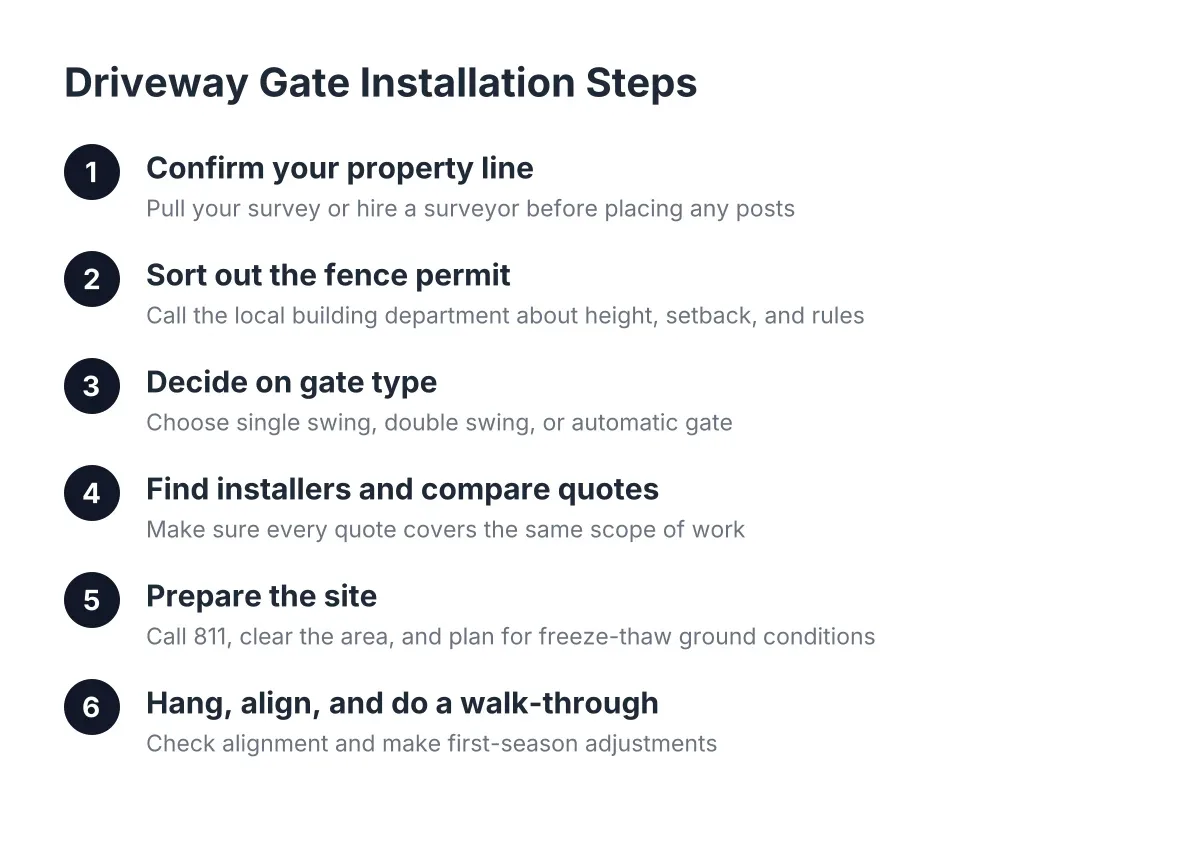
Step 1: Confirm Your Property Line Before Anything Else
Do not skip this. If you just moved in and there is no fence at all between you and the neighbor, you may not know where your yard actually ends. A gate set even a foot onto the neighbor's land can turn into a dispute you do not want in your first year on the block.
Pull your survey from your closing documents first. Most Cleveland-area buyers received one at purchase. If you cannot find it, check with your county recorder or hire a surveyor to mark the corners. Pin flags cost far less than moving a set post.
In addition, decide now whether the gate opens into your yard or out toward the drive. On tight inner-ring lots, swing clearance can push the gate location a few feet one way or the other, and that affects where posts land relative to the line.
Step 2: Sort Out the Fence Permit Question
Many Greater Cleveland suburbs require a fence permit, and a gate is part of the fence for permit purposes. Rules vary by city on height, setback from the sidewalk, and whether the finished side must face out. Driveway gates can raise extra questions about sight lines at the apron.
Therefore, call your local building department before you order materials. Ask three things:
- Does my city require a fence permit for this project, and what does it cover?
- Are there height limits near the driveway or front setback?
- Do I need my neighbor's signature or notification for a fence on the shared line?
Do not rely on what the previous owner did or what the neighbor's fence looks like. Older fences often predate current rules. A good fence company will walk you through the permit question for your specific suburb, but the building department is the final word.
Step 3: Decide What Kind of Gate You Actually Need
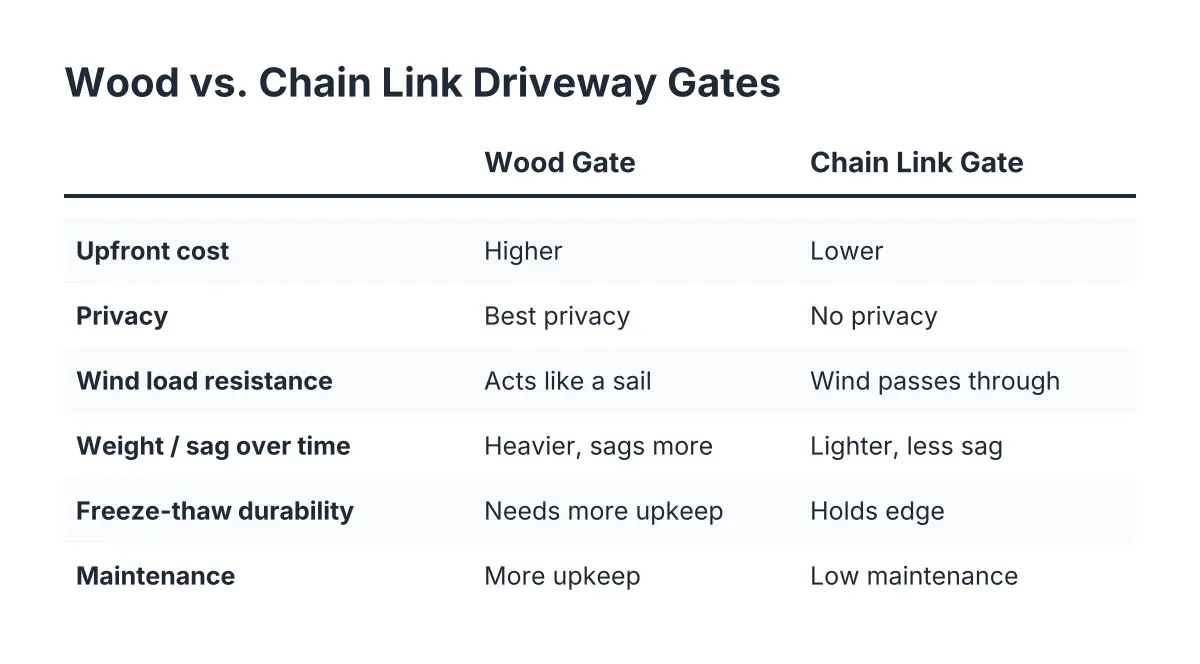
Match the gate to the job, not the catalog. For a privacy-driven homeowner, a wood walk gate that matches a 6-foot privacy fence blocks the sightline and marks the boundary cleanly. For a landlord, a chain link gate on a rental in 2026 is often the better call: lower cost, less maintenance between tenants, and easy fence repair if a mover dents it.
For driveway gates, you have three basic choices:
- Single swing gate. Simple and affordable, but it needs a full gate-width of clear swing space, which is tight on short Cleveland driveways.
- Double swing gate. Two shorter leaves, half the swing depth each. A common pick for standard residential drives.
- Automatic gate. A swing or slide gate with an opener, power run, and safety sensors. Searches for automatic gate installation have grown, but an opener adds electrical work and ongoing maintenance, so be honest about whether you will use it daily.
Suppose you own a duplex on the west side with a shared gravel drive and a tenant who has a dog. In that scenario, a chain link double swing gate with a lockable latch solves the liability concern for a fraction of what an automated gate costs, and it holds up to turnover.
Step 4: Find Gate Installation Services and Compare Quotes
When you compare gate installers and their prices, make sure every quote covers the same scope. A fair gate installation quote should spell out:
- Post size, depth, and whether posts are set in concrete
- Gate material, width, and hardware (hinges, latch, drop rod for double gates)
- Whether old fence or gate removal and haul-away is included
- Who handles the permit paperwork
- For automatic gates: the opener model, power source, and safety features
For cost context, Angi reports that fence installation overall averages $3,277, with most homeowners paying between $1,860 and $4,843, and NerdWallet puts professionally installed fences at $15 to $25 per linear foot on average. A gate adds to those figures because it carries more hardware and labor per foot than straight fence line. Automated driveway gates sit well above a basic walk gate because of the operator and electrical work. Ask each installer to break the gate out as its own line item so you can see exactly what it adds.
A free estimate should also include someone looking at your actual site. Driveway slope, buried utilities, and soil conditions all change the plan, and nobody can price those from a satellite photo. When exploring gate installation options near you and your neighborhood, verify that the installer's experience matches your local conditions and site challenges.
Step 5: Prepare the Site and Plan Around Cleveland Ground Conditions
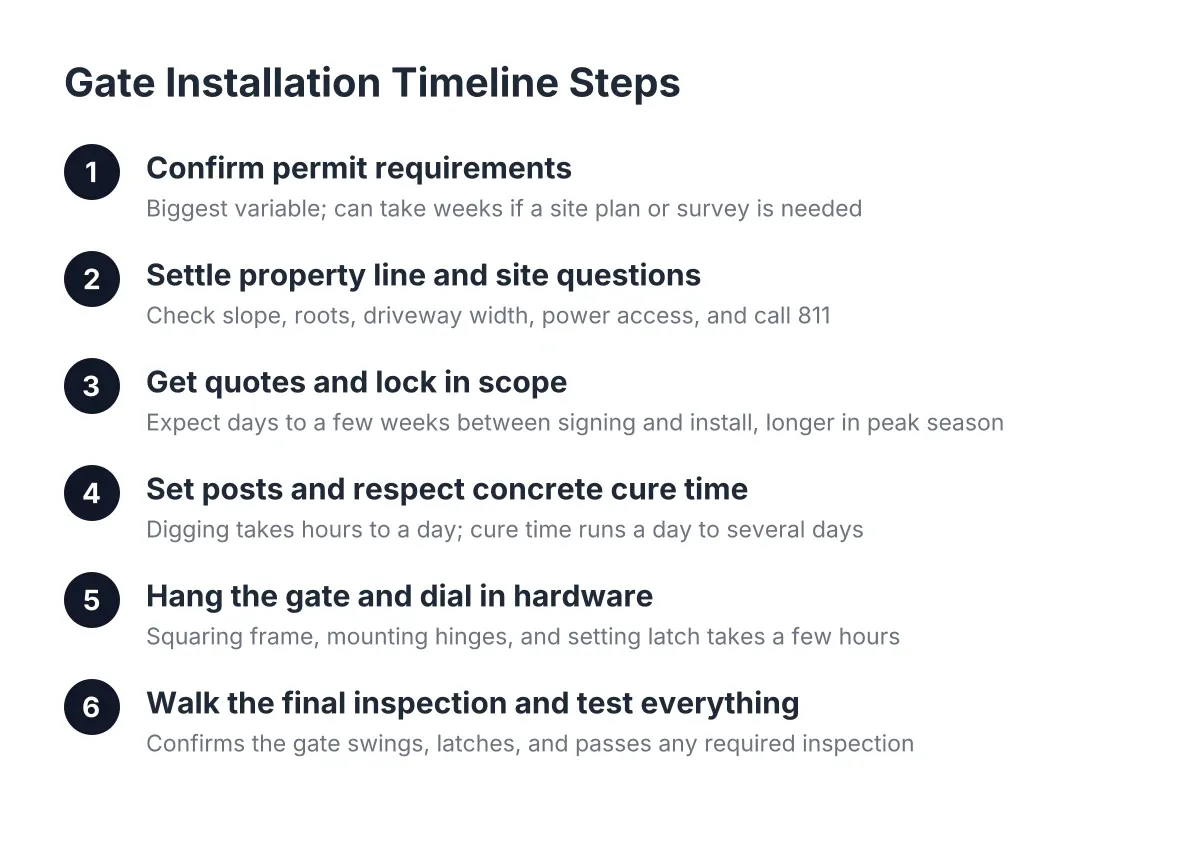
Northeast Ohio freeze-thaw cycles move the ground every winter. Gate posts take more load than line posts, so they need deeper footings and proper concrete. A gate that sags by March usually traces back to a post that was set too shallow for the frost.
Before the crew arrives, call 811 so utilities get marked. Clear the gate area of vehicles, planters, and debris. If the gate posts land on an existing concrete or paver driveway, ask how the installer will handle it. Core drilling lets a crew set posts through the slab without breaking up the surface, with fast-setting concrete poured in the hole so the driveway can be cleaned up the same day. That matters if you want the drive to stay intact.
Driveways also pitch toward the street for drainage. Experienced crews run a string line across the post tops so the gate and adjoining fence follow the grade at a consistent height, instead of stair-stepping awkwardly across the slope. If your quote does not mention how the installer handles slope, ask.
Step 6: Hang and Align the Gate So It Still Works Next Year
This step is the installer's job, but knowing what good work looks like helps you check it. A well-built gate gets squared and braced before hanging, with hinges positioned on the rails so the gate holds its shape while it goes up. Setting the latch hardware thoughtfully matters too; placing the striker with room to adjust means the gate keeps latching as the ground settles over the seasons.
Watch for these signs of a careful install:
- Gate posts set deeper than the line posts, in concrete
- Even gap along the latch side, top to bottom
- The gate swings freely through its full arc without scraping the drive
- Double gates meet cleanly at the center with a working drop rod
- On automatic gates, the opener reverses when it meets an obstruction
For wood gates, pressure treated framing resists the moisture that rots gates first. For chain link, check that the gate frame is welded or properly fitted, not just clamped loose.
Step 7: Handle the Walk-Through and First-Season Adjustments
Before the crew leaves, open and close the gate yourself several times. Lock it. Unlock it. If it is an automatic gate, cycle the opener and test the safety reverse. Get the permit sign-off completed if your city requires a final inspection.
Then expect one round of adjustment after the first winter. Freeze-thaw movement can shift a latch alignment slightly even on a solid install. A minor hinge or striker adjustment is normal; a gate dragging on the ground by spring is not, and that is worth a call back to your installer. Landlords juggling several properties should put a quick gate check on the turnover checklist, since a sagging gate is the kind of small fence repair that becomes a tenant complaint if it waits.
When to Call a Pro Instead of Doing It Yourself
Searching for gate installation help makes sense for most driveway projects. A homeowner can realistically swap a latch, tighten hinges, or re-stain a wood gate. However, setting gate posts to frost depth, core drilling a concrete drive, and anything involving an automatic opener and its wiring belong with a professional. Electrical work on gate operators is not a weekend project, and a gate that fails across a driveway is a safety issue, not just a cosmetic one.
One honest trade-off: hiring a pro costs more up front than a kit from a big-box store. The difference shows up in year three, when the professionally set posts have not heaved and the gate still latches without a shoulder shove.
Ready to Plan Your Gate Installation?
If you are in Greater Cleveland and ready to move, Cleveland Fence Installers handles gate installation alongside wood fence, chain link fence, and privacy fence installation across the service area. We will give you straight answers on cost drivers, the fence permit question for your suburb, and what your driveway and soil mean for the build. Reach out for a free estimate and a site visit, and get a gate that still swings true after a Cleveland winter.
If you need gate installation, Cleveland Fence Installers can help.
Prefer to talk it through? Call (216) 465-0485 — a quick call is usually the fastest way to get a straight answer for your situation.