Do I Need a Permit for Gate Installation in Cleveland? A Step-by-Step Answer
You priced out a fence, you picked a spot for the gate, and then a neighbor mentioned permits. Now you are stuck on one question: do you need a permit for gate installation in Cleveland, or can you just build? It is a fair worry. Nobody wants to pay for a gate and then get a notice from the city telling them to tear it out or pay a fine.
Here is the short version. In most Cleveland-area suburbs, a gate is treated as part of the fence, so the fence permit question and the gate permit question are usually the same question. A standalone walk gate in an existing fence rarely triggers anything new. A tall driveway gate, an automatic opener, or a gate on a corner lot can. The only authority that can give you a final answer is your local building department, and the steps below show you how to get that answer without wasting a week.
This guide walks you through the permit question in order, from figuring out which city you actually answer to, through getting the answer in writing, to planning the gate itself so a tight budget does not get eaten by surprises.
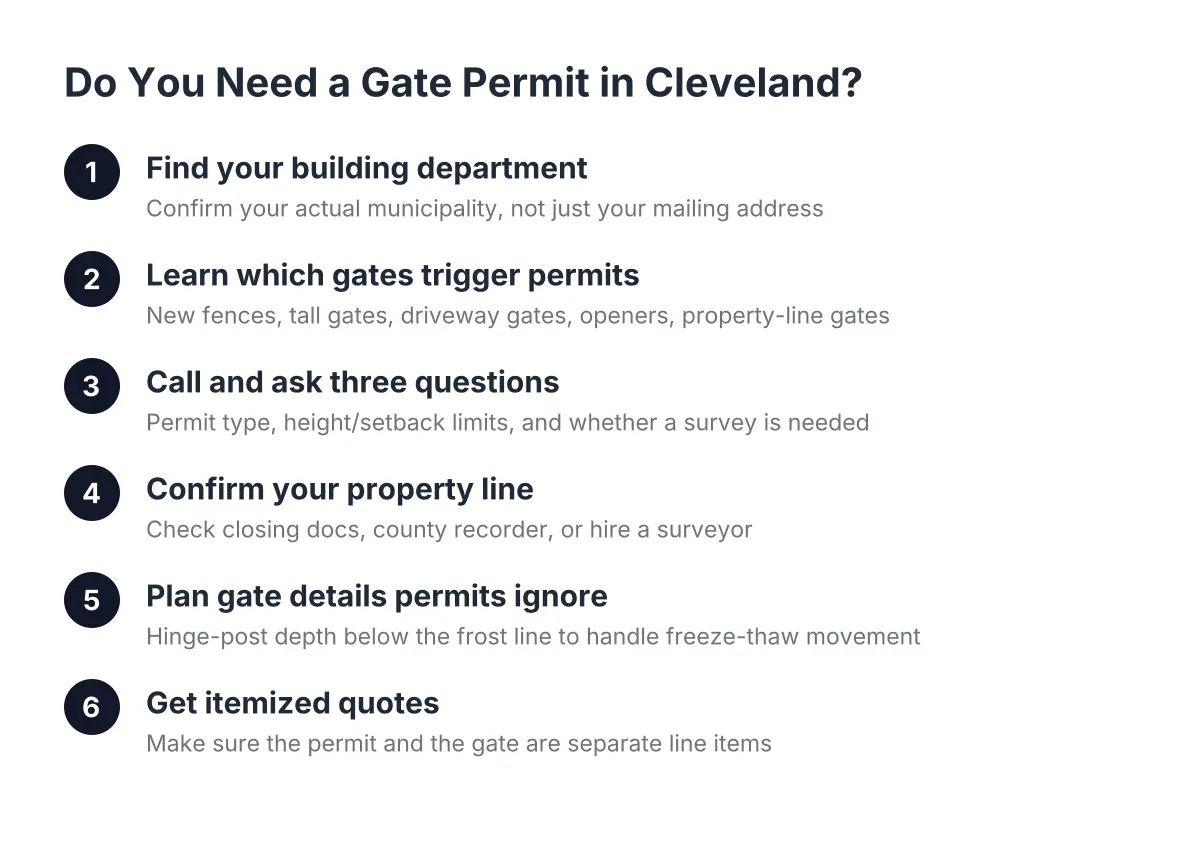
Step 1: Figure Out Which Building Department Owns Your Address
Start here, because "Cleveland" is not one set of rules. Greater Cleveland is a patchwork of the city itself plus dozens of suburbs, and each one runs its own building department with its own fence and gate rules. A gate that needs no paperwork in one suburb might need a drawing and a fee two streets over, across a municipal line.
First, confirm your actual municipality, not your mailing address. Mailing addresses lie; plenty of homes with a Cleveland mailing address sit in a neighboring suburb. Your property tax bill or the county auditor's website will tell you the truth.
Next, find that city's building department page. You are looking for anything labeled fence permit, zoning permit, or accessory structure. Gates almost never get their own category. They ride along with the fence rules.
Step 2: Learn Which Gate Projects Tend to Trigger a Permit
A simple walk gate hung between two existing fence posts usually raises no new permit issues; it is repair-level work, like fence repair. However, some gate projects change the math, and these are the ones worth asking about by name when you call the city:
- A new fence with a gate in it, since the whole fence likely needs whatever permit your city requires for fence installation
- A gate taller than the surrounding fence, because height limits are the most common fence rule cities enforce
- A driveway gate, which can raise sight-line and setback questions, especially on corner lots
- An automatic gate opener, which involves electrical work that may need its own inspection
- A gate on or near the property line, the classic trouble spot on Cleveland's older inner-ring streets with tight lot lines
Do not treat this list as the final word. Rules vary by city and change over time, so verify each item against your own building department rather than assuming your project is exempt.
Step 3: Call the Building Department and Ask Three Specific Questions
Asking the city whether a permit is required for your gate project takes one phone call, and it is free. Describe the project plainly: the gate type, the height, the location on the lot, and whether it is part of a new fence or going into an existing one. Then ask these three questions and write down the answers.
- Does this project need a permit, and if so, which kind: fence, zoning, or electrical?
- What are the height and setback limits for a gate and fence at my address?
- Do I need a site drawing or survey, and will there be an inspection?
Get the answer in writing if you can. An email reply or a printed handout from the counter protects you later. If the person on the phone says no permit is needed, ask them to point you to the written exemption so you have something to show if a neighbor or inspector ever asks.
In addition, be wary of anyone who waves off the permit question. A contractor who says "nobody pulls permits for gates" without knowing your city is guessing with your money. A reasonable fence company will either handle the permit conversation for you or tell you exactly whom to call.
Step 4: Confirm Your Property Line Before You Set a Single Post
Permits are only half the legal picture. The other half is the property line, and in Cleveland's older neighborhoods the lot lines are tighter and less obvious than new buyers expect. A gate post set six inches onto the neighbor's side is a dispute waiting to happen, permit or not.
Check your closing documents for a survey first. Many buyers, especially people who just closed on a new build, already have one and do not realize it. If you cannot find one, the county recorder may have the plat, or you can hire a surveyor to mark the corners.
For example, suppose a couple closes on a new-construction home with a bare backyard and wants a privacy fence with a four-foot walk gate for the dog. Say their budget is around $4,000 to $6,000 for the whole project. In that scenario, a disputed property line could force them to move posts after the fact, which costs far more than confirming the line up front. For context, Angi reports that fence installation costs an average of $3,277, with most homeowners paying between $1,860 and $4,843, so a redo on even part of a run is real money.
Step 5: Plan Your Gate Installation Details That Permits Will Not Catch
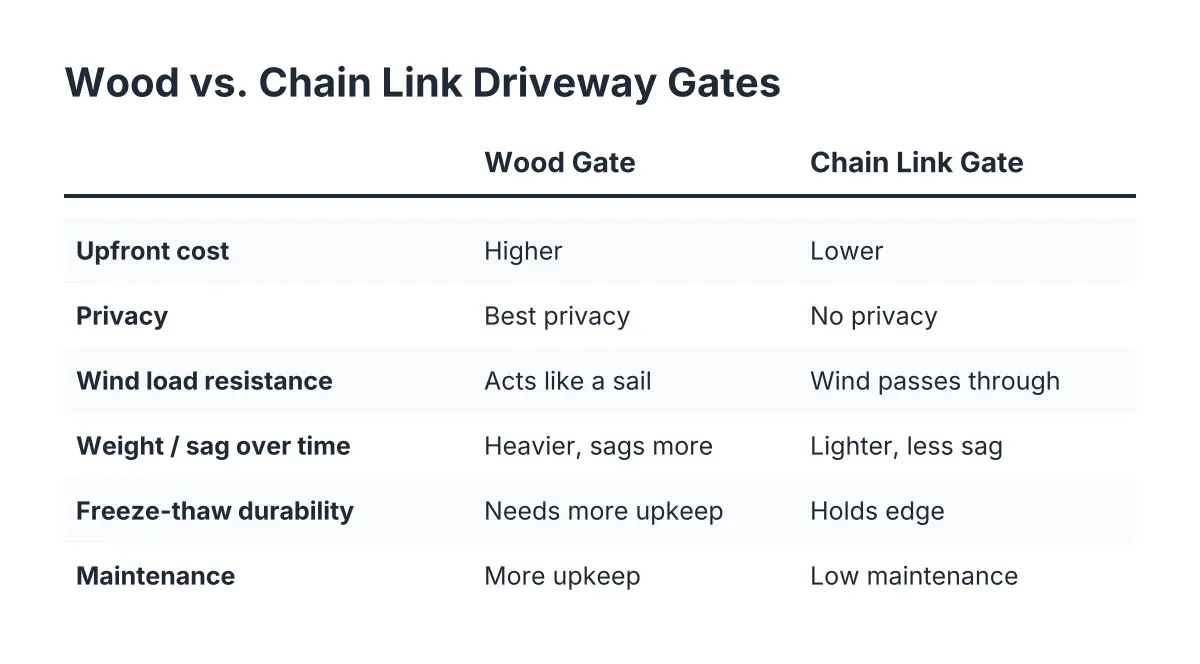
A permit protects you from the city. It does not protect you from a gate that sags, drags, or will not latch by March. Northeast Ohio's freeze-thaw cycles move the ground every winter, and gates feel that movement more than any other part of a fence. Plan for it before anyone digs.
Three details matter most in a Cleveland yard:
- Hinge-post depth and footing. The hinge post carries the gate's full weight. It needs to be set below the frost line in concrete, or it will heave and tilt when the ground freezes and thaws.
- Latch placement. Setting the latch striker near the top of its adjustment range leaves room for the gate to settle over time and still catch cleanly. Positioning the striker before the gate is hung also helps align the gate correctly.
- Reinforcement where the material is weak. On vinyl gates, the hinge-side post and the gate uprights benefit from internal reinforcement so screws hold under load. The latch side rarely needs it; the hinge side almost always does.
These are the kinds of details a good gate installation crew handles by habit and a weekend installer learns the hard way. If your project includes an automatic opener or a heavy driveway gate, the stakes go up; that is a reasonable point to bring in a professional rather than troubleshoot a leaning 200-pound gate yourself.
Step 6: Get Quotes That Spell Out the Permit and the Gate as Line Items
When you start collecting estimates, make the permit question and the gate itself visible on paper. A vague lump-sum quote is where hidden costs live. Ask each fence company to break out the fence, the gate hardware, the gate labor, haul-away of old material if any, and who is responsible for the permit.
As a result, you can compare quotes on substance instead of guessing. Per-foot pricing gives you a sanity check on the fence portion; NerdWallet reports professionally installed fences cost $15 to $25 per linear foot on average, citing Angi data. The gate will sit on top of that as its own line, since gates take more hardware and labor per foot than straight fence runs.
One trade-off worth naming: handling the permit yourself can save a little on the quote, but it also makes you the one responsible for drawings, fees, and inspections. For a first-time buyer, paying an installer who knows the local building departments to manage that paperwork is often worth it.
The Bottom Line on Gate Permits in Cleveland
A gate by itself rarely needs its own permit, but the fence it hangs on often does, and in 2026 the rules still vary city by city across Greater Cleveland. One phone call to your building department, with your answers in writing, removes the fine-and-tear-out risk that keeps budget-first homeowners up at night. Confirm the property line, insist on itemized quotes, and make sure whoever does the work plans for frost heave. Do those things in order, and the permit question becomes the easiest part of the whole gate installation project.
Prefer to talk it through? Call (216) 465-0485 — a quick call is usually the fastest way to get a straight answer for your situation.