Gate Installation Timeline: How Long Does a Cleveland, OH Project Take?
If you are asking how long a gate installation timeline runs, here is the short version: a simple walk gate added to an existing fence often takes a few hours, a new driveway gate with set posts takes one to three days of site work plus concrete cure time, and an automatic gate adds more days for electrical and operator setup. The permit question can add weeks before any crew shows up. This guide walks through each step so a homeowner or small landlord in Cleveland, OH can plan the whole project, not just the install day.
That distinction matters. The install day is usually the shortest part. The timeline that catches people off guard is everything around it: permits, property lines, post curing in Cleveland's freeze-thaw ground, and scheduling. Here is the full process, step by step.
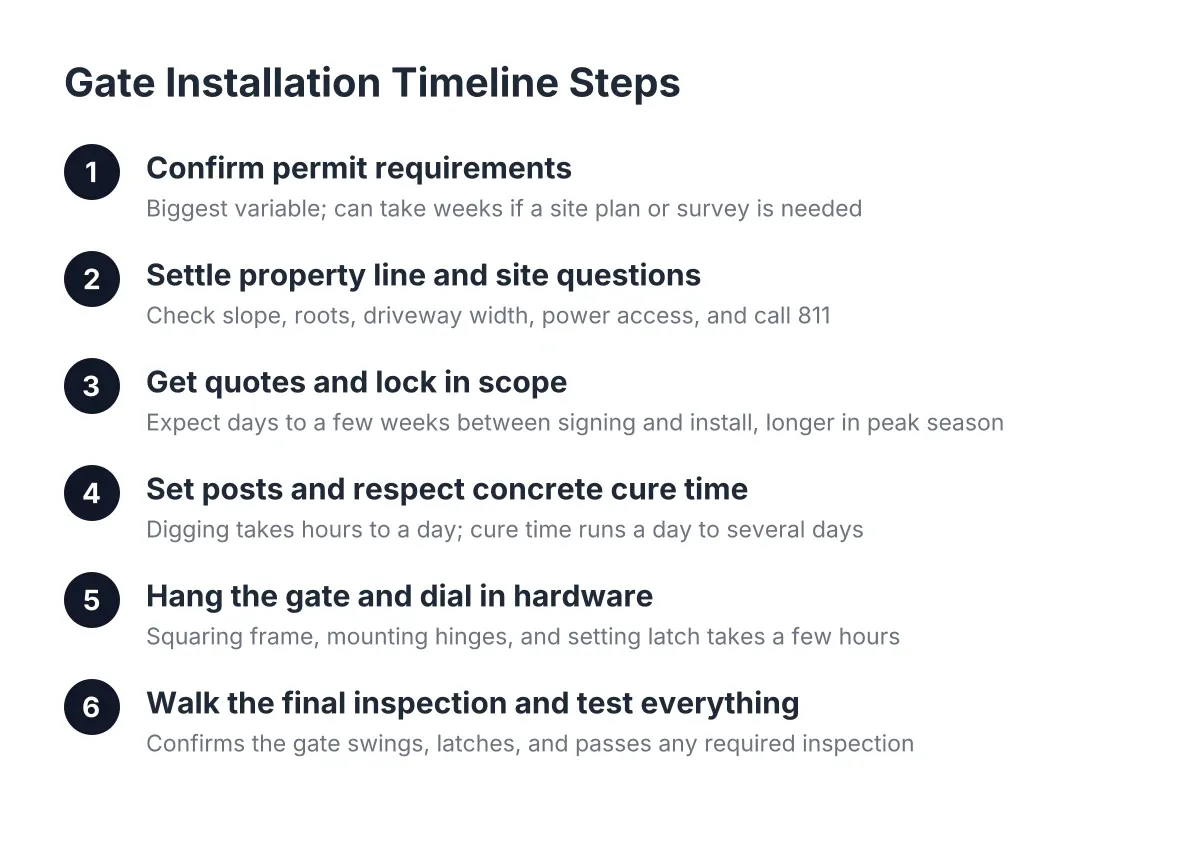
Step 1: Confirm Whether You Need a Permit Before Anything Else
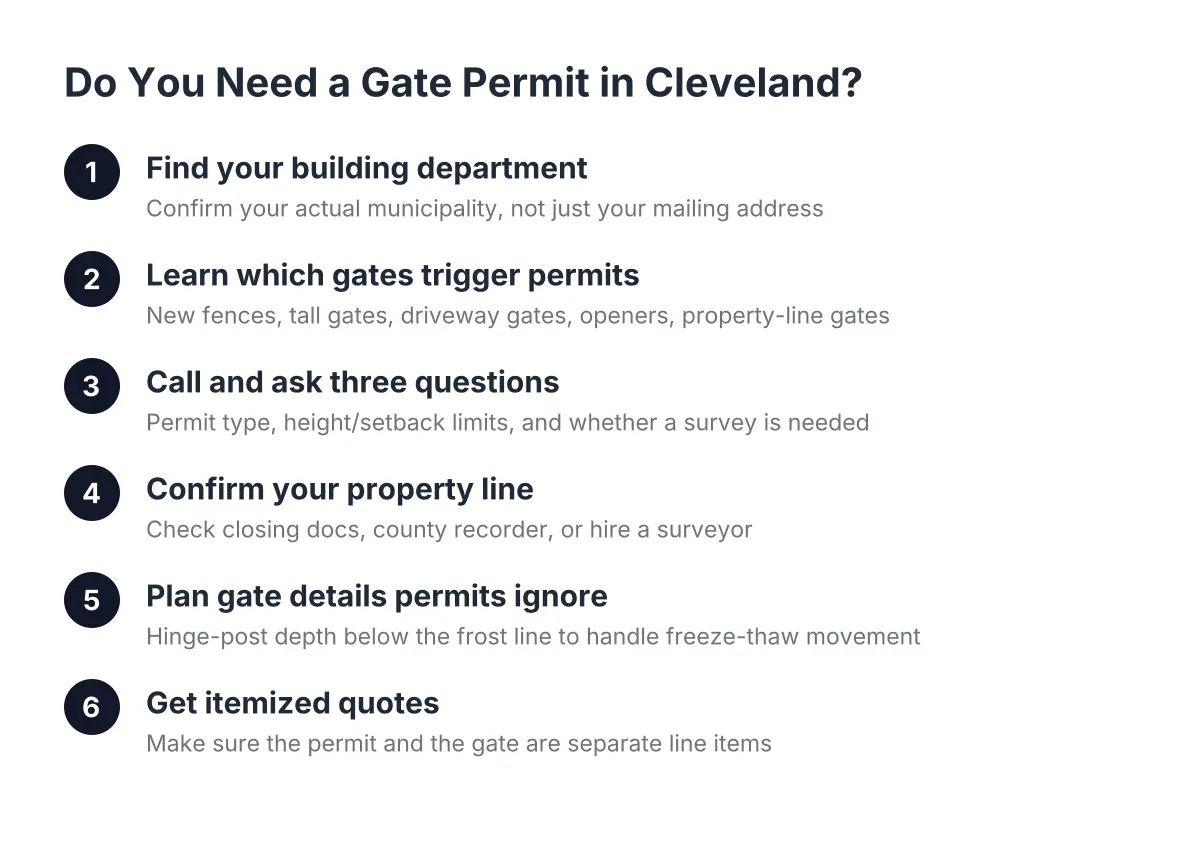
Start with the permit question, because it is the single biggest variable in how long your gate project takes. A fence permit or zoning approval can be required depending on your city, your gate height, and where it sits on the lot. Skip this step and you risk a stop-work notice or, worse, tearing out finished work.
Cleveland and its inner-ring suburbs each handle fences and gates differently. Some treat a gate as part of the fence and cover it under one fence permit. Others have separate rules for driveway gates, especially automatic ones. Do not rely on what a neighbor did or what a contractor assumes; call your local building department and ask directly.
Budget time for this step. Approval can come back fast, or it can take weeks if the department asks for a site plan or a property survey. If you are a landlord working against a tenant turnover date, make this call before you list the unit, not after.
One honest note: no article can tell you for certain whether your specific address needs a permit. Verify with your city's building department, and ask any fence company you talk to whether they pull the permit or expect you to.
Step 2: Settle the Property Line and Site Questions
Next, confirm where the gate will actually go. Cleveland's older housing stock sits on tight lot lines, and a gate post set six inches onto a neighbor's property creates a problem no schedule can absorb. If you do not have a survey, find your plat map or consider ordering a stake survey for the gate and fence line.
While you are at it, walk the site and note anything that slows a crew down:
- Slope across the gate opening, which affects how the gate swings or slides
- Tree roots, old concrete footings, or buried debris where posts must go
- Driveway width and whether a swing gate has room to open fully
- Power access, if you are planning an automatic gate operator
- Utility lines, which require a call to 811 before any digging
Each of these is solvable. However, each one found on install day instead of planning day adds time, and sometimes cost, to the job.
Step 3: Get Quotes and Lock In a Scope
With permits and site questions answered, get written estimates. A clear quote should spell out the gate type, hardware, post material, concrete, haul-away of any old fencing, and whether permit handling is included. Vague quotes are where the hidden costs live, and hidden costs are what stretch timelines when change orders pile up.
For context on the broader project, Angi reports that fence installation costs an average of $3,277, with most homeowners paying between $1,860 and $4,843. NerdWallet puts professionally installed fences at $15 to $25 per linear foot on average, citing Angi data. A standalone gate added to an existing chain link fence or wood fence sits well below those full-project numbers; an automatic driveway gate with an operator can sit well above them. Use the quote line items, not the bottom line, to compare bids.
Be careful with the lowest number. The cheapest bid often means lighter posts, shallower footings, or skipped bracing, and a gate that sags in two years costs more to rebuild than a solid one cost to install. A gate takes more abuse than any fence panel, so the build quality shows up fast.
Scheduling is part of this step too. In Greater Cleveland, spring and summer calendars fill up. Expect days to a few weeks between signing and your install date, longer in peak season. Winter installs happen, but frozen ground slows digging and can push dates.
Step 4: Set the Posts, Then Respect the Concrete Cure Time in Your Gate Installation Timeline
Here is where gate installation timeline requirements emerge: concrete. Gate posts carry constant swinging weight, so they get set deeper and heavier than standard fence posts, in concrete footings below the frost line. In Cleveland, freeze-thaw ground movement will heave a shallow footing and leave your gate dragging by spring.
Digging and setting posts for a single gate is usually a few hours to one day. The wait comes after. Concrete needs time to cure before it can take the load of a hung gate, and a careful installer will not hang a heavy driveway gate on green footings. Depending on the mix, the weather, and the gate weight, that wait can run from a day to several days.
Therefore, plan on two visits for most driveway gate projects: one to set posts, one to hang and adjust the gate. A light walk gate on an existing, solid fence post can skip the wait entirely, which is why those jobs finish in an afternoon.
Step 5: Hang the Gate and Dial In the Hardware
Hanging the gate itself moves fast when the posts are right. A typical crew squares the gate frame, mounts hinges, hangs the gate, and sets the latch in a few hours. Good installers pre-fit the hinges and position the latch hardware so the gate self-aligns as it goes up, which saves adjustment time.
Hardware placement also protects your timeline years from now. Ground shifts in this region, so a latch striker set with room to adjust keeps the gate working as posts settle. On vinyl gates, reinforcing the uprights so screws hold firm makes the frame last. These details cost minutes during installation and save a fence repair call later.
For an automatic gate, this step expands. The operator needs mounting, power, safety sensors, and programming. Depending on whether an electrician must run power to the gate location, add one to several extra days. Trenching conduit across a long Cleveland driveway is its own small project.
Step 6: Walk the Final Inspection and Test Everything
Finally, close the job properly. If your city required a fence permit, it may require a final inspection; schedule it promptly so the paperwork does not drag past the physical work. Then test the gate the way it will actually be used.
- Swing or slide it through its full travel several times
- Check the latch engages cleanly and locks if security matters
- Confirm clearance at the bottom across the whole arc, not just one spot
- For automatic gates, test the safety reverse and any keypads or remotes
Suppose you own a rental duplex on Cleveland's west side with a turnover in four weeks, and the yard needs a secured gate before the next tenant moves in with a dog. In that scenario, a realistic plan looks like this: permit call in week one, quote and scheduling in week two, posts set early in week three, gate hung after cure later that week, and a buffer week for weather or inspection. Tight, but doable, as long as the permit question gets asked first.
How Long the Full Gate Installation Timeline Runs, Start to Finish
For most Cleveland projects in 2026, expect this overall shape: a few hours of on-site work for a simple walk gate, one to three days of site work spread over two visits for a driveway gate, and several additional days for an automatic gate with electrical work. Wrapped around that sits one to four weeks of permits, quotes, and scheduling.
In other words, when someone asks whether the timeline for gate installation is long, the honest answer is that the labor is short and the lead-up is not. The homeowners and landlords who finish on schedule are the ones who handle the permit call, the property line, and the quote comparison before the crew ever arrives. Do those three things first, and the rest of the project tends to run exactly as planned.
If you need gate installation, Cleveland Fence Installers can help.
Prefer to talk it through? Call (216) 465-0485 — a quick call is usually the fastest way to get a straight answer for your situation.