Fence Installation Terms Explained: A Plain-English Glossary
If you are getting quotes for a new fence in Greater Cleveland, the jargon piles up fast. This fence installation glossary explains the terms you will see in estimates, permit paperwork, and material lists in plain English. Use it to read a quote line by line, ask sharper questions, and spot vague answers before you sign anything. Every definition stands on its own, so you can skim just the terms you need.
- Post: the vertical backbone of the fence
- Frost Line: how deep the ground freezes
- Post Hole and Footing: the dug hole and concrete base
- Rail: the horizontal framing between posts
- Picket: the vertical boards you actually see
- Gauge: wire thickness on chain link
- Mesh Size: the diamond opening in chain link fabric
- Pressure Treated Wood: lumber treated to resist rot
- Privacy Fence: a solid fence that blocks the view
- Gate Hardware: hinges, latches, and drop rods
- Fence Permit: the city's written approval to build
- Property Line and Survey: where your land legally ends
- Setback: how far the fence must sit from the line
- Easement: a strip of your land others can use
- Linear Foot: how fence pricing is measured
- Tear-Out: removing the old fence first
- Grade and Racking: how a fence handles sloped ground
- Utility Locate (Call Before You Dig): marking buried lines before digging
Fence Installation Glossary: Parts of the Fence
These are the pieces named on a materials list or sketch. When a fence company walks your yard, these are the words they will use.
Post
A post is the vertical support that anchors a fence to the ground. Posts carry the whole structure, so how deep they are set and how they are secured matters more than anything else on the quote. In Cleveland, freeze-thaw ground movement can heave a shallow post out of plumb within a few winters. Ask any installer how deep they set posts and why.
Rail
A rail is the horizontal framing piece that runs between posts and holds the fence boards or fabric. Wood fences use two or three rails depending on height; chain link uses a top rail of steel pipe. More rails mean a stiffer fence that sags less over time. If a tall privacy fence quote shows only two rails, ask why.
Picket
A picket is one of the vertical boards fastened to the rails on a wood fence. Picket width, spacing, and thickness drive both the look and the price. Pickets butted tight together give privacy; gaps give airflow and a more open look. Thin pickets cost less up front but cup and crack sooner.
Gauge
Gauge is the measure of wire thickness in a chain link fence, and a lower number means thicker, stronger wire. A 9-gauge fence is heavier duty than an 11-gauge one, even though 11 sounds bigger. Gauge is one of the quiet ways two chain link quotes can differ in price while looking identical on paper. Ask for the gauge in writing.
Mesh Size
Mesh size is the width of the diamond-shaped opening in chain link fabric. Smaller diamonds use more wire, cost more, and are harder to climb; larger diamonds cost less. If you are fencing for a dog, mesh size matters because small pets can squeeze through large openings. It belongs on the quote next to the gauge.
Pressure Treated Wood
Pressure treated wood is lumber infused with preservatives under pressure so it resists rot and insects. A pressure treated fence post lasts far longer in wet ground than untreated wood. Many wood fences pair treated posts and rails with cedar or treated pickets. In a climate with wet springs and freezing winters, treated posts are the standard, not an upgrade.
Privacy Fence
A privacy fence is a solid fence, usually six feet tall, built so neighbors and passersby cannot see through it. Privacy fence installation costs more per foot than open styles because it uses more material and catches more wind, which demands sturdier posts. Height limits for privacy fences are a common permit question, so confirm your city's rules before you pick a height.
Gate Hardware
Gate hardware means the hinges, latches, springs, and drop rods that make a gate open, close, and lock. Gates fail before fences do because they move every day, so hardware quality shows up fast. Good gate installation includes a reinforced gate post set deeper or in more concrete than line posts. If a quote lists a gate but no hardware details, ask what is included.
Fence Installation Glossary: Ground, Digging, and Site Work
This section covers what happens below the surface, which is where most Cleveland fence problems start.
Frost Line
The frost line is the depth to which the ground freezes in winter. Posts set above the frost line get pushed up and tilted as the soil freezes and thaws, a cycle Cleveland yards go through every year. Setting posts below the frost line is the single biggest factor in whether a fence stays straight. Your local building department can tell you the depth used in your area.
Post Hole and Footing
A post hole is the hole dug for each fence post, and the footing is the concrete or packed gravel base that holds the post in it. Hole depth and footing type are where a cheap job hides its corners. Concrete footings resist wind load on solid privacy fences; gravel footings drain better around wood posts. A clear quote states hole depth and footing material for every post type.
Grade and Racking
Grade is the slope of your ground, and racking means angling the fence panels so they follow that slope without gaps underneath. The alternative is stepping, where each panel stays level and drops down like stairs. Sloped yards take more labor either way, which is why two houses on the same street can get different prices for the same fence. If your yard slopes, ask which method the installer plans to use.
Utility Locate (Call Before You Dig)
A utility locate is the free service that marks buried gas, electric, water, and cable lines before anyone digs. In Ohio, you request it through 811 before post holes go in. A professional crew will not dig without the marks, because hitting a buried line is dangerous and expensive. If an installer shrugs off the locate, that is a red flag, not a time-saver.
Pricing and Paperwork
These terms show up on quotes, permits, and property records. They decide what you can build and what you will pay.
Linear Foot
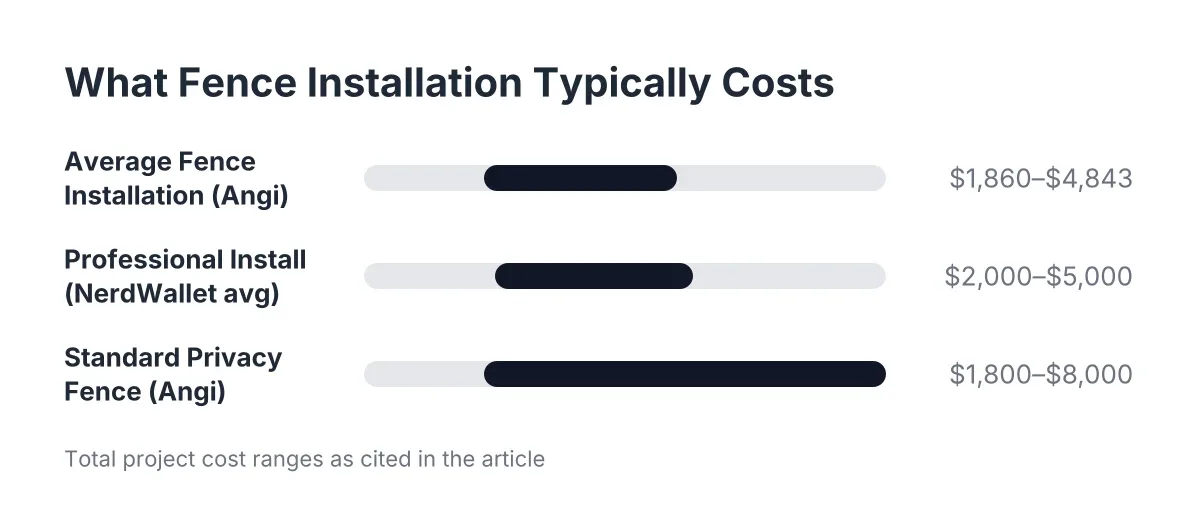
A linear foot is a straight-line foot of fence length, and it is the unit most fence pricing is based on. Measure your fence line, and you can compare quotes per foot instead of guessing at lump sums. Material, height, gates, tear-out, and site conditions all move the per-foot number. For a fuller breakdown of what drives the total, see our guide to fence installation cost.
Fence Permit
A fence permit is written approval from your city or township to build a fence of a certain height, style, and location. Permit rules vary from one Cleveland suburb to the next, covering things like maximum height and whether the finished side must face the neighbor. Skipping a required permit can mean fines or tearing the fence out later. Always verify the rules with your local building department before work starts; requirements in Shaker Heights can differ from those a few suburbs over.
Property Line and Survey
A property line is the legal boundary of your lot, and a survey is the professional measurement that pins down exactly where it runs. Fences built even a foot over the line can trigger disputes or forced removal. Cleveland's older inner-ring neighborhoods have tight lots where the real line often sits closer to the house than owners assume. If you cannot find your survey pins, getting a survey before fence installation is cheaper than moving a fence after.
Setback
A setback is the minimum distance a fence must sit back from a property line, sidewalk, or street corner. Corner lots often have extra setback rules so drivers can see around the intersection. Setbacks shrink your usable fenced area, which can change how much fence you need and what it costs. Your building department can confirm the setbacks that apply to your lot.
Easement
An easement is a strip of your property that a utility or neighbor has a legal right to use, even though you own the land. You can often fence across an easement, but the utility can remove that section to reach their lines, usually without paying to rebuild it. Easements show up on your deed or survey. Knowing where yours run helps you decide where a gate or removable panel makes sense.
Tear-Out
Tear-out is the removal and disposal of an old fence before the new one goes in. It is a separate line on most fence replacement quotes because old concrete footings take real labor to pull. If a quote for replacing a fence seems low, check whether tear-out and haul-away are included or left for you. Old posts snapped off at ground level still leave concrete that has to come out.
Using These Terms
With this fence installation glossary, you can read a quote line by line and know what each item means: post depth, gauge, linear footage, tear-out, and the permit question. That makes it easier to compare two bids fairly and to ask any fence company the questions that reveal how they build. If you are planning a project anywhere in Greater Cleveland, a free estimate is the natural next step.
If you need fence installation, Cleveland Fence Installers can help.
Prefer to talk it through? Call (216) 465-0485 — a quick call is usually the fastest way to get a straight answer for your situation.