Gate Installation Terms Explained: A Plain-English Glossary
If you are getting quotes for a new gate in Greater Cleveland, the jargon piles up fast: swing gates, drop rods, cantilever tracks, setbacks. This gate installation glossary puts each term in plain English so you can read a quote line by line, ask the right questions, and spot a thin bid before you sign anything. Each entry starts with a one-sentence definition you can take at face value, then explains why it matters for your yard and your budget. No sales talk, just the words you will actually hear.
- Swing Gate: a gate that opens on hinges, like a door
- Sliding Gate: a gate that rolls sideways instead of swinging
- Double Gate: two gate panels that meet in the middle
- Walk Gate: a narrow gate for people, not vehicles
- Gate Post: the beefed-up post that carries the gate's weight
- Hinge: the hardware that lets a gate swing
- Latch: the catch that holds a gate closed
- Drop Rod: a pin that anchors one half of a double gate to the ground
- Gate Frame: the rigid skeleton that keeps a gate square
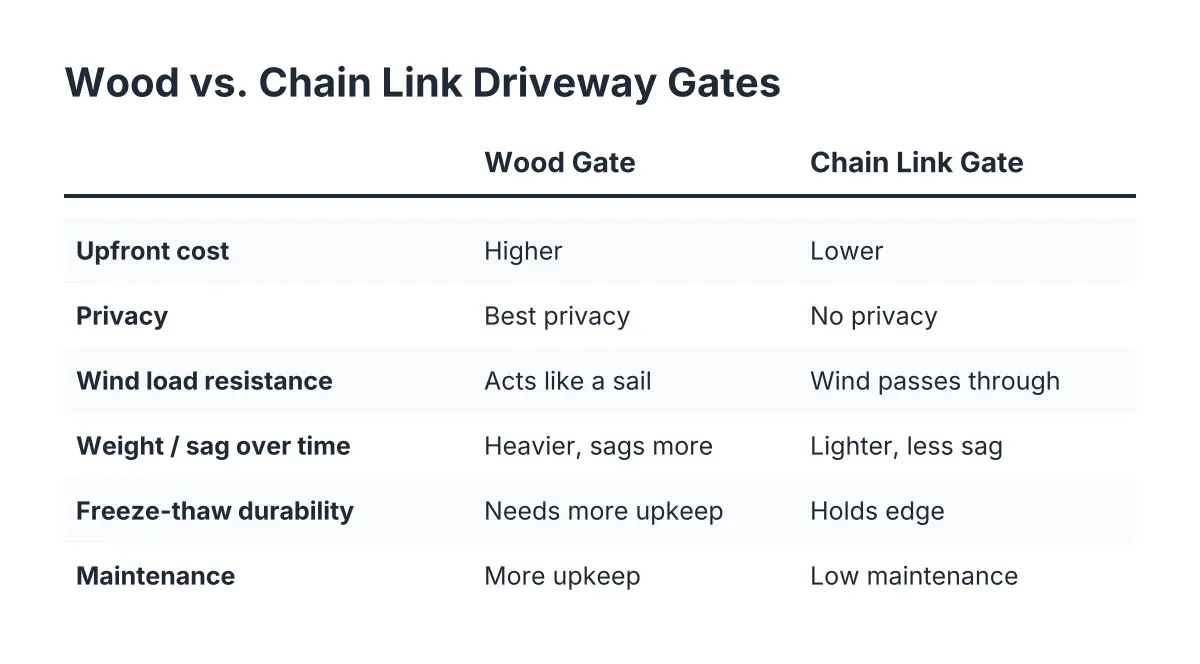
- Sag: when a gate droops and drags on the ground
- Clearance: the gap between the gate and the ground or posts
- Swing Direction: which way the gate opens, in or out
- Frost Line: how deep the ground freezes, which sets post depth
- Post Footing: the concrete base that holds a gate post upright
- Setback: how far a fence or gate must sit from a property line
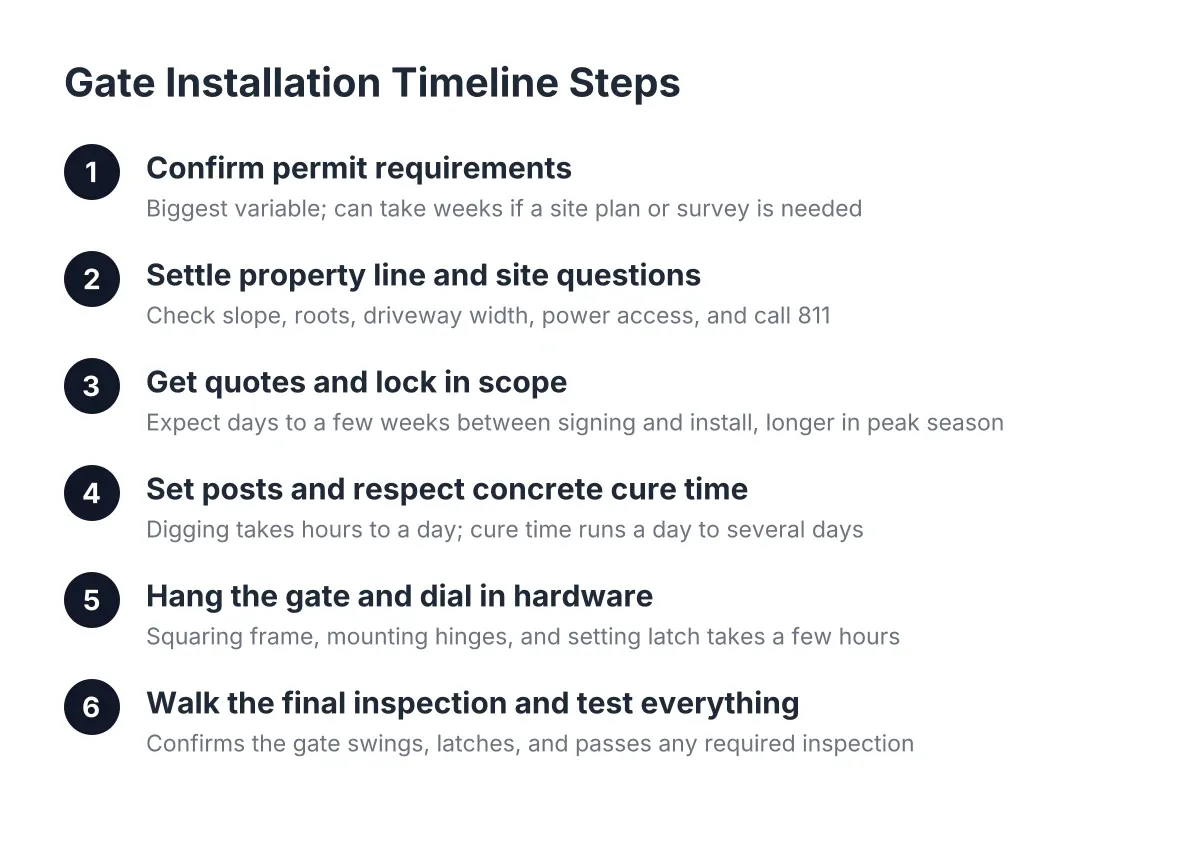
- Fence Permit: the local approval you may need before building
Gate Installation Glossary: Types and Layout
These terms describe what kind of gate you are buying and how it fits your lot. Get these right and the rest of the quote makes sense.
Swing Gate
A swing gate is a gate that opens on hinges and swings in an arc, like a house door. It is the most common and least expensive type for homes because it needs the fewest parts. The catch is that it needs clear, level space to swing through. If your driveway slopes up toward the house, an inward-swinging gate may scrape the pavement, and your installer should flag that before building.
Sliding Gate
A sliding gate is a gate that rolls sideways along the fence line instead of swinging open. It works well on sloped driveways and tight lots where a swing gate has no room to travel. It costs more because it needs a track or rollers and extra fence length for the gate to slide along. On Cleveland lots with tight property lines, a slide can solve problems a swing gate cannot.
Double Gate
A double gate is two gate panels that meet in the middle and open from the center. Homeowners usually choose one for driveways or to get a mower, trailer, or boat into the backyard. Each panel is shorter and lighter than one wide gate would be, which means less sag over time. If you ever plan to drive equipment through, say so during the estimate; widening a gate later costs more than building it wide now.
Walk Gate
A walk gate is a narrow gate, usually three to four feet wide, sized for people rather than vehicles. It is the standard gate in most backyard fence projects. Even if you only need a walk gate today, think about where trash cans, wheelbarrows, and snow blowers pass through. A few extra inches of width at gate installation time is cheap compared to rebuilding the opening later.
Gate Installation Glossary: Hardware and Moving Parts
Hardware is where cheap gates fail first. When a quote lists these parts by name, the installer is telling you what quality level you are paying for.
Hinge
A hinge is the pivoting hardware that attaches a gate to its post and lets it swing. Hinges carry the gate's full weight every time it moves, so undersized hinges are the top cause of early gate failure. A heavy wood privacy gate needs heavier hinges than a light chain link gate. Ask what hinges are included; "adjustable" hinges let the installer fine-tune the gate later as the ground shifts.
Latch
A latch is the catch that holds a gate closed until someone opens it. Options run from a simple gravity latch to lockable and self-closing versions. If you have a pool, many areas require self-closing, self-latching hardware, so raise that early. A latch that lines up poorly is often the first visible sign of a sagging gate.
Drop Rod
A drop rod is a vertical pin on one half of a double gate that drops into a sleeve in the ground to hold that half still. Without it, both panels flap in the wind and the latch has nothing solid to close against. In a Cleveland winter, the ground sleeve can pack with ice and debris, so ask how the installer sets it and whether it drains. A missing drop rod on a double gate quote is worth a question.
Gate Frame
A gate frame is the rigid skeleton, usually steel or built-up wood, that holds a gate's shape and keeps it square. Fence boards alone will twist and droop; the frame is what resists that. On wood gates, a diagonal brace or a steel frame kit does this job. If a quote for a wide wood gate says nothing about framing or bracing, ask how the installer plans to stop sag.
Fit, Function, and Common Problems
This part of the gate installation glossary covers the words installers use when they talk about how a gate hangs and why gates fail.
Sag
Sag means a gate has drooped out of square so the latch side sits lower than the hinge side, often dragging on the ground. It comes from undersized hinges, a weak frame, a leaning post, or plain gravity over time. Sag is the most common gate repair call there is. A good installer prevents it with a proper frame, strong posts, and hinges rated for the gate's weight.
Clearance
Clearance is the planned gap between the gate and the ground, posts, or latch hardware. Too little clearance and the gate binds when wood swells in wet weather or the ground heaves in a freeze. Too much and pets slip underneath. An installer who talks about clearance is planning for Cleveland's wet springs and frozen winters, not just a sunny install day.
Swing Direction
Swing direction means which way a gate opens: into the yard, out toward the street, left-handed, or right-handed. It sounds minor until a gate swings into a slope, a downspout, or a parked car. Standing at the opening with your installer and agreeing on swing direction takes two minutes and prevents the most common "that's not what I pictured" moment. It should be written on the quote.
Ground, Posts, and Paperwork
Most of a gate's strength is underground, and some of the project lives at city hall. These terms cover both.
Frost Line
The frost line is the depth to which the ground freezes in winter, and posts must be set below it to stay put. In Northeast Ohio, freeze-thaw cycles push shallow posts up and out of plumb, and a leaning post means a dragging gate by spring. This is why post depth shows up on good quotes. Ask any fence company how deep they set gate posts and why.
Post Footing
A post footing is the concrete base poured around the bottom of a post to anchor it in the ground. Gate posts need bigger footings than regular fence posts because the gate hangs its full weight off one side, day after day. A quote that treats gate posts like line posts is cutting a corner you will feel in a year or two. Depth, diameter, and concrete should all be part of the conversation.
Setback
A setback is the minimum distance a fence or gate must sit from a property line, sidewalk, or street under local rules. Cleveland's older neighborhoods often have tight lot lines, so a few inches matter. Building past your line can mean tearing work out later. Confirm your property line before the crew arrives, and check setback rules with your local building department rather than guessing.
Fence Permit
A fence permit is the local government's written approval to build a fence or gate on your property. Whether you need one depends on your city, your gate's height, and sometimes its location on the lot. Rules vary across Greater Cleveland suburbs, so verify with your local building department before work starts. A straight-shooting installer will tell you the permit question exists instead of waving it off.
Using These Terms
What this gate installation glossary gives you is a working vocabulary: you can now read a quote line by line and know what hinges, footings, and setbacks actually mean for the gate in your yard. When a bid skips the frame, the post depth, or the permit question, you will notice, and you can ask before you commit. If you want straight answers on your project, a free estimate is the natural next step.
If you need gate installation, Cleveland Fence Installers can help.
Related guide: gate installation — Complete Guide
Prefer to talk it through? Call (216) 465-0485 — a quick call is usually the fastest way to get a straight answer for your situation.