How Freeze-Thaw Cycles Affect Fence Post Setting on Cleveland Soil
If your old fence is leaning, your posts are rotting at the ground line, or a winter storm just dropped two sections into the yard, the ground under your fence is part of the story. Freeze-thaw cycles affect fence posts in Cleveland more than almost any other factor, and a fence set without the freeze line in mind usually fails years before the wood or wire does. This guide explains what happens below grade, why so many Cleveland fences heave and lean, and how to make sure the replacement is set to outlast the one you are tearing out. Understanding fence post frost heave—the upward movement of posts due to freezing soil—is essential to protecting your investment.
This is written for two readers. First, the homeowner staring at a half-collapsed wood fence wondering whether to repair or replace. Second, the small landlord with a handful of rental doors who needs a chain link fence or basic wood fence that survives tenant turnover and Lake Erie winters without an annual repair bill. Both of you have the same underlying problem: posts, and what the ground does to them from November through April.
What the Freeze-Thaw Cycle Does to the Ground Under a Fence
A freeze-thaw cycle is simple physics. Water in the soil freezes, and when water freezes it expands. That expansion pushes soil, and anything buried in it, upward and sideways. When the ground thaws, the soil relaxes and settles back down, rarely in exactly the same place.
One cycle does little. The problem is repetition. A Cleveland winter does not freeze once in December and thaw once in March. Temperatures cross the freezing line dozens of times in a season, especially in late fall and early spring. Every crossing is another push on every post in your fence line.
Over several winters, that repeated push does three things to a poorly set fence:
- Frost heave. The freezing soil grips the post or its concrete footing and lifts it. A post can rise a little each winter and never fully settle back, which is why old fences often have posts sitting an inch or two higher than they started.
- Lateral movement. Expanding soil does not only push up. It pushes sideways, which rocks posts in their holes and opens a gap around the footing. Water fills that gap, freezes, and widens it further.
- Loosening. Once a post can wobble, wind and snow load finish the job. A loose post leans, the rails rack, and the panels start to sag. By the time the fence looks bad from the kitchen window, the failure below grade is already years old.
If you are standing in front of a leaning fence right now, odds are strong this is what killed it. The pickets may have rotted too, but the lean started underground.
How Freeze-Thaw Cycles Affect Fence Post Frost Heave in Cleveland
Freeze-thaw cycles affect fence posts in Cleveland harshly because the region combines three things: heavy clay soil that holds water, lake-effect moisture that keeps that soil wet, and shoulder seasons with repeated swings above and below freezing. Wet clay is the worst-case soil for frost heave, and much of Greater Cleveland sits on it.
Clay matters because frost heave needs water. Sandy, fast-draining soil sheds water before it can freeze in place. Clay traps it. When that trapped water freezes, the soil expands with real force, enough to lift concrete footings that were poured too shallow.
Cleveland's housing stock adds a wrinkle. In older inner-ring neighborhoods, lots are tight, fence lines often sit close to driveways and foundations, and the soil along those lines has been disturbed and refilled over decades. Disturbed fill holds water unevenly, so one post heaves while its neighbor stays put. That is why old fences in these neighborhoods wave up and down along the top line instead of leaning uniformly.
The practical takeaway: in this region, how deep and how well a post is set matters more than what brand of picket goes on it. A premium cedar panel on a shallow post is a short-term fence vulnerable to frost heave and frost heave damage.
Why Your Old Fence Failed, and What That Tells You
Before you replace anything, it helps to read the failure. The way a fence dies tells you what the replacement needs to do differently. Walk the line and look for these patterns:
- Posts that lean but feel solid at the base. The footing itself probably tilted. It may have been too shallow, so freezing soil got underneath and pushed it over winter by winter.
- Posts that wobble in the ground. The footing cracked or the post was never tamped and compacted well. Inadequate compaction around the footing is the main reason posts loosen under wind and water load over time.
- Wood posts snapped or spongy at the soil line. Classic rot at grade, where moisture sits against the wood. The post above and below that line may still be sound.
- Posts sitting higher than they used to, with panels pulled apart. That is frost heave, the signature of freeze-thaw damage on a post that was not set below the frost line.
- One or two sections down after a storm, the rest standing straight. Localized damage, often from a tree limb or a single failed post, not a system-wide problem.
Patterns one, two, and four point to a setting problem. Replacing pickets on those posts just puts new material on a failing foundation. Pattern three is a materials and drainage problem, and pattern five may be a genuine repair candidate.
Repair or Replace When Freeze-Thaw Is the Cause
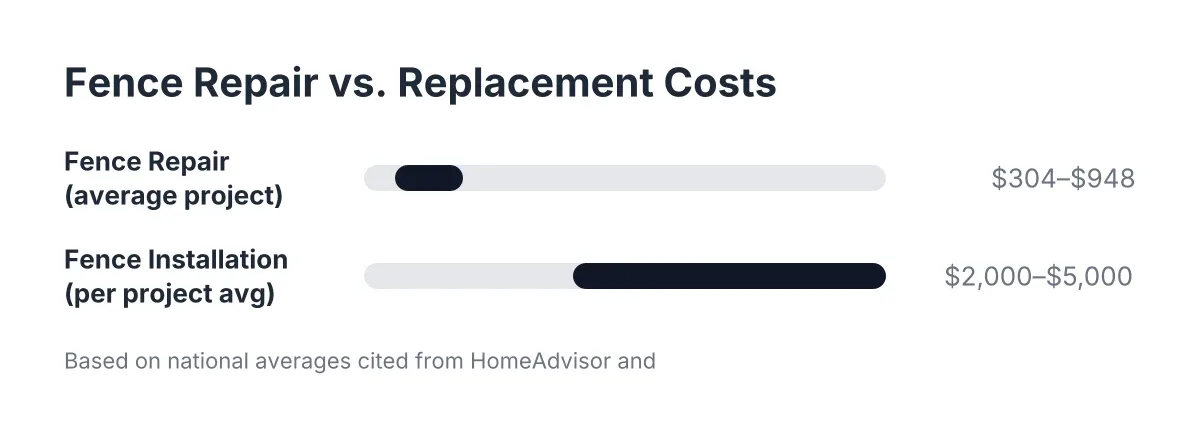
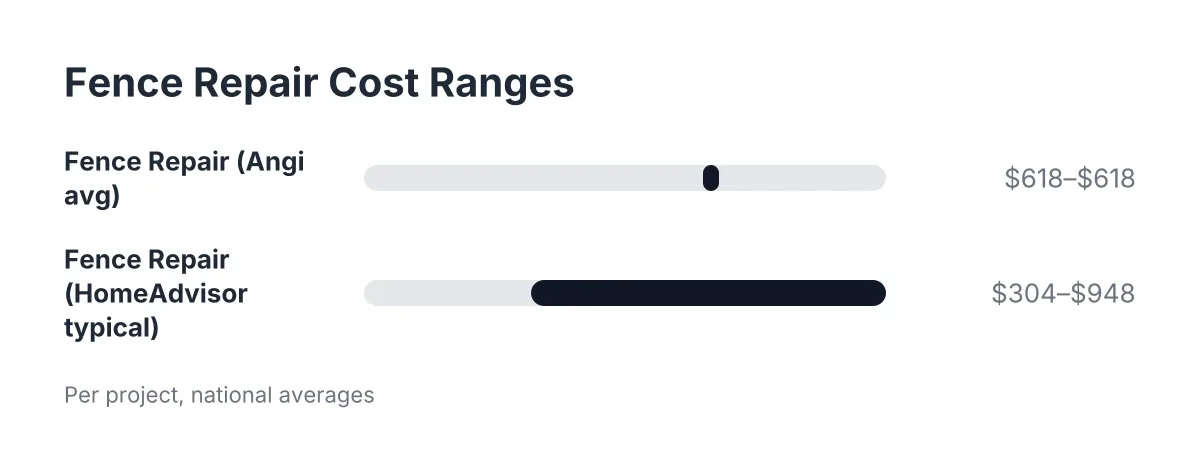
If frost heave or loose footings run the length of the fence, repair rarely pays. You would be resetting most of the posts anyway, and resetting posts is the expensive part of the job. For scale, Angi's 2026 data, based on nearly 3,000 verified projects, puts the national average fence repair cost at $618 per project. HomeAdvisor reports a similar figure, with most homeowners spending between $304 and $948 on repairs. That budget covers a couple of damaged sections, not a fence line full of heaved posts.
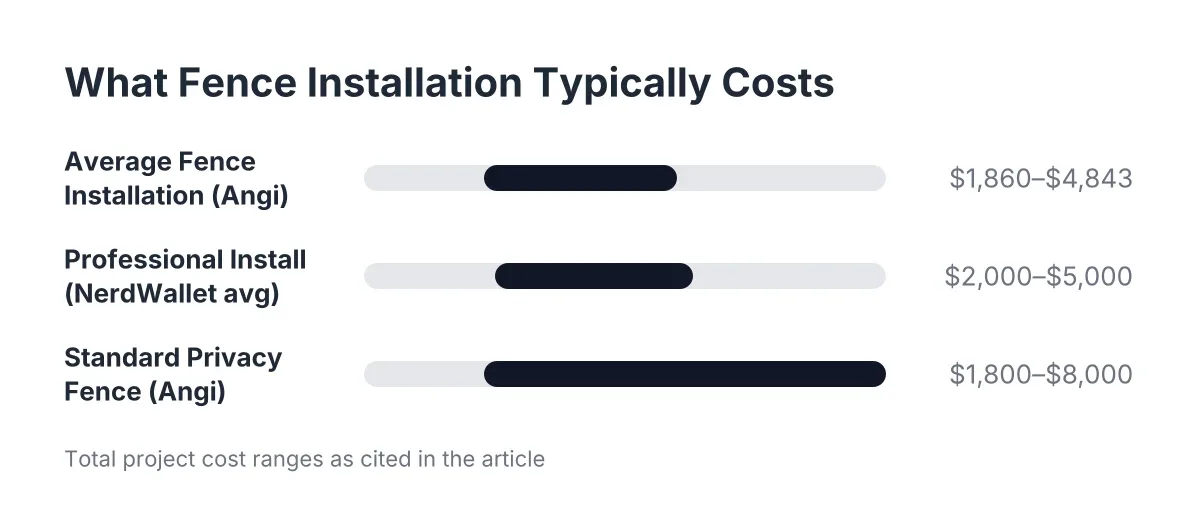
Full fence replacement costs more up front. Angi reports fence installation averages $3,277, with most homeowners paying between $1,860 and $4,843. NerdWallet, citing Angi data, puts professionally installed fences at $15 to $25 per linear foot on average. However, a replacement set correctly for Cleveland's freeze line resets the clock entirely, while serial repairs on heaved posts just spread the same money over five miserable years.
There is a middle path worth knowing about. On a wood fence where the concrete footings are still sound but the wood posts have rotted, an interim post repair that preserves those footings can keep the fence standing and safe. The money spent effectively carries forward, because the fence stays up until you are ready for a full replacement, often with steel posts that will not rot at the soil line. For a landlord phasing work across several properties in a season, that sequencing matters.
Be skeptical in the right direction, though. A contractor who quotes replacement without walking the line and checking individual posts has not earned the bigger number. A contractor who quotes a cheap repair on posts that heave every winter has not solved your problem either. Ask them to show you which posts are solid and which are not. A good installer can demonstrate it with a firm shake at each post.
Setting Posts to Survive Freeze-Thaw Cycles
The defense against frost heave is not complicated, but every step has to be done right. Here is what correct post setting looks like on Cleveland soil, and what to watch for on your own project.
Depth Below the Frost Line
The single most important number in the whole job is hole depth. The footing must sit below the depth to which the ground freezes, so the freezing layer cannot get under the footing and lift it. In Northeast Ohio that means a deep hole, deeper than installers in milder climates dig. Check the exact required depth with your local building department, since it can vary by municipality, and do not accept a crew that eyeballs it.
Depth shows up in a detail you can verify yourself. If a post is driven or set and still sticks up above the planned height, the hole was not deep enough. The fix is a deeper hole, not a saw cut at the top, because cutting the top leaves the shallow footing problem buried where you cannot see it.
Footing Size and Concrete
A post resists lateral force through the mass and width of its footing. A skinny collar of concrete around a post cracks under sideways load, and once it cracks the post wobbles at the break point. The hole needs enough diameter that concrete surrounds the post generously on all sides.
More concrete is not automatically better, though. Past a sensible footing size, extra concrete adds cost without adding stability, and on wood posts there is a real trade-off to weigh. Concrete poured tight against wood can trap moisture at the ground line and speed up rot compared to a well-draining setup. Good installers manage this with drainage-minded details at the base rather than simply burying the post in more mix.
What is never acceptable is skipping the footing entirely. Dropping a post in a hole and stomping dirt back around it is not a building practice; it is a future service call. Every structural post in a Cleveland fence needs a proper footing, whether that fence is a privacy fence, a wood fence, or a chain link fence.
Compaction and Finishing
Tamping is the unglamorous step that decides how the fence holds up in year eight. The material around and over each footing has to be compacted thoroughly, because loose backfill lets water pool against the footing. Pooled water is exactly what freeze-thaw cycles need to pry a post loose.
A small finishing detail worth asking about: after the concrete is placed in a dirt hole, a thin layer of soil goes over the top of the footing so grass can grow flush against the post. It looks better, and it avoids a bare concrete collar that sheds water toward the post.
One more timing note that surprises homeowners. Fresh concrete footings grip hard; posts set within the past year are tough to pull, while decades-old footings often pop out easily during demolition. If your replacement quote includes tear-out of an old fence, that age difference is part of why removal labor varies from job to job.
Material Choices That Handle Cleveland Winters
Post setting is the foundation, but material choice decides how the fence ages above grade. For this climate, the realistic options break down simply.
A pressure treated fence is the workhorse for wood. Treated posts resist rot far longer than untreated lumber at the wet soil line, which is where Cleveland fences die. Cedar pickets on treated posts is a common pairing: the treated wood handles the ground contact, the cedar handles the weather.
Chain link is the freeze-thaw survivor. Steel posts do not rot, the open mesh carries almost no wind load, and the whole system flexes slightly instead of racking. For a landlord securing a yard at a rental before re-listing, chain link set on proper footings is usually the lowest lifetime-cost option, and the same logic drives most commercial fence installation in the area. Angi data shows privacy fence installation typically runs between $1,800 and $8,000, averaging $4,300, so a landlord choosing chain link over a privacy upgrade at a rental is often saving thousands per address.
Gates deserve their own mention. A gate post carries constant swinging load on top of frost pressure, so gate installation needs the deepest, widest footings on the whole line. If any post on your old fence failed first, it was probably a gate post.
A Replacement Scenario, Start to Finish
Suppose a homeowner in Old Brooklyn has a 15-year-old wood privacy fence. A February storm took down two sections, and a walk of the line finds six of the fourteen posts loose, three heaved an inch or more, and rot at the soil line on most of the rest. A repair quote to reset six posts and rebuild two sections might land somewhere around a thousand dollars as an illustrative estimate, but it leaves eight tired posts in ground that heaves every winter.
In that scenario, full fence replacement is the honest answer, and the job sequence looks like this:
- Confirm the property line and check whether a fence permit is required. Replacement in the same footprint sometimes changes the permit picture, but rules vary by city, so verify with the local building department before anyone digs.
- Tear out the old fence, including the old footings, not just the posts snapped off at grade.
- Dig new holes below the frost line, sized for a full footing, not a concrete collar.
- Set posts in concrete, aligned and plumb, with the drainage details handled at each base.
- Compact thoroughly around every footing, then cap with a thin soil layer so grass grows to the post.
- Hang rails, panels, and gates only after the footings have properly set.
Notice how much of that list happens before any fence is visible. That is the point. On Cleveland soil, fence installation is mostly a below-grade job wearing an above-grade disguise, and freeze-thaw cycles affect everything that happens in steps three through five.
Questions to Settle Before the Crew Arrives
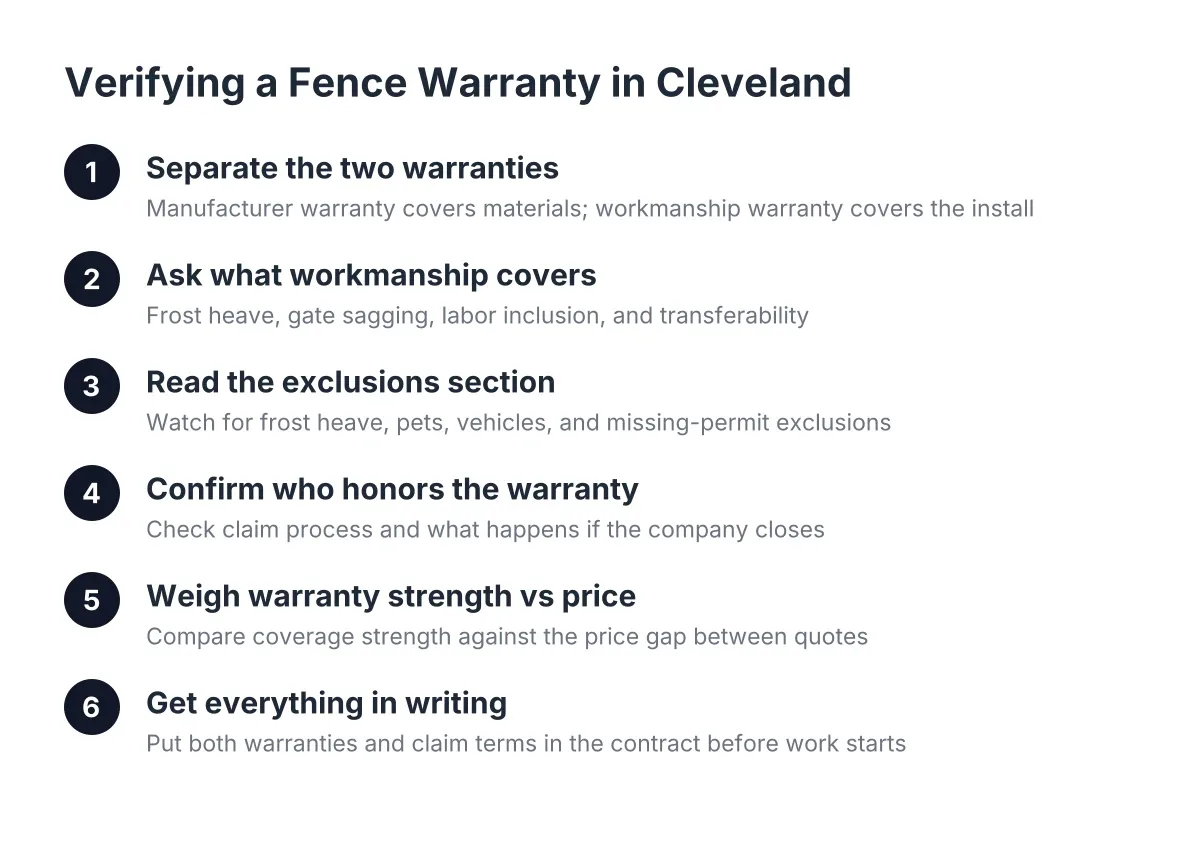
The implementation details above turn into a short checklist you can run with any fence company before work starts:
- How deep will the post holes go, and is that below the local frost depth?
- What footing diameter are you planning, and how will you handle drainage at wood posts?
- Will the old footings come out, or stay in the ground?
- Who confirms the property line, and has the fence permit question been checked with the building department?
- For gates, what extra footing work is planned at the hinge posts?
- If this is a phased job across several rental addresses, which addresses go first and why?
Clear answers to those six questions tell you more about the fence you will own in ten years than any catalog of picket styles. If your situation involves a retaining wall, a steep slope, or a disputed property line, bring in a professional to assess it before committing to a layout; those conditions change the engineering, not just the price.
The fence that failed on you probably was not doomed by its pickets. It was doomed the day its posts went into Cleveland clay without enough depth, enough footing, or enough compaction. Get those three things right on the replacement, and the next time a freeze-thaw winter grinds through Northeast Ohio, your fence line will stay exactly where the crew left it.
If you need fence installation, Cleveland Fence Installers can help.
Prefer to talk it through? Call (216) 465-0485 — a quick call is usually the fastest way to get a straight answer for your situation.