Questions to Ask a Fence Installer Before You Sign a Contract in Cleveland
A leaning fence with rotted posts, or a bare new-build yard with a dog that needs containing, puts you in the same spot: you need to hire someone, and you only find out if you picked wrong after the posts are in the ground. Knowing which questions to ask a fence installer before you sign anything is the cheapest insurance you will ever buy on this project. These fence installer questions take ten minutes. A bad install costs you the whole fence, sometimes twice.
This FAQ covers the questions that matter most in Greater Cleveland, where freeze-thaw ground movement, tight inner-ring lot lines, and local fence permit rules can turn a simple job into a dispute if nobody asked about them up front.
Why do questions matter more than the price on the quote?
Questions matter more than the quoted price because fence pricing reflects construction choices you cannot see on paper. Two quotes for the same 150 feet of privacy fence can differ by a lot, and the gap usually comes from post depth, lumber grade, build style, and expected lifespan, not from one fence company padding the number.
The cheapest bid often costs more over time. A fence built with shallow posts or ungraded lumber gets rebuilt years sooner than a solid one, and in that scenario you pay for the project twice. Treat the quote as the start of the conversation, not the answer.
Key Questions to Ask Your Fence Installer About Posts and Cleveland's Freeze-Thaw Ground
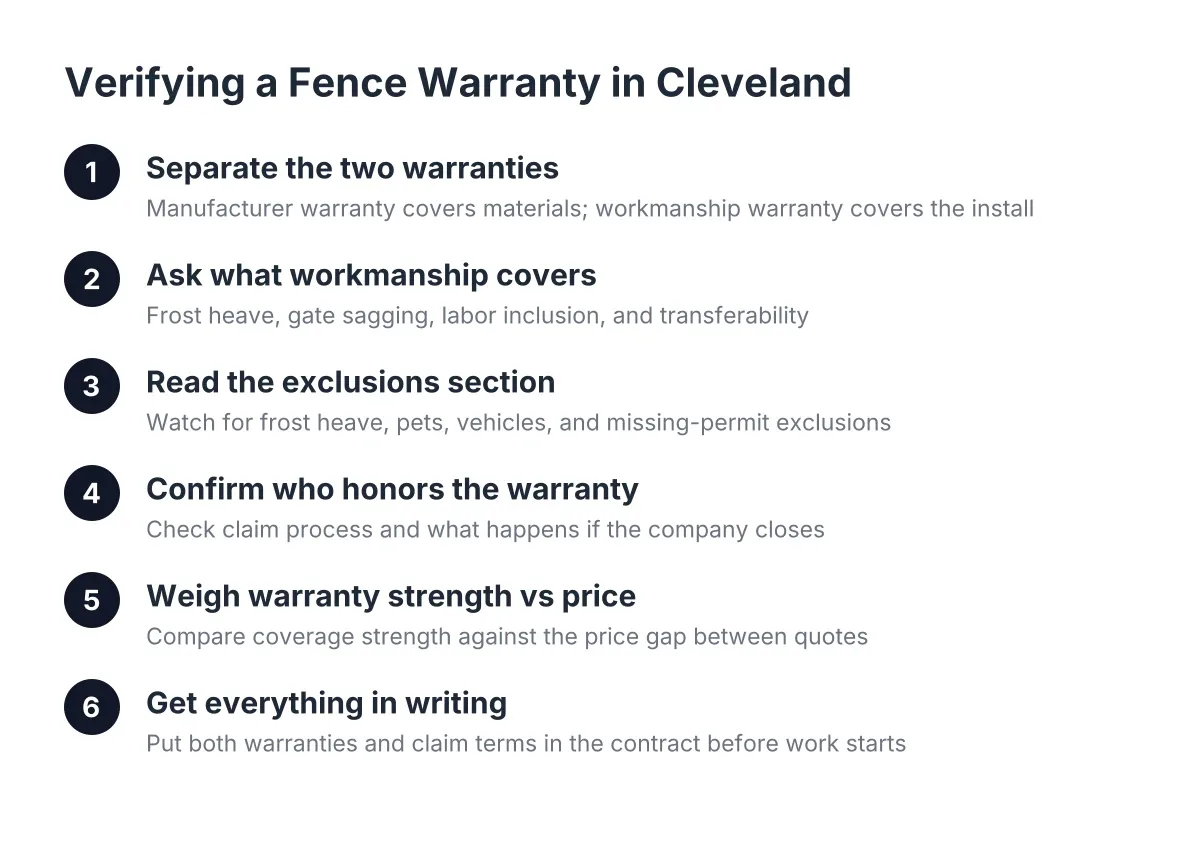
Ask how deep the posts go, what diameter the holes are, and how the installer accounts for frost heave. In Northeast Ohio, the ground freezes and thaws repeatedly each winter. Posts set too shallow get pushed up and out of plumb, and the fence starts leaning within a few seasons.
A straight answer sounds specific: a stated depth, a stated hole width, and a clear method for setting posts in concrete or gravel. A vague answer like "we set them deep enough" is a reason to keep asking. If you are replacing a rotted fence, also ask whether the old posts and footings come out completely or get left in the ground, because new posts set next to old concrete stubs rarely sit where they should.
Do I need a fence permit, and who pulls it?
Whether you need a fence permit depends on your city, your fence height, and sometimes your fence location on the lot. Greater Cleveland includes dozens of municipalities, and each one sets its own rules on permits, height limits, and setbacks. Never assume the rules from your last house carry over.
Ask the installer three things:
- Does this project likely need a permit in my city, and have you worked under that city's rules before?
- Who applies for it, you or me?
- What happens to the schedule and the contract if the permit gets delayed or denied?
A replacement fence is a common trap here. Many homeowners assume that swapping an old fence for a new one in the same footprint never needs a permit. Sometimes that is true, and sometimes it is not; the only reliable answer comes from your local building department. An installer who tells you to skip that call is telling you something about how they work.
How do I know the fence will sit on my property line?
You confirm the line with a survey or existing survey pins, not with the old fence or the neighbor's memory. This matters most on older inner-ring Cleveland lots, where parcels are narrow, fences have been replaced several times, and the existing fence may sit a foot off the true line.
Ask the installer how they locate the line before digging. A careful answer involves survey pins, your plat or survey document, or a recommendation to hire a surveyor when the pins cannot be found. Building on the wrong side of the line is one of the few fence mistakes that can force a tear-out, so this question earns its place even when it slows the project down.
Is repair or full fence replacement the right call for my damaged fence?
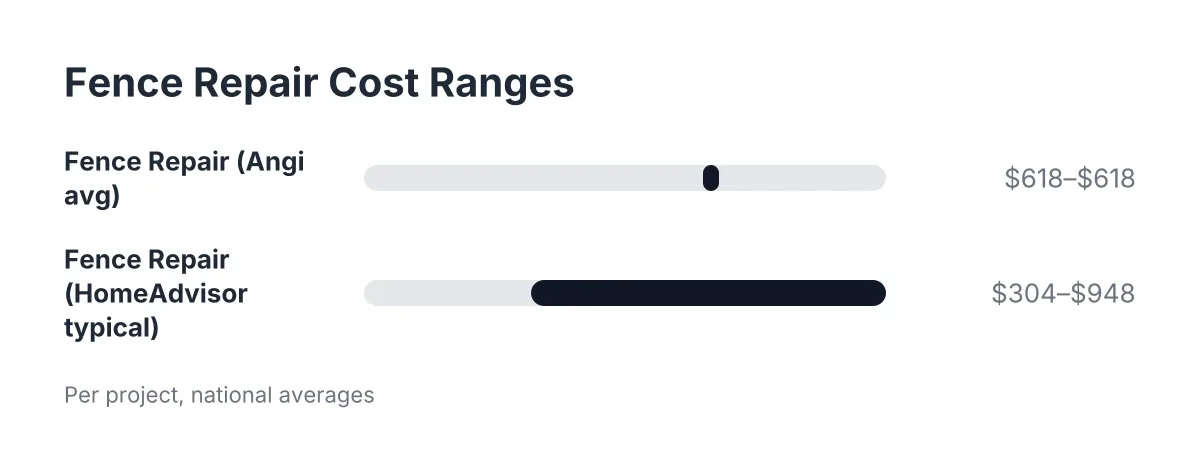
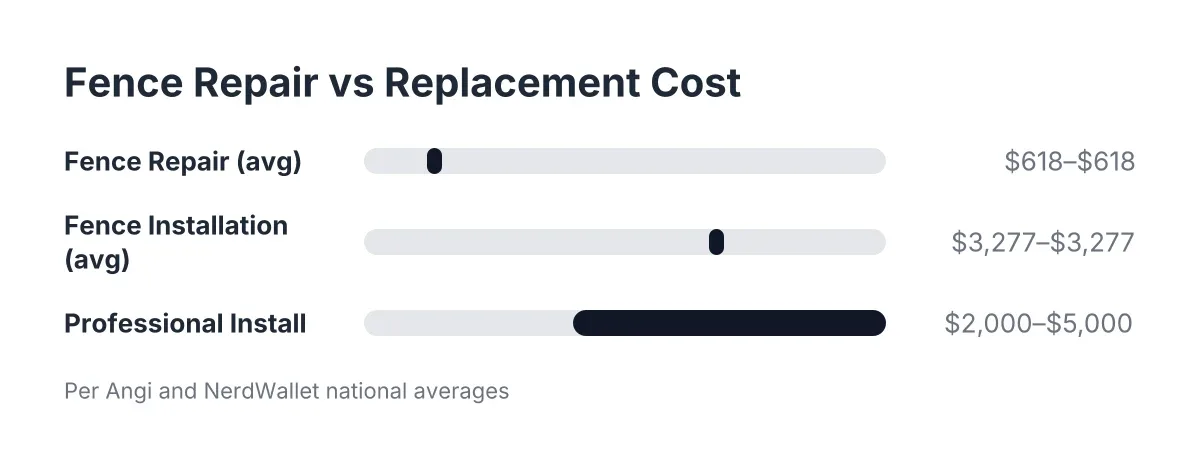
Repair makes sense when damage is limited to a few sections and the posts are sound; replacement makes sense when posts are rotting or the fence is past its expected life. According to Angi, the national average fence repair runs $618 per project, while Angi puts average fence installation at $3,277. That gap is why the repair question deserves an honest answer.
Suppose a storm drops a limb on a 12-year-old pressure treated fence and flattens two sections. If the posts along the rest of the run are still solid, a fence repair on those sections is a fair fix. If you can rock three or four posts by hand, you are patching a fence that is already failing, and a repair quote just delays the replacement bill. Ask the installer to show you which posts are sound and how they checked, so the recommendation is something you can verify in your own yard rather than take on faith.
What should the written quote and contract spell out?
A complete fence quote names the material, the post specs, the footage, the gate hardware, and who handles tear-out and haul-away. If any of those are missing, the lowest number on the page means nothing, because you cannot compare it to anything.
Before signing, confirm the contract covers:
- Exact footage, fence height, and material, such as pressure treated pine, cedar, or galvanized chain link fence fabric.
- Post depth, spacing, and how posts are set.
- Gate installation details: count, width, hinges, and latch hardware.
- Tear-out and disposal of the old fence, including the old concrete footings.
- Payment schedule, start window, and what triggers a change order.
- Who marks underground utilities before digging.
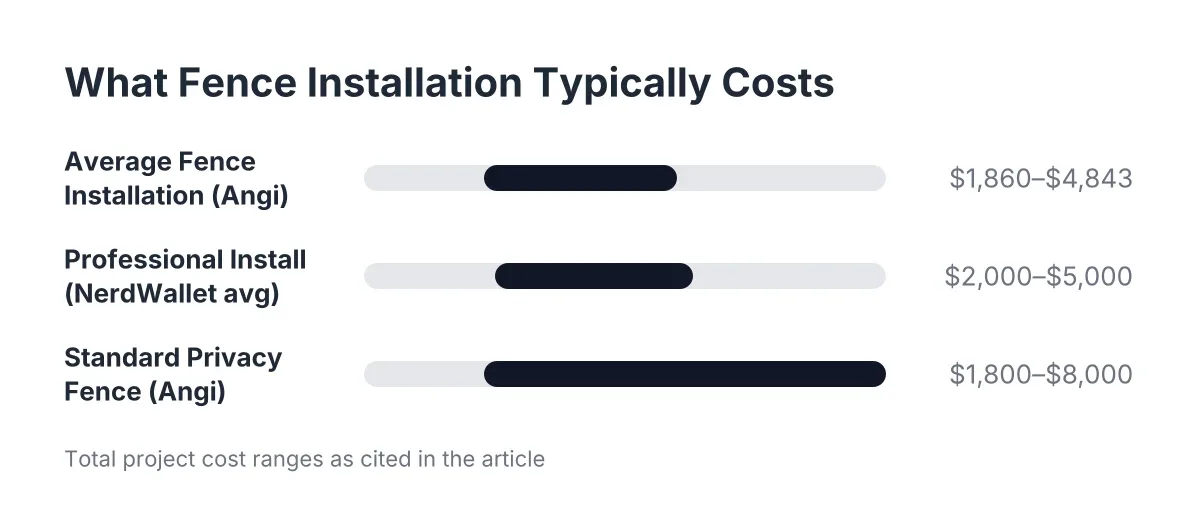
For budgeting context, NerdWallet reports professionally installed fences average $15 to $25 per linear foot, with most projects landing between $2,000 and $5,000. Your Cleveland number will move with material, terrain, and tear-out, but a quote far outside that band in either direction deserves an explanation.
What questions should I ask the fence company about panels, slopes, and layout?
Ask how the installer handles slopes, cut panels, and panel alignment, because layout decisions decide how the finished fence looks. Any fence panel installation guide will tell you panels get checked for level against the neighboring section before fastening; what separates a careful crew is where they put the compromises.
For example, on a run where a full panel will not fit at a corner, a good installer cuts the short section to size and places it where it is least visible, saving full panels for the parts of the yard you see every day. On sloped Cleveland lots, ask whether the fence will step or rack to follow the grade. Neither answer is wrong, but you should choose it, not discover it.
What makes some fence styles cost more than others?
Custom fence styles cost more because they use more material and more labor, not because of markup games. Board-on-board and shadow box designs need extra pickets to create the overlap. Horizontal fences need more cutting, trim strips to cover splice points, and tighter post spacing. A standard flat-top privacy fence is the baseline everything else gets measured against.
If one quote covers a basic privacy fence and another covers board-on-board with trim, you are not comparing the same fence. Ask each fence company to quote the same style so the numbers mean something. For reference, Angi data puts privacy fence installation between $1,800 and $8,000, averaging $4,300, and style is a big part of that spread.
When should I get a professional opinion instead of deciding myself?
Bring in a professional when the property line is unclear, when you cannot tell if posts are rotted below grade, or when your city's permit rules are ambiguous. Those three situations carry real cost if you guess wrong, and no article, including this one, replaces a site visit or a call to your building department.
The good news is that the homework is short. Confirm the line, confirm the fence permit question with your city, and put every installer through the same list of questions. In Greater Cleveland's service area, the installer who answers all of them plainly, including the answers that cost them the job, is usually the one worth hiring.
If you need fence installation, Cleveland Fence Installers can help.
Prefer to talk it through? Call (216) 465-0485 — a quick call is usually the fastest way to get a straight answer for your situation.