Wood Fence Installation Mistakes Ohio Winters Punish (and How to Avoid Them)
A wood fence that looks great in June can lean by March. In Greater Cleveland, the ground freezes, thaws, and freezes again all winter, and that movement finds every shortcut taken during fence installation. If you are planning your first fence, maybe for a new-build backyard with no fence at all, the mistakes that matter most are the ones you cannot see once the fence is up: how deep the posts went, what the concrete looks like below grade, and whether anyone checked the permit question before digging.
This guide walks through the wood fence mistakes Ohio winters punish hardest, what a proper install actually includes, what a fair price looks like in 2026, and when to handle something yourself versus calling a fence company. The goal is simple. You should be able to walk into your first phone call already knowing what to ask and roughly what the answers should be.
Why Ohio Winters Are Hard on Wood Fences
Cleveland sits in a freeze-thaw climate. Water in the soil freezes, expands, and pushes upward. Then it thaws, the soil settles, and the cycle repeats dozens of times in a single winter. Any fence post that is set too shallow, or set in a footing that traps water, gets worked loose a little more each cycle.
Wood adds its own problems. Fence posts are prone to warping, twisting, and rot over time, even when the panels above them get repainted or restained on schedule. The panels are what you see. The posts are what fail. Almost every sagging wood fence in Northeast Ohio traces back to a post problem, and almost every post problem traces back to a decision made on installation day.
That is the real argument of this article. Winter does not destroy good fences. Winter exposes bad installs. So the cheapest way to own a fence here is not the cheapest quote; it is the install that survives ten or fifteen winters instead of five.
The Wood Fence Installation Mistakes That Fail First
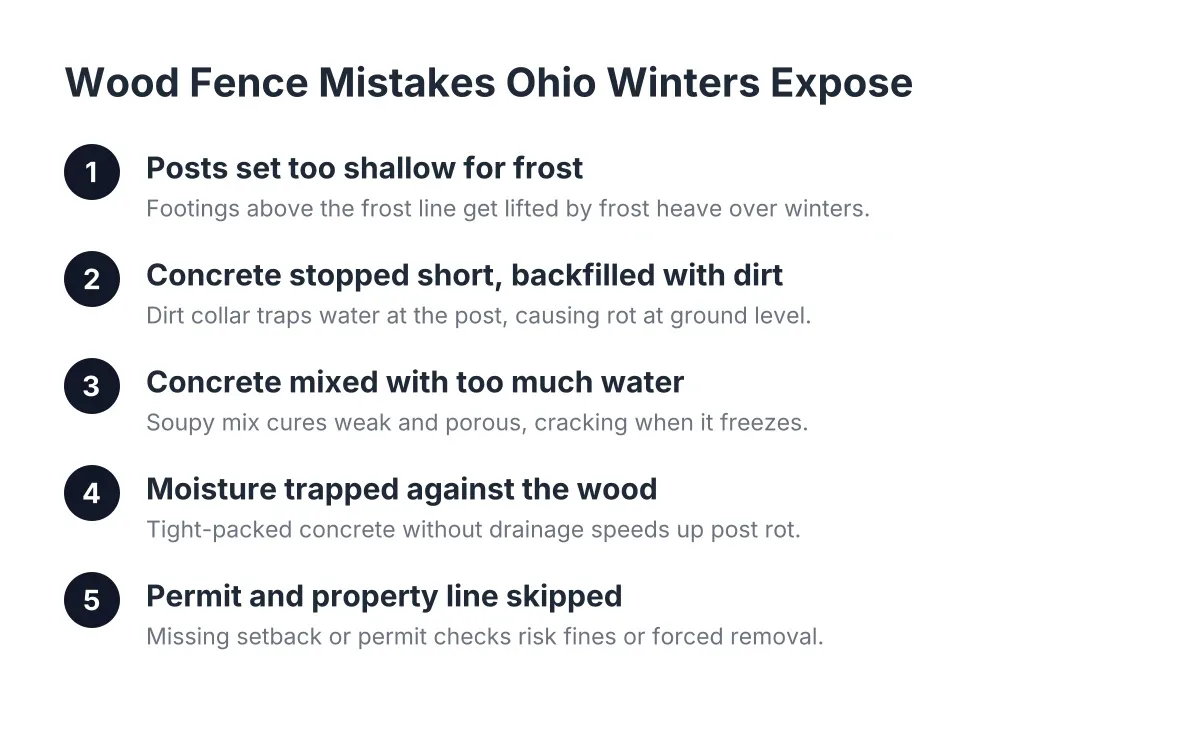
Most wood fence failures in a freeze-thaw climate come from a handful of repeat mistakes: posts set too shallow, concrete footings stopped short of grade, soupy concrete mixes, and wood posts packed in ways that trap moisture against the grain. Each one shortens post life, and each one is invisible once the fence is built.
Setting posts too shallow for frost
In a climate like Cleveland's, the ground freezes to a meaningful depth every winter. A post footing that does not reach below that frost zone gets gripped by the freezing soil and lifted, a process called frost heave. One winter might move a shallow post a half inch. Five winters can leave a gate that no longer latches and a fence line that waves like a flag.
The fix is depth. Posts need footings that extend below the local frost line, and your local building department can tell you the depth that applies to your city. This is one of several reasons the permit conversation matters; the same office that handles your fence permit can confirm the frost depth requirement for your lot.
Stopping the concrete short and backfilling with dirt
Here is the most common failure point in wood fence installation, and the one homeowners never catch during the job. The crew pours concrete into the hole but stops a couple inches below grade, then tops the hole off with dirt or sod so the lawn looks tidy. That dirt collar holds water right where the post meets the ground.
As a result, moisture concentrates at the exact point where the post is most vulnerable. The post rots at ground level while the buried portion and the visible portion both look fine. Years later the fence leans, and the owner cannot figure out why, because the panels were maintained the whole time.
A better footing comes to grade, or slightly above it, and is crowned so water sheds away from the post instead of pooling against it. If you watch your installer do nothing else, watch how they finish the top of each footing.
Mixing concrete with too much water
Concrete strength depends on the water-to-mix ratio, and the most common beginner mistake is adding water by feel instead of measuring it. A soupy mix is easier to pour, but it cures weaker and more porous. Porous concrete absorbs water, and absorbed water freezes and expands. In Cleveland, that means the footing itself can start to crack and crumble over the winters.
This mistake shows up constantly in DIY installs and rushed professional ones. It costs nothing to avoid; it just takes a crew that measures.
Trapping moisture against the wood
Concrete packed tight around a wood post can hold moisture against the grain and speed up rot compared to a footing that drains. Good installers manage this with drainage, a gravel base under the post, footing shape, and post placement, so water moves away from the wood instead of sitting against it. Pressure treated fence posts resist rot far better than untreated lumber, but pressure treatment slows rot; it does not make the post immortal in standing water.
Skipping the permit and property line check
This mistake has nothing to do with frost and everything to do with money. In many Cleveland-area cities, a fence permit is required before installation, and setback rules control how close to the property line a fence can sit. Older inner-ring suburbs with tight lot lines make this stricter, not looser. Build without checking, and you risk a fine, a neighbor dispute, or an order to move or remove a fence you already paid for.
Rules differ by city, so do not rely on what worked for a friend two suburbs over. Call your local building department, or confirm that your installer will pull the permit and will put that in writing. An installer who waves off the permit question to keep the job moving is transferring the risk to you.
What a Proper Wood Fence Installation Includes
A complete wood fence installation covers layout, permit handling, post setting below frost depth, panel or picket construction, gate installation, and site cleanup. Knowing that scope helps you compare quotes line by line instead of guessing why one number is higher than another.
Expect a legitimate quote to address:
- Layout and property line verification, often working from your survey or plot plan
- The fence permit question for your specific city, with clarity on who applies
- Utility line marking before any digging starts
- Post holes dug below frost depth, with footings finished at or above grade
- Pressure treated posts, with your choice of picket or panel style on top
- Gate installation with hardware rated for the gate's weight
- Haul-away of dirt, packaging, and, on a fence replacement, the old fence
Watch the last item. Haul-away and old fence removal are common hidden costs. Some quotes include them; some list them as add-ons; some never mention them until the invoice. Gates are another common gap, since a gate costs more per foot than fence line. Ask whether gates, removal, and haul-away are in the number you are comparing.
What Fence Installation Costs in 2026
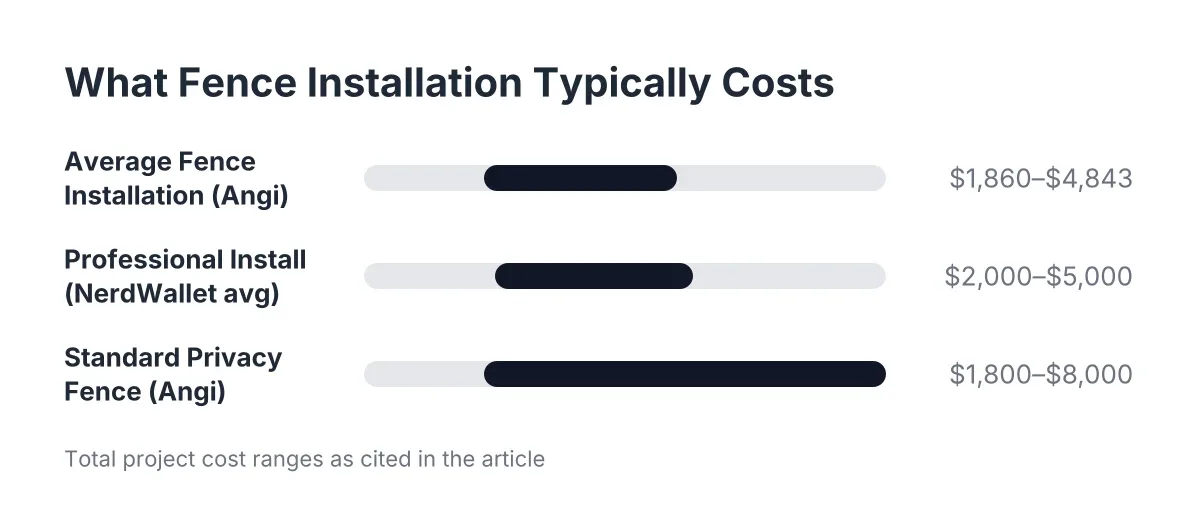
Fence installation costs an average of $3,277, with most homeowners paying between $1,860 and $4,843, according to Angi. NerdWallet, citing Angi data, puts professionally installed fences at $15 to $25 per linear foot on average, with typical totals between $2,000 and $5,000. For taller privacy builds, Angi reports privacy fence installation typically runs $1,800 to $8,000 and averages $4,300.
Those are national figures, not Cleveland quotes, but they give you a baseline before the first phone call. Say a homeowner in a new build in Parma Heights wants to enclose a blank backyard, about 150 linear feet with one walk gate, in six-foot pressure treated privacy fence. Using the national per-foot range as a rough guide, that hypothetical project lands in the low-to-mid thousands, with the gate, terrain, and material grade pushing the number up or down. If a quote comes in wildly outside that kind of range with no explanation, ask why. There may be a good reason, such as slope, rock, or old footings to remove, but you deserve to hear it.
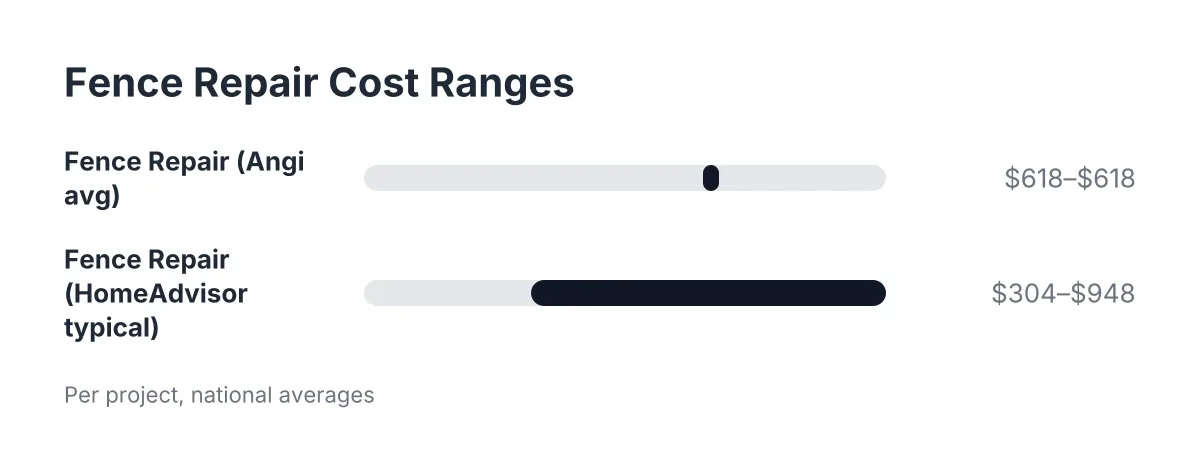
For existing fences, repair is a different budget conversation. HomeAdvisor reports fence repair averages $618, with most homeowners spending between $304 and $948. Angi's 2026 data, based on nearly 3,000 verified projects, lands on the same $618 national average. That gap between a $618 repair and a several-thousand-dollar replacement is why post failures are worth catching early.
On timing, most residential wood fence projects take days, not weeks, once the permit is approved and materials are on site. The permit step is the variable. Approval timelines differ by city, so ask your building department or your installer what to expect in your suburb rather than assuming.
Repair, Replace, or Bridge the Gap
Not every leaning wood fence needs full fence replacement, and not every rotted post means tearing out the footing. When a wood post rots at grade, the first instinct is often to rip out the post and its concrete and start over with steel. That is sometimes right, but it is not always the most practical move.
An interim post repair that preserves the existing concrete footing can stop a sagging fence from falling while you plan. In that scenario, the repair money is not wasted; it buys years of service and keeps the fence standing until a full replacement, often with steel posts that end the rot cycle entirely, fits the budget. For a Budget-First buyer, that staged approach is often the honest middle path between a patch and a premature rebuild.
There are limits, though. If most posts are soft at grade, if the fence has heaved out of line across multiple sections, or if the footings themselves are cracking from freeze-thaw, piecemeal fence repair becomes more expensive than starting over. A walkthrough with a local installer is worth the time before you commit either way.
DIY or Hire a Fence Company?
A capable homeowner can handle fence staining, hardware tightening, and replacing individual pickets or boards. Those jobs are low risk and low cost. The post work is where DIY projects in Northeast Ohio go wrong, because every winter-related mistake above, shallow footings, weak concrete, trapped moisture, happens below grade where you cannot inspect your own work after the fact.
Call a professional when the project involves:
- New post holes, because frost depth, drainage, and footing finish decide the fence's lifespan
- Property lines, because an encroaching fence can trigger disputes or forced removal
- Permits, because an unpermitted fence is your liability, not the installer's
- Gates, because a poorly hung gate sags within a season of freeze-thaw movement
- Slopes or obstacles, since stepping panels on grade or working around trees takes planning
On that last point, tight spots are where experience shows. Butting a new fence against a neighbor's existing fence, or fitting a post beside a mature tree, sometimes calls for a reinforced post, such as a metal pipe sleeved inside the post, rather than forcing a standard set into a bad location. A first-time builder rarely knows those options exist.
How to Choose an Installer Who Builds for Winter
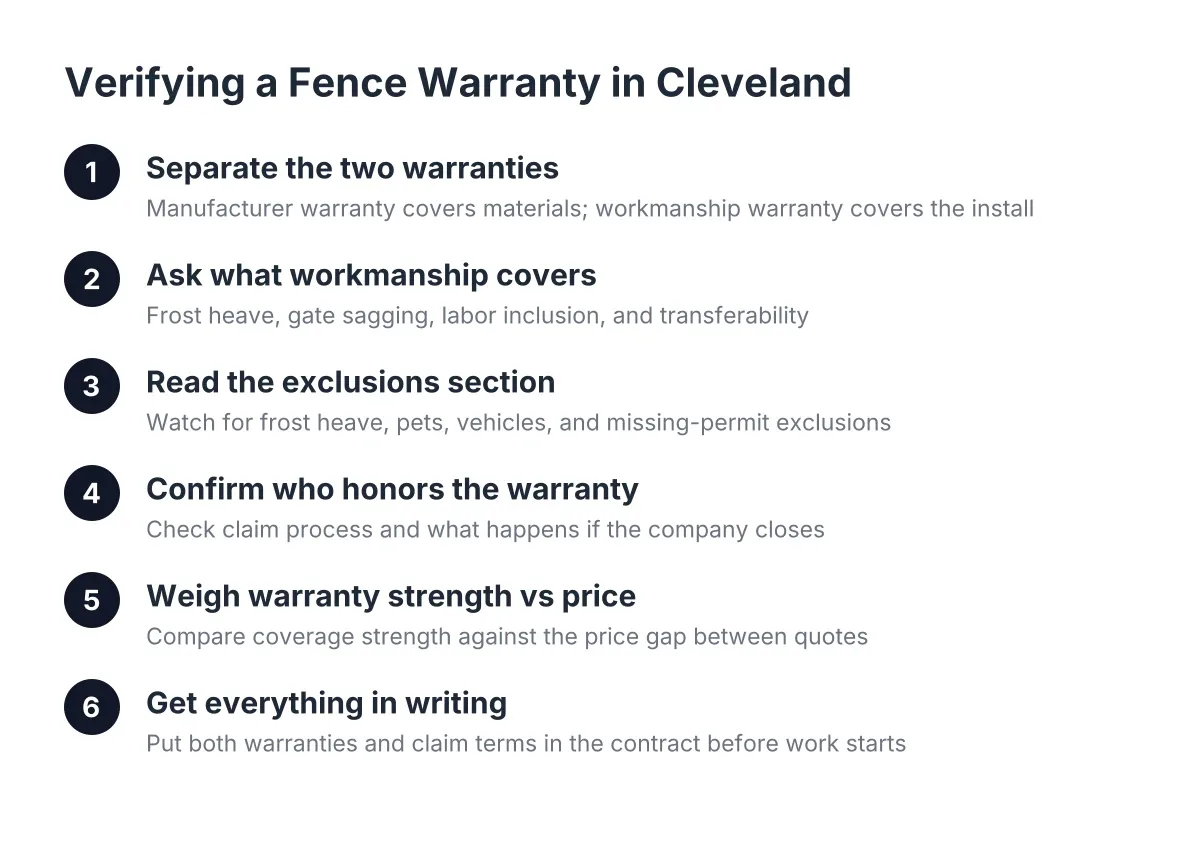
Choosing a fence installer in Cleveland comes down to three questions: how deep do the footings go, how are the footings finished at grade, and who pulls the permit. A contractor who answers all three specifically, in writing, is telling you they build for this climate. Vague answers on any of them are a warning.
Here is what a fair quote looks like. It states the linear footage, post depth, footing finish, material grade, gate count, and whether removal and haul-away are included. It names who handles the fence permit. Additionally, it is itemized enough that you can compare it against another quote without guessing.
In addition, resist the pull of the lowest number. The cheapest bid often skips exactly the steps this article covers, and a fence that fails in five winters instead of fifteen costs more in the end than the higher bid did up front. Cheap concrete and shallow posts are not savings; they are deferred bills.
One more detail worth asking about: panel placement. On a yard where full panels and cut sections must mix, a careful crew puts the cut sections in the least visible runs and saves full panels for the sightlines you see from the house and street. It costs nothing extra. It just requires a crew that plans the layout before digging, which is the same habit that gets the footings right.
Get Straight Answers Before You Dig
A wood fence in Greater Cleveland lives or dies by what happens below grade and before the first post hole: frost-depth footings, concrete finished to shed water, dry contact around the wood, and a permit confirmed with your city. None of that is complicated. All of it is skippable by a crew in a hurry, and winter will find every skipped step.
Cleveland Fence Installers builds wood fence, chain link fence, and privacy fence for this climate specifically, and answers the cost and permit questions directly before you commit to anything. If you are planning a new fence, a gate, or a fence replacement anywhere in the Greater Cleveland service area, reach out for a free estimate and get the permit question settled before anyone digs.
If you need wood fence installation, Cleveland Fence Installers can help.
Prefer to talk it through? Call (216) 465-0485 — a quick call is usually the fastest way to get a straight answer for your situation.